As the inaugural post of this site noted, the lack of substantial doctrine in Congregational churches is, to the say the least, a significant lacuna in our churches. In an effort to provide something of a balm to this sore disease, this here is Richard Mather’s Catechism.
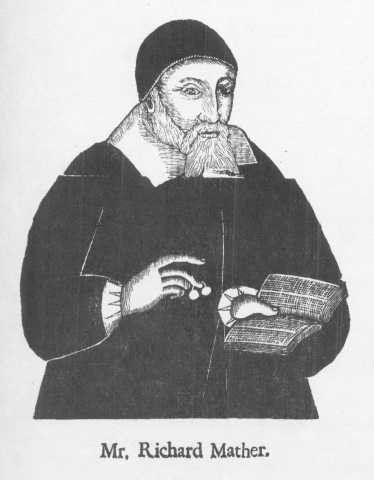
By way of introduction, Richard Mather was a famed Puritan and progenitor of the Mather dynasty. Born in Lowton in Lancashire, England, he would go on to attend Brasenose College, Oxford University for a time, be ordained to the ministry in 1619, and eventually become a famed preacher about Liverpool.
He would become suspended more than once in 1633 and 1634 for his nonconformity to certain of the ceremonies then imposed by law. It is concerning Richard Mather that the famed saying of Archbishop Richard Neile would say “it had been better for him that he had begotten seven bastards” than flout the ceremonies which were disregarded. It is difficult to not admire Mather when such utterly absurd ceremonial dogmatisms cause such a remark, which illustrate par excellence the preference of the lesser to the weightier matters of the law.
He would be coaxed by fellow Puritans John Cotton and Thomas Hooker to migrate to New England in 1635, and would faithfully serve as teacher at the church at Dorchester in the Massachussetts Bay Colony until his death on April 22, 1669.
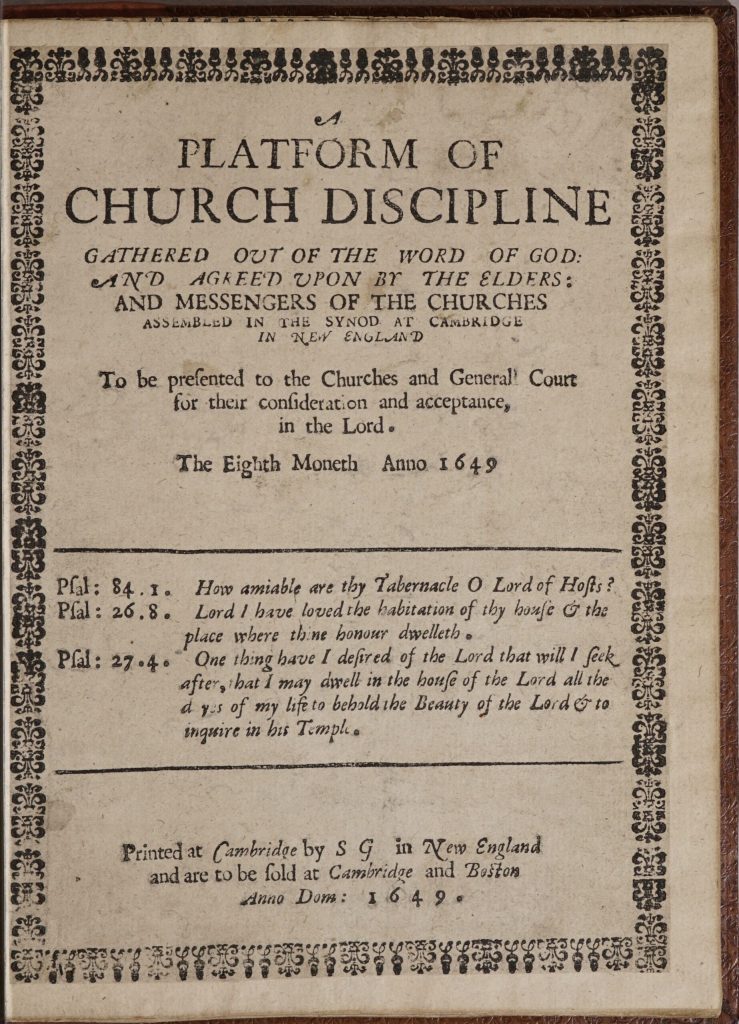
He has left behind him sermons, polemical treaties, his indelible imprint upon New England polity through the Cambridge Platform, the Bay Psalm Book, and both a prodigious son and grandson.In addition to all of these, he left behind him a substantial catechism. Mather was not alone in this, as New England profusely published catechisms throughout the colonial period, instructing her sons and daughters in the principles of true religion. Mather’s catechism shines in its pithy yet substantial treatments of both doctrine and practice. This catechism has not been republished since the 17th century, and it is the author’s hope that this newly typeset edition can go somewhere in stirring up renewed interest in doctrinal retrieval among modern Congregationalists. Tolle Lege!
Note: The archaic spellings have been modernized and all Scripture citations have been footnoted.
__________________________________________________________
A CATECHISM OR,
The Grounds and Principles of Christian Religion, set forth by way of Question and Answer.
Wherein the Sum of the Doctrine of Religion is comprised, familiarly opened, and clearly confirmed from the Holy Scriptures.
By RICHARD MATHER,
Teacher to the Church at Dorchester in New England.
Hold fast the form of sound words which thou hast heard of me in faith and love, which is in Christ Jesus.
2 Tim. 1. 13.
When for the time ye ought to be teachers, ye have need that one teach you again the first principles of the oracles of God, and are become such as have need of milk, and not of strong meat.
Heb. 5. 12.
LONDON, Printed for John Rothwell, and are to be sold at his shop at the sign of the Sun and Fountain in Paul’s Church-yard near the little North-gate. 1650.
__________________________________________________________
TO THE CHRISTIAN READER.
The public catechizing of children by way of familiar dialogue in short and plain questions & answers, though it be scrupled by some, as if it wanted Scripture warrant: yet such as acknowledge children to be members of Christ’s kingdom and church, (as all but anti-paedobaptists do).[1] They cannot deny, that (being members of Christ’s house) the stewards of his house must (in faithfulness to Christ, and them) dispense a portion of spiritual food to them in due season.[2] And evident it is by daily experience that long discourses (sermon-wise) run over children’s heads (like water over a mill, that grinds no meal at all) and pass their capacity. No way of instruction is so proper for them, as that which the prophet describes as most suitable to the understanding of children, line upon line, here a little and there a little[3] which can no way so conveniently be dispensed, as in brief and familiar questions and answers put into their mouths.
But as this way of short and familiar catechizing is the fittest portion of young children’s bread: so there is a larger doctrine of catechism, containing the whole body of divinity, which being solidly compacted together, and evidently confirmed from Scripture light, and familiarly delivered to the apprehensions of God’s people, it will be a seasonable portion for children of riper age: not only for their further building up in the faith and obedience of the doctrine of the gospel: but also for their establishment in the truth, that they be not plucked away with the error of the wicked. Hence Luther had his major as well as his minor catechisms: and Beza his larger confession of the faith as well as his shorter. Yea the Apostle Paul (whose example was now precedential, as being indeed authentical and binding to imitation) he committed to Timothy a platform of sound and wholesome words, in faith and love: which he commanded and charged him, not only to hold fast himself,[4] but likewise to commit the same to faithful men, who might be able to teach others also.[5] This charge, as it then was (and always will be) weighty, and seasonable: So never more important and necessary, then in this capricious and fastidious age, when men will not suffer wholesome doctrine, but having itching ears and wits, do turn away their hearts from the truth, and are given up to such empty and windy notions, wherein it is hard to judge whether arrogancy or ignorance be the more predominant: arrogance of higher attainments in Christ, or ignorance of the true Christ, and of life in him.
Now for casting in some help, (by the grace of Christ) to prevent the spreading of such a gangrene of vanity and apostacy; and to establish the people of God in the truth of the doctrine which is according to godliness: Our reverend brother (according to the precious talent of wisdom, and sound judgement given unto him, &c. out of his faithful love to the flock of Christ) he has compiled this ensuing platform of wholesome doctrine, in way of a larger catechism: wherein you shall find the sum of the doctrine of Christian religion, with pithy solidity and orderly dexterity digested together; and with clear evidence of truth confirmed from the Holy Scriptures: and both with such familiar plainness of savory language, as (by the blessing of Christ) the simple honest hearted reader may be informed and established in the highest truths, and the most intelligent may be refreshed and comforted, in revising and recounting the treasures of wisdom and knowledge which they have received and embraced, and the grounds upon which they have believed; and all may be led on in the constant profession and practice of the faith and love which is in Christ Jesus.
So we commend this ensuing treatise to the diligent perusal of the Christian reader; and both it and you to the rich blessing of the grace of Christ, and rest. Yours to serve in the faith and love of the gospel.
JOHN COTTON & JOHN WILSON.
__________________________________________________________
THE Grounds and Principles of Christian Religion.
CHAP. I. Of Catechizing as an Introduction to that Which Follows.
Quest. What is catechizing?
Ans. An instructing of the people in the grounds, or principles, or fundamental points of religion.
Q. How are these catechistical, and fundamental points called in the Holy Scripture?
A. They are called the foundation,[6] the first principles of the oracles of God,[7] the beginning of the doctrine of Christ,[8] the entrance into God’s Word,[9] milk for babes,[10] and the form of wholesome words.[11]
Q. How may the warrantableness of this kind of teaching appear?
A. Both by express testimony of Scripture,[12] and because catechizing is nothing else but the drawing of the doctrine of religion into brief sums; and this has plentiful warrant in the word.[13]
Q. What need is there of this kind of teaching?
A. The doctrine of catechism being milk for babes, and the laying of the foundation, there cannot but be great need thereof; for all men know the foundation must be laid afore there can be any building; and babes must have milk afore they be fed with stronger meat.
Q. What is the benefit of catechizing?
A. It is a means of well-grounded knowledge,[14] and of profiting by sermons; the want whereof being an hinderance that men cannot profit by other higher points of doctrine.[15]
Q. What else may be the benefit thereof?
A. It is a means to prevent apostasy[16] and the infection of error, which they that are ignorant and unstable are apt to be seduced withal.[17]
Q. Do you then think that the doctrine of catechism is wholesome and useful to the souls of God’s people?
A. As common and ordinary meats are most wholesome to the body, more than curious and dainty dishes: so the doctrine of catechism is specially wholesome to the soul, and therefore is expressly called the form of wholesome words.[18]
Q. How should the doctrine of catechism be handled?
A. Briefly, many things being contracted into narrow summes, for the helping of memory,[19] and yet plainly,[20] as may be for the understanding of the simple.
Q. What are we to think of that usual way of catechizing by questions and answers?
A. This way of teaching has plentiful warrant in the Scriptures,[21] and is suitable to the notation, and signification of the word catechizing, which is taken from that return or answer which is given in an echo.
Q. Who are to be catechized?
A. All that have need thereof, as being not well instructed in these points; and therefore little children[22] are to be catechized as soon as they shall be able to learn, and others also that are ignorant[23] or children in understanding.
Q. But is it not a shame for persons of years to be catechized?
A. It is a shame, and justly reproveable as a sin, when persons grown to years are so ignorant as to have need to be catechized.[24]
Q. But how if they be not willing to be catechized?
A. It is much more a sin and shame, if being ignorant they refuse to have their ignorance holpen by being instructed.[25]
Q. But is it not indeed a reproach and shame unto a man to be catechized?
A. It is so far from being a shame, that indeed it is the duty of all to be willing to learn,[26] and therefore not a shame unto any; but the commendation of every one that is so willing.[27]
CHAP. 2. Of the Holy Scriptures.
Q. You have showed that to be instructed in the principles of religion, is both warrantable, needful, and profitable; tell likewise whence we must take direction for attaining well-grounded knowledge in these principles, and all other points of religion?
A. Out of those sacred books or writings, which are called the Holy Scriptures.
Q. Has the word and will of God always been set down in writing?
A. No: Moses was the first penman of Holy Scripture, who lived not till above two thousand years after the creation.
Q. How was the will of God made known to his people in those times afore the Scriptures were written?
A. By divers and sundry means,[28] as by visions,[29] by dreams,[30] by visible signs,[31] and by audible voice.[32]
Q. Why did God afterward cause his will to be set down in writing?
A. That it might be the better preserved,[33] that it might be conveyed to posterity,[34] and that it might be an infallible standard to try all doctrines by.[35]
Q. What are the books of Holy Scriptures?
A. The books of the Old Testament[36] as they are expressed in our Bibles.
Q. Why are these writings called holy?
A. They are called holy[37] because they have an Holy Author, which is God,[38] were written by penmen who were holy men,[39] and because the doctrine which is contained in them is all for the promoting of holiness in us.[40]
Q. How may it he proved that these books are indeed the Word of God?
A. Because it is said they were given by inspiration of God,[41] and that the penmen of them spake as they were moved, or acted by the Holy Ghost.
Q. How else?
A. By the wonderful efficacy of them, as in other things, so in this, that they enter into the heart, for conviction, and humiliation,[42] and are mighty through God to convert and comfort the soul.[43]
Q. How else may it be proved that the Scriptures are the word of God?
A. Because they must either be the word of God, and have him for the Author of them, or else some creature must be the author of them; which latter is not possible.
Q. It is true indeed, if no creature be the author of them, then God the creator must; but why may not some creature be their author?
A. A good creature, angel or man, could never be so impious, presumptuous, and blasphemous, as to father his own doings upon God, falsely making him the author of them; and a wicked creature would never show such care and zeal for the glory of God, such dislike and detestation of all kind of sin, as the book of the Scriptures does.
Q. What particular uses are the Scriptures profitable for?
A. For the teaching of true doctrine, and convincing the contrary, for correction or reformation of errors in life, and for instructing unto good duties.[44]
Q. Are the Scriptures a complete and sufficient rule of direction for all points of faith and life?
A. Yea; for they were written for that very end, that we might believe on Christ Jesus, and believing have eternal life through his name:[45] and they are able to make one wise unto salvation through the faith which is in Christ Jesus.[46]
Q. How else may this sufficiency and perfection of the Scriptures appear?
A. It may appear also by this, in that by the Scriptures, the man of God, who needs more abilities than other men, may be perfect, and thoroughly furnished unto all good works;[47] and because it is a cursed thing to add anything thereto.[48]
Q. Does the knowledge of the Scriptures belong unto all, or only to the learned?
A. Not only magistrates[49] and ministers,[50] but every householder,[51] yea simple people;[52] yea women,[53] young men,[54] and children,[55] ought to be acquainted with the Scriptures; and therefore the knowledge of them does belong unto all sorts of people.
CHAP. 3. Of God.
Q. You have showed that the means of well-grounded knowledge is the Holy Scripture; tell me now what it is that the Scriptures do especially teach us?
A. They teach us especially the saving knowledge of God, and of Jesus Christ.[56]
Q. How may it be proved that there is a God?
A. The Scriptures do abundantly, and plainly testify it;[57] and the creation of the world does show it.[58]
Q. How does the creation of the world show that there is a God?
A. Even as a fair and sumptuous building does show that somebody was the maker of it, so this great world does show there was a maker of it which is God.[59]
Q. But why might not the world be without beginning and have its being of it self?
A. Because then the world should be God, for that which has its being of itself, and is without beginning, is God.
Q. How else may it be proved that there is a God?
A. The succession of day, and night, and other seasons with the sustentation, and ordering of the creatures and the motions of them, does plainly witness that there is a God.[60]
Q. How may this be expressed in some familiar comparison.
A. When a ship is seen at sea with her sails spread, and her passage rightly guided unto the harbor, it appears thereby, that there were men that guided the same; for if there were no men, there would never be any ships upon the sea: Even so the preservation of the great ship of the world, and the guidance of its motions, does evidently show, that there is a God by whom the same is preserved, and guided.
Q. What else may be a further proof that there is a God?
A. That there is a God is manifestly declared by the strange and wonderful plagues and judgments, that sometimes are inflicted upon notorious sinners upon earth.[61]
Q. What may be thought of those accusations, and terrors of conscience, that sometimes are found in men, upon the committing of heinous sins, though known to no man living, but to the sinner himself?
A. This also is another testimony that there is a God, before whose judgment seat a man must answer for his deeds; for otherwise why should a man be afraid where no fear is?[62]
Q. How many Gods are there?
A. No more but one.[63]
Q. Why may there not be more Gods than one?
A. Because that is contrary to the nature of God which is to be infinite, and everlasting, that is the first, and the last; now there cannot be many infinites, nor many firsts and lasts, but one only.
Q. How else does the nature of God show that there can be no more but one God?
A. It is the nature of God to have his being of himself, and so give being to whatsoever else has being; for so much is signified by the word Jehovah.[64]
Q. And how does this prove that there can be no more but one God?
A. Because if there were many Gods, then either they must one give being to the other, or each one have his being of himself, both which are utterly impossible.
Q. Why might not one of them give being to the other?
A. Because then that other could not be God, as not having his being of himself.
Q. And why might they not be many Gods, each one having his Godhead of himself?
A. Because then none of them could be God, as not giving being to all others which had being.
Q. Though there be but one God, yet is there not more persons, or subsistences in the Godhead than one?
A. Yes; the Scriptures do apparently witness that in the unity of the divine essence, there is a plurality of the divine persons.[65]
Q. How many are the persons in the Godhead?
A. They are three, the Father, the Son, and the Holy-Ghost.[66]
Q. Whether are these three, the Father, the Son, and the Holy-Ghost several, and distinct Persons, or only several names, and titles of one, and the same person.
A. The Father is not the Son but another person;[67] the Son is not the Father, but another;[68] and the Holy Ghost is neither the Father nor the Son, but another;[69] and therefore they are each distinct from other as several, and distinct persons.
Q. What are the personal properties, whereby each is distinguished from other?
A. The property of the Father is to beget the Son,[70] the property of the Son to be begotten of the Father,[71] the property of the Holy Ghost to proceed from the Father and the Son,[72] who is therefore called the spirit of the Father,[73] and of the Son.[74]
Q. Are every one of these persons God?
A. Yea: Of the Father there is less question, and the Scriptures do witness that the Son is God,[75] and also that the Holy Ghost is God.[76]
Q. You have showed that there is a God, and only one God, and three persons; tell me now what God is?
A. God is so infinite, and incomprehensible, that no creature is able fully to comprehend or know him.[77]
Q. How then may we conceive of him?
A. As he has revealed himself to us,[78] in his back parts,[79] which are his divine attributes,[80] and by his works.[81]
Q. What are those attributes or back parts of God?
A. Wisdom,[82] power,[83] goodness,[84] truth,[85] justice,[86] mercy,[87] and the like, in all which he is infinite,[88] and everlasting.[89]
Q. What are the works of God?
A. They are three, decree, creation, and providence.
CHAP. 4. Of God’s Decree.
Q. What is God’s decree?
A. That whereby he has before determined and decreed with himself whatsoever shall come to pass.
Q. Do you say that God’s decree reaches to all things whatsoever comes to passe in time?
A. Yea all things whatsoever have been, are, or that shall be hereafter, were before decreed, and determined by God.[90]
Q. What are some of the principal things that are so decreed?
A. Things that are most casual,[91] things that are most freely done by the creature,[92] and things wherein the creature commits abundance of sin.[93]
Q. What else?
A. Such things as seem small and little,[94] are also great, and special events.
Q. What are some of those great and special events that are decreed by the Lord?
A. The coming and death of Christ, and all the works of his mediatorship,[95] the salvation of the Godly,[96] the damnation of the wicked,[97] the day of every man’s particular death,[98] and the day of the general judgement.[99]
Q. When were all these things decreed by God?
A. Before the world was created, even from everlasting.[100]
Q. What was the cause of Gods decrees?
A. The cause that moved him to decree was nothing foreseen in the creature, but his own will, and good pleasure.[101]
Q. But say some are appointed by the decree of God to damnation, if his will be the cause of that decree, how is that just?
A. Yea, it is most just and righteous notwithstanding.[102]
Q. How may that appear.
A. Because the will of God is the rule of all righteousness,[103] and because the Lord has absolute power over all creatures, as the potter has power over his clay.[104]
Q. How else may the justice of the Lord in his decrees appear?
A. Because what ever be the Lord’s decree, there is no man actually condemned till he be first defiled with sin.[105]
Q. Whether is the decree of God certain, and immutable, or such as may be changed, and not take effect?
A. It is altogether unchangeable, and shall surely be accomplished.[106]
Q. If the decree of God be unchangeable, then what needs man to be careful in the use of means for his own good?
A. Yes, the means must be used notwithstanding God decree; and that partly because the means are appointed, and decreed of God as well as the end;[107] and partly because the revealed will and command of God is our rule, and not his secret decree.[108]
Q. Do you think then that God’s decree does not excuse men from blame in the sins which they do commit?
A. It does not excuse them at all,[109] and the reason is because the decree of God infuses no corruption into the hearts of men, nor constrains them to sin against their will, but they sin most freely, and willing of their own accord.
Q. Is the decree of God secret within himself or revealed and made known?
A. It is secret within himself, till himself do reveal it, and therefore further then so it is not to be searched into.[110]
Q. How does God reveal his decree?
A. Partly by his word, wherein this doctrine is plainly, and plentifully taught,[111] and partly by the execution and accomplishment of things in time.
Q. How does the execution or accomplishment of things reveal God’s decree?
A. Yea very clearly, because nothing was decreed but he executes the same in time; and whatsoever is brought to passe in time was determined and decreed afore.[112]
Q. How many ways may the decree of God be considered?
A. As respecting all the creatures in general, or as it respects the reasonable creatures, angels and men, in special.
Q. What are the parts of Gods decree as it respects man?
A. Election and reprobation.
Q. What is election?
A. It is the decree of God or his predestination[113] whereby of his own free love[114] and good pleasure[115] he has from everlasting[116] appointed and chosen some certain men[117] to the obtaining of grace,[118] and salvation[119] by Christ,[120] for the praise of his glorious grace.[121]
Q. And what is reprobation?
A. It is the decree of God whereby of his mere will and good pleasure[122] some certain men[123] are not elected and ordained to life,[124] but on the contrary are appointed to destruction or damnation[125] to be inflicted upon them for their sin,[126] to the praise of God’s glorious justice.[127]
CHAP. 5. Of Creation.
Q. Had this world a beginning by creation, or was it from everlasting?
A. The scripture in many places, and specially in the first of Genesis does declare that the world was not from everlasting, but had a beginning by the Lords creating of it.[128]
Q. Who was it that created the world?
A. God that is without beginning, and has his being of himself, he it was who gave beginning, and being to the world.[129]
Q. Whether was this the work of the Father, or of the Son, or of the Holy Ghost?
A. Of every person in the Trinity; not of the Father only but also of the Son,[130] and of the Holy Ghost.[131]
Q. What are the things that are created?
A. All things without exception, that have a being, except God only who did create them.[132]
Q. Do you mean that the third heaven was also created by God?
A. Yes, for that heaven is said to be a city whose builder, & maker is God.[133]
Q. But what think you of the angels, were they also created by God?
A. Angels are the chief of those invisible things, those thrones and dominions, principalities, and powers, which are expressly mentioned to have been created by the Lord.[134]
Q. Wherewith did God make the world?
A. Though men must have tools, and instruments, and sometimes more hands then their own for the effecting of works; yet when the Lord made the world, with him it was not so.
Q. How then or wherewith did he make it?
A. He made it himself alone,[135] and without any other means but only by his Word.[136]
Q. Whereof or of what materials did he create the world?
A. Not of any preexistent matter, but of nothing.[137]
Q. How do you mean when you say that all things are made of nothing? For the body of Adam was made of the dust of the ground, and fishes of the waters, and therefore it may seem all things were not made of nothing.
A. I mean that some things were made of nothing without any matter at all, and that the first matter whereof other things were made, was not eternal, but was immediately created of nothing; and that that first matter was so indisposed to be the things that were made of it, that no less a power was seen in making other things out of it, than in making that first matter, or the lump itself; as it was as great a work to bring great whales out of the waters, as to bring forth the water out of nothing; and in these respects, all things may be said to be made of nothing.
Q. In what time was the world created?
A. Every particular thing quickly, and as it were in an instant,[138] and the whole in the space of six days.[139]
Q. What was the work of each day?
A. The work of the first day was heaven, the dark and deep lump of earth, and waters, and light.
Q. What of the second day?
A. The firmament which is called heaven.
Q. What of the third day?
A. The gathering of the waters together, which is called sea, the drying of the earth, and making it fruitful.
Q. What of the three last days?
A. On the fourth day sun, moon, and stars, on the fifth day fish, and foul, on the sixth day beasts and creeping things, and man.
Q. When was the highest heaven, and angels created?
A. Most likely on the first day.[140]
Q. Why was God six days in making the world?
A. Not because he needed so much time, but that we might more distinctly consider of his works.
Q. Why did God make the world?
A. Not because he needed it, for he is all-sufficient in and of himself, not needing anything, but giving into all life, and breath, and all things.[141]
Q. Did he make it out of necessity of nature, or because he could not choose?
A. No, for had he pleased, he might have made it sooner, or later, or not at all.
Q. Why then did he make it?
A. Because it so pleased him.[142]
Q. For what end did God make the world?
A. For the declaration of his own glory.[143]
Q. What was the state of all things by creation?
A. God looked upon all the work which he had made, and behold it was very good.[144]
CHAP. 6. Of God’s Providence.
Q. What is the providence of God?
A. That whereby God does preserve, and govern, dispose, and order all creatures with all their actions.
Q. What Scriptures do show that there is such a providence of God?
A. Many, and namely these.[145]
Q. How else may the same be proved?
A. Such is the wisdom, and knowledge of God, that nothing can come to pass, but he must needs know it, and such is his omnipotency, that what he absolutely would not have to be, he is able to hinder it, and therefore nothing falls out but he sees it, and by his providence has an hand therein.
Q. What are the parts of God’s providence, or the several acts of it?
A. Preserving of the creatures[146] and government of them.[147]
Q. What need is there of the providence of God for the preservation of creatures?
A. Yes very much, as well as of his power for the creating of them.
Q. How may that appear?
A. Not only because making, and preserving of the creatures, are coupled together as acts of the same power,[148] but also because otherwise the creatures could not continue in being, but would soon return to nothing.[149]
Q. And why must the government of the creatures be also ascribed to God?
A. Partly because it would argue imperfection in God, if he should make creatures, and leave the government of them to others; and partly because the creatures would never certainly attain the ends for which they were created, if they were not governed by the same power by which they were created.
Q. What are the things whereto the providence of God does extend?
A. All things without exception of any.[150]
Q. What are some sorts of them?
A. All persons, and all living things, though never so mean,[151] and all the very accidents, and circumstances of actions, as the times, and seasons of them[152] and the like.
Q. What kind of actions of the creatures are ordered by the providence of God?
A. All kind of actions, whether they be great or small,[153] whether they be of kindness, and favour unto men, or of judgement & correction.[154]
Q. What else?
A. Actions that are most contingent, and casual,[155] and actions wherein the creature is most sinful, and wicked.[156]
Q. How far forth has God an hand by his providence in the sinful actions of creatures?
A. Partly by permitting sin to enter, when he could easily hinder the same, if he pleased; and partly by disposing and ordering of it for good ends.
Q. How does God permit the entrance of sin?
A. Partly by leaving men to themselves, not bestowing upon them his grace, that might keep them from sin,[157] and partly by letting Satan loose upon them to be blinded, and mis-led by his temptations.[158]
Q. How is this just that God should deny the assistance of his grace, and leave men to themselves, and the temptations of Satan?
A Yes, it is very just, because he is debtor to none, but may bestow his grace where, and upon whom he pleases.[159]
Q. What else may be said for the clearing of God’s justice herein?
A. God being the judge of the world may punish sin with what punishment he sees meet, and so by giving sinners up unto further sin.[160]
Q. What may be some instance of Gods disposing and ordering of sin for good ends?
A. The sin of Joseph’s brethren when they sold him into Egypt, which God disposed, and ordered for the preserving of Iacob and his house in time of famine.[161]
Q. What else?
A. The sin of Amnon, and Absolom which God disposed and ordered for the correction, and humiliation of David.[162]
Q. What may be a third instance hereof?
A. The great sin, and wickedness of them who put the Lord Jesus Christ to death, as foul a fact as the sun ever saw, and yet even this did the Lord dispose, and order for the redemption and salvation of his elect.[163]
Q. But if God by his providence have a stroke in ordering of the sins of men, is not God himself then tainted with sin?
A. No, by no means: for God cannot be tempted of evil,[164] neither does any sin proceed from him,[165] but contrarily he is then holy, holy, holy, when he gives men up to be hardened in their sins.[166]
Q. What else may be said for the further learning of this truth?
A. God is so far from being tainted hereby with the uncleanness of sin, that his wisdom and goodness does hereby the more appear, in that he can work good by evil instruments, and make even sin itself to seem to his glory.
Q. But whether may not sinners then hereby have excuse for themselves, and lay the blame of their sin upon God?
A. If God did infuse corruption into the hearts of men, or incline them or command them to sins who else were unwilling so to do, then there were more color for this demand; but this cannot be affirmed with truth.
Q. What then is truth in this case?
A. God made man altogether righteous and upright,[167] and gives men a holy commandment that prohibits all sin,[168] and yet they sin of their own accord,[169] and therefore their destruction (and so their sin as cause thereof) is of themselves.[170]
Q. May not this be illustrated by some similitude, to show how God may have a hand in the evil actions of men, and yet all the sinfulness of the action be wholly of the creature and not of God?
A. As he that spurs a lame horse, is the cause of his going, but not of his halting, which is from the beast himself; and as the sun shining on a carcass, or a dunghill, is the cause of the savor, but not of the stench which is from the carcass itself; even so it is in this case.
Q. How or in what manner does the providence of God put forth, and show itself?
A. Most freely and as it pleases him,[171] most commonly in the ordinary use of the means[172] and sometimes it pleases him to work without means.[173]
Q. How else does the providence of God put forth and show itself?
A. Sometimes by working great and mighty works by weak means,[174] sometimes by disappointing the best and the most probable means that they become ineffectual;[175] and sometimes by working contrary to all means, and the natural course of things.[176]
CHAP. 7. Of Angels.
Q. What are the kinds of God’s providence?
A. It is either general towards all creatures, or specially towards some.
Q. What are those special creatures which the providence of God does extend unto?
A. Angels and men.
Q. What is the nature of angels?
A. They are spirits[177] or spiritual substances, and therefore invisible that they cannot be seen with bodily eyes, no more than the wind that blows, or the souls of men, nor are they preserved by sleep and food, & raiment, as living bodies are;[178] and yet they are immortal, and cannot die.[179]
Q. What else are we to know concerning the nature of angels?
A. That they are creatures of excellent strength,[180] great acuteness of understanding,[181] very swift and speedy in their motion,[182] and by creation very pure, and holy.[183]
Q. What is the number of angels?
A. Though they be not infinite, yet their number is very great, and to us they are innumerable.[184]
Q. What end and office were they created for?
A. To celebrate the Lord’s praises, and to execute his commands,[185] specially towards the heirs of salvation.[186]
Q. Do the angels continue in that estate wherein they were first created?
A. Not all, for a great many fell away from that happy condition who are now become devils.[187]
Q. May the rest also fall away, and perish with the devils?
A. No, because they are elected of God, and so forever upheld in that good estate.[188]
CHAP. 8. Of the Estate of Man in Innocency by Creation.
Q. How does the providence of God exercise itself towards man?
A. In a fourfold estate; the state of innocency by creation before the fall, the state of corruption by and since the fall, the state of grace in this world, and the state of glory in the world to come.
Q. What was the state of man in innocency by creation before the fall?
A. God did as it were deliberate with himself, the Father, Son, and Spirit consulting together about the making of man,[189] and therefore it must needs be that the state of man at the first by God’s creating of him, was very excellent.
Q. Wherein did his chief excellency consist?
A. In that he was made in the likeness and image of God.[190]
Q. What was that image of God?
A. Principally it stood in knowledge, righteousness, and true holiness.[191]
Q. What was the knowledge that man was indued withal in that estate?
A. He did then truly, and distinctly know God, and the will of God,[192] with the nature of the creatures,[193] and his own present happiness.[194]
Q. What was that holiness and righteousness?
A. That his will, and affections, with his whole heart and soul, was exactly conformable to the revealed will of God.
Q. Did not man in that state besides this conformity to God enjoy communion with God?
A. Yes, at that time there was great amity, and love between God and man,[195] all the distance that is now being risen since as the effect and fruit of sin.
Q. Did not the place where man was then put, something set forth his happiness in that estate?
A. Yes; for he was placed in Paradise which was an excellent garden planted by God himself, and abounding with all delight, and pleasures.[196]
Q. But seeing man was to work and labor in the garden in dressing and keeping it, how does this agree with happiness?
A. Yea very well, because happiness does not consist in idleness; and as for his labor, it then was, and always should have been without pain, and weariness, if man had continued in that estate.
Q. What was man’s condition at that time in respect of food and raiment?
A. The earth at that time was furnished with plenty, and variety of wholesome and delightsome fruits, and he had liberty to eat of them all, except only of the tree of knowledge of good and evil.[197]
Q. His food then was excellent; but what was his apparel?
A. Such was the strength and beauty of his body outwardly, and the perfection of God’s image, wherewith he was clothed inwardly, that he had no need of other bodily apparel either in respect of shame or season of weather, and therefore he lived naked.[198]
Q. What was his condition in respect of other creatures?
A. All the fishes of the sea, all the birds of the air, and beasts of the field were all of them subject to his dominion, and rule.[199]
Q. But what help had he in his condition against solitariness?
A. The Lord saw it was not good for a man to be alone, and that amongst all the other creatures there was not a meet help for him, and therefore of a rib of his side he made a woman and brought her to the man to be his wife.[200]
Q. But why was man created last of all creatures?
A. This also does declare his excellency and happy estate by creation; for being made last it appears thereby, that he was under God the end for which the other creatures were made, and so was more excellent then they, as the end is more excellent then the means.
Q. How else did the time of man’s creation declare his happiness?
A. It appears thereby, that God would not make him before he had first provided for him, but brought him into the world as into a great store-house already fully furnished with all variety of good things that might be for his service and comfort.
CHAP. 9. Of the Fall of our First Parents.
Q. You have already showed the state of man in innocency by creation, what things are to be considered concerning the state of corruption?
A. The beginning thereof which was the fall of our first parents, and the consequents of that fall in respect of sin and punishment.
Q. What Scriptures do prove that Adam and Eve did fall from that state of innoceney and purity wherein they were created?
A. Many, but most especially the third chapter of Genesis.[201]
Q. Who did fall?
A. First Eve,[202] then Adam,[203] and in him all mankind[204] that proceed from Adam after the ordinary way.
Q. How did man fall?
A. By transgression[205] and disobedience[206] to the commandment of God, which was that they should not eat of the tree of knowledge of good and evil.[207]
Q. Wherein was this such a great offence? For it may seem a small matter to eat an apple or other fruit forbidden.
A. This sin was not small, but very great, as comprehending in it an heap and multitude of many other heinous evils.
Q. What are some of those evils comprehended in this sin?
A. There was great unbelief to doubt of the truth of God’s threatening, there was great idolatry in preferring the counsel of Satan before the commandment of God, and great blasphemy in yielding to Satan, when he said God forbade them that tree because he did envy their happiness.
Q. What evil else was there in that offence?
A. There was discontent with their estate, though it was exceeding good, abominable pride that would be like unto God, and horrible unthankfulness to sin against God that had so highly advanced them.
Q. What further evil was in it?
A. There was curiosity in desiring to know more than God would have them to know; also they sinned needlessly and willfully, that commandment being so equal and easy to have been kept.
Q. How may that appear?
A. Because man then had no inward concupiscence or corruption of nature, as we now have, that could move him to break the commandment, nor was he any necessitated thereto through any want, having such variety and abundance of other fruits, whereof he might freely eat.
Q. What may be a last particular to show the heinousness of this first offence?
A. Man showed himself herein to be wretchedly careless of the good of his posterity, to whom in this act he was both unkind and cruel.
Q. How may that appear?
A. In that by this means he brought sin and misery upon them all.[208]
Q. Why should this sin of Adam bring the guilt of sin and misery upon all his posterity?
A. Because he stood at this time as a public person in the room of all mankind, we being all considered in him as members in the head, as children in his loins, as debtors in our surety, and as branches in our root.
Q. What was the cause of this great and lamentable offence?
A. It was not any weakness or want of power in man to stand; for being made in God’s image he might have stood if he would.
Q. You think then he was not compelled and forced to sin and break the commandment?
A. God was so far from forcing him to sin that he gave him power to have obeyed, and threatened him with death in case of disobedience.
Q. But might not Satan compel him to it?
A. Satan could do nothing against him by compulsion or constraint, and therefore does only assault him by crafty and subtle persuasions?
Q. What then was the cause of this their sin?
A. The principal cause was man himself in abusing his own free-will, to receive the temptation, which he might have resisted if he would.[209]
Q. How far was Satan a cause of that first offence?
A. Though he could not constrain man to sin without his own consent, yet he was justly to be blamed for that sin of man, in that it was through his enticements that man was drawn unto it.
Q. How did he entice man to it?
A. By abusing the serpent to seduce the woman, and the help of the woman to seduce the man.[210]
Q. What are the effects and fruits of his fall?
A. By means of this fall both the Serpent and Satan became accursed, and Adam and Eve and their posterity plunged into a depth of sin and misery.[211]
CHAP. 10. Of Sin; the Definition of It, and the Distribution into Original and Actual.
Q. What is sin?
A. Transgression of the moral law of God, by a creature that is bound to keep it.
Q. Why is sin said to be a transgression of the law?
A. Because the Apostle John does expressly so call it,[212] and elsewhere it is said where there is no law,[213] there is no transgression.
Q. Why say you that sin is a transgression of the law of God only? For are not transgressions of the lawful commandments of parents and other superiors, sins also?
A. Yes so far as they tend to the dishonor of superiors, such transgressions are also sins; but the reason of that is because obedience to the lawful commands of superiors is enjoined in the fifth commandment of the law of God, in which respect God is said to be the only lawgiver.[214]
Q. But why do you make sin a transgression only of the moral law, since unbelief and impenitency though they be against the gospel, are also sins, and so were violations of the ceremonial law that was given to Israel by Moses?
A. Violation of the ceremonies by the people of Israel was a sin, because the observation of them was enjoined to that people in the second commandment of the moral law, like as the observation of Baptism and the Lords Supper are now enjoined to Christians by the same commandment.
Q. And why are unbelief and impenitency sins?
A. Though these be directly against the gospel, yet they are also sins when they are found in them to whom the gospel comes, as being against the first commandment of the law, which enjoins obedience to God in whatsoever he has showed or shall show to be his will.
Q. Why do you make sin a transgression of the law by a creature?
A. Because God the Creator may do things forbidden in the law, and yet not sin, as to kill and destroy; because the law is not a rule to him but to us, his own will being his rule.[215]
Q. Why is it added, by a creature bound unto it?
A. Because though angels may sin, yet many things in the law, specially in the fifth and seventh commandment are not appliable to angels; and as for other creatures, the law is no rule to them at all.
Q. Who among men are tainted with sin?
A. All that are mere men, none excepted.[216]
Q. How many sorts of sin are there?
A. Besides that first offence of eating the forbidden fruit, there is the corruption of nature which is usually called original sin, and the sins of life which are usually called actual.
Q. What is the nature of original sin? Wherein does it consist?
A. It consists in the loss of God’s image wherein man was created at the first,[217] and in a contrary vitiousness instead thereof.[218]
Q. What is the measure or greatness of this sin?
A. It contains not only some one or few particular evils, but a mass of all iniquities, even the most abominable that can be named or imagined.[219]
Q. How far does this sin extend?
A. It overspreads the whole race of mankind as a contagious leprosy and epidemical disease,[220] and infects all the powers and parts both of soul and body.[221]
Q. How is this sin propagated?
A. It is conveyed from parents to children not by imitation but by generation.[222]
Q. What do you understand by actual sins?
A. All omissions of good,[223] and failing in the manner of doing it,[224] and all committing evil whether in thoughts,[225] words,[226] or deeds,[227] against any of the commandments of God.
Q. Who are guilty of actual sins?
A. All the children of men;[228] and they that sin the least, yet doubtless would do more if the Lord did not restrain them.[229]
Q. But though all men be thus defiled with sin, yet may not a natural man do some things that are good?
A. He may do things that are good for the act or matter of them,[230] but his person not being accepted,[231] and his heart[232] so exceedingly corrupted, therefore all that he does as it proceeds from him, is corrupt also and so most odious unto God.[233]
CHAP. 11. Of the Punishment of Sin.
Q. Since all the children of men are thus woefully defiled with sin, what punishment is due by reason of the sin?
A. In one word all kind of death,[234] and cursedness.[235] Which in the particulars contains all the plagues that are written in God’s book,[236] and many more which are not written.[237]
Q. What are the general heads of those plagues?
A. They are temporal, and spiritual, and eternal.
Q. What are the temporal plagues.
A. The cursing of the earth,[238] and the creatures made subject to vanity,[239] and the bodies of men become subject to plagues and pains and death.[240]
Q. What else?
A. In name ignominy and reproach, both alive and after death,[241] and calamities in mens’ wives, children and friends.[242]
Q. What other outward miseries are there?
A. In the outward estate poverty and losses,[243] and their very blessings to be turned into curses.[244]
Q. What are the spiritual miseries?
A. The loss of God’s image and all comfortable communion with him,[245] with bondage to the devil,[246] and a necessity of sinning.[247]
Q. What else are the spiritual miseries?
A. When men are given up unto more sin[248] as unto hardness of heart,[249] blindness of mind[250] and strong delusions.[251]
Q. What is the eternal misery?
A. Damnation and destruction in another world.[252]
Q. Wherein does that consist?
A. In being deprived of all good, and in the contrary sense and feeling of evil.
Q. What good shall the wicked be then deprived of?
A. They shall then be deprived of the favorable presence of God,[253] of the joys of heaven,[254] of the society of the saints,[255] and all comfort of the creature.[256]
Q. And what evil shall they then have the feeling of?
A. They shall feel unspeakable torment both in soul and body.[257]
Q. What will be the effect thereof?
A. It will cause weeping & gnashing of teeth,[258] the former through grief and dolor, and both of them through indignation and despair.
Q. If they must be deprived of heaven, and of the presence of God and of his saints, what place and company shall they be in?
A. They shall be in hell as in a prison,[259] or deep pit,[260] or lake that burns with fire and brimstone,[261] and their company shall be no other but the devil and his angels.[262]
Q. This punishment of the damned is in itself most dreadful and terrible, but how long shall it continue?
A. The thing were something less grievous, if this misery would ever have an end; but this is the aggravation of it that it must be everlasting.[263]
CHAP. 12. Of Man’s Deliverance.
Q. Having spoken of the state of man by creation, and his estate of corruption, let us now come to the third estate, the state of grace in this life; and first tell me whether there be any ability in man to deliver himself from his sinful and miserable estate?
A. None at all; because man being dead in trespasses and sins, has no more ability to recover himself to spiritual life, then he that is bodily dead to recover himself to bodily life.[264]
Q. How else may this inability of man appear?
A. Man of himself is without strength[265] to anything that is good; and moreover, if he had power unto it, yet he has no will to seek after God,[266] but to depart further and further from him[267] yea to express all enmity against him.[268]
Q. What may be a further reason to show that man cannot deliver himself?
A. Man being a creature, is but finite; and the majesty and justice of God which by sin is offended and wronged, is infinite.
Q. What do you infer from thence?
A. Because there can be nothing in a finite sinning nature to satisfy an infinite offended majesty; but such a nature must be ever in satisfying, and never have satisfied; therefore it was not possible that man should deliver himself from his sinful and miserable estate.
Q. If man could not deliver himself, might he not be delivered by some other creature?
A. There is no man that can give a ransom to redeem another, so much as from bodily death[269] and much less from spiritual and eternal death.
Q. But if one man could not redeem another, what do you say of other creatures?
A. Other creatures are none of them of the same nature with man, and are all of them but finite, even the angels themselves; and therefore none of them can make satisfaction to the infinite majesty of God.
Q. If infinite justice must needs be satisfied, and neither man nor other creature are able to do this; how then was there any possibility that man should ever be delivered from this wretched estate?
A. The mercy of God is so infinite that he might be willing that man should be delivered, and his wisdom such that he could find out some way and means of deliverance; and his power such that he was able to accomplish the way which his wisdom should devise; and therefore there was a possibility that man should be delivered.
Q. But whether is there any way of deliverance already found out, and man actually recovered?
A. Yes, the Lord has wrought redemption, and raised up an horn of salvation for his people.[270]
Q. Is God himself then the author of man’s deliverance?
A. Man’s misery being sin against God, and punishment from God, therefore God only must be the author of his deliverance, if he ever be delivered.
Q. What moved God to work man’s deliverance?
A. Not because he had any need of man, for he could have been absolute and all-sufficient of himself, if all men had perished everlastingly, as he was before man had any being.[271]
Q. Did God procure man’s deliverance, because man did so deserve?
A. Man deserved it not, but the contrary, because he fell willfully from that happy estate wherein he was created, whereas he might have continued happy if he would: therefore it had been no unrighteous thing if God had left him in that misery whereinto he had brought himself.[272]
Q. Did the Lord work the deliverance of man, because man did importunately seek and sue unto him for the same?
A. Man did not seek and sue unto God at all, but fled from him.[273] And if he had sought unto God for help, God was not bound to afford it; and how much less when he sought it not?
Q. If God did not work the deliverance of man because himself had need of it, or because man did desire it, what then was the cause that moved him to it?
A. Only his free grace, mercy, and love.[274]
Q. What is the true way and means of deliverance?
A. Only the Lord Jesus Christ.[275]
CHAP. 13. Of the Person of Christ, and his Divine and Human Nature.
Q. What things are to be known and believed concerning Christ?
A. His person, his office, his actions, the benefits that come by him, and the means how we are made partakers of him and all his benefits.
Q. What is his person?
A. It is God and man united together in one person.
Q. How may it be proved that Christ is God?
A. By sundry places of Scripture, wherein he is expressly so called.[276]
Q. How else?
A. Because eternity,[277] omnipotency,[278] omniscience,[279] and omnipresence[280] which are properties peculiar to God, are all of them ascribed unto Christ.
Q. How else may the Godhead of Christ be proved?
A. Because the creation of the world,[281] the forgiveness of sins,[282] the working of miracles[283] which are works that can be done by none but God, are all of them ascribed to him as the author of them; and because he is made a lawful object of divine worship.[284]
Q. Why was it requisite that Christ our savior should be God?
A. That he might bare the weight of God’s wrath without sinking under the same[285] that he might overcome death[286] and his sufferings might be of sufficient worth and value to satisfy the infinite justice of God.[287]
Q. Is Christ also truly partaker of the nature of man?
A. Yes, for he is frequently called man, and the son of man[288] and said to be made flesh[289] and partaker of flesh and blood.[290]
Q. Why was it requisite that he should be man?
A. That he might suffer death for us,[291] sanctify our nature,[292] and that we might have access with boldness unto God.[293]
Q. But since he was God from everlasting, how came be to be man also?
A. When the fulness of time was come,[294] he became man, not after the ordinary and usual way of generation by man and woman together, but he was conceived by the Holy Ghost in the womb of a virgin, without a father.[295]
Q. Since there are two natures in Christ, the divine and human, whether is Christ then two persons?
A. By no means, but one only.[296]
Q. But is not Christ a person in respect of his Godhead?
A. Yes, the second person in the blessed Trinity.
Q. Is not another man who has the whole nature of man in him, both body and soul, a perfect person?
A. Yes, it is even so.
Q. Why then is not the human nature in Christ a distinct person?
A. Because it never had subsisting and being of itself, but in the person of the Son of God being assumed unto it from the first moment of its being.[297]
Q. If both the human and divine nature be in Christ, and yet Christ but one person; is then the Godhead become the manhood, and the manhood the Godhead?
A. Not so; this union of two natures in one person does not confound the two natures, nor destroy the properties of either; but these still remain unconfounded and distinct in that one person.
CHAP. 14. Of the Office of Christ to be a Mediator.
Q. Having spoken of the person of Christ, tell in the next place what is Christ’s office?
A. His office in the general is to be a mediator between God and man, to work reconciliation betwixt them.[298]
Q. What need was there of such a mediator?
A. Very much need, because by the sin of man there was now grown enmity between them, God being offended with man, and man being enemy to God.[299]
Q. Is Christ the only mediator? Or are there not others that may be mediators also?
A. Properly there is no other mediator between God and man but Christ only.[300]
Q. Who gave Christ a commission or calling to the office of a mediator?
A. As no man can lawfully intrude himself into any office without a lawful calling, no more did Christ intrude himself into the office of a mediator, but was lawfully called and authorized thereunto by the Father.[301]
Q. How was he furnished with gifts and abilities for discharge of this office?
A. As God never calls any to any office, but he gives them gifts requisite thereto: so Christ was furnished with all wisdom & knowledge, and other gifts of the spirit, that might fully fit him for his office of mediator.[302]
Q. Whether is Christ mediator according to his human nature, or according to his divine?
A. The office of mediation belongs to whole Christ, as he is God and man, and not in respect of either nature alone.
Q. How may that appear?
A. A mediator should be a fit and middle person to deal between two that are at variance: but if our mediator be considered as God only, he should then be too high to treat with man, and had he been man only he should have been too low for God.
Q. What may be a further reason thereof?
A. If the acts of his mediation do proceed from him, being considered only as God, they then cannot be applicatory unto us; and if they proceed from him only as man, they then cannot be of sufficient value to be satisfactory unto God.
Q. Do you then think that in the execution of his office of mediator both the natures do jointly concur?
A. It is even so indeed; God-man, whose Christ is our mediator.
Q. How long has Christ had this office?
A. In respect of God’s decree he was appointed to it from eternity[303] in respect of virtue and efficacy he was mediator from the beginning of the world.[304]
Q. But when was he manifested in the flesh?
A. In respect of his manifestation in the flesh, he was given in the fulness of time in these latter days.[305]
Q. What is the effect and benefit of his mediatorship?
A. Hereby God and man that were at enmity are reconciled together again, and made one.[306]
CHAP. 15. Of the Covenant between God and Man, the Covenant of Works, and the Covenant of Grace, and the Difference Between Them.
Q. How does Christ as mediator reconcile God and man again?
A. By making a new covenant and agreement betwixt them, which is called the covenant of grace?
Q. Is the covenant of grace made with respect to Christ?
A. Yea, had it not been for Christ’s sake, and through his mediation, God would never have made such covenant with man.
Q. How may that be proved?
A. This covenant is said to be confirmed in Christ[307] and Christ is said to be the mediator of the covenant,[308] the angel of the covenant,[309] and sometimes the covenant itself.[310]
Q. What is this covenant of grace?
A. That wherein God for Christ his sake promises forgiveness of sins, and everlasting happiness to them that believe on Christ.
Q. Is there not mention in Scripture of some other covenant of God to man, besides this covenant of grace in Christ?
A. Yes, there is that general covenant with mankind, that the word should not be drowned any more with water, and that the succession of day and night, and other seasons, should be maintained as long as the earth shall endure.[311]
Q. These covenants are only concerning external and earthly blessings; but is there not some covenant concerning everlasting happiness, besides that covenant of grace in Christ?
A. Yes, that which is usually called the covenant of works.[312]
Q. What is that covenant of works?
A. That whereby God promises all life and happiness, upon condition of perfect obedience to the law in a man’s own person, with a threatening of everlasting death & cursedness for the least transgression.[313]
Q. Wherein do these two covenants differ?
A. The covenant of works being made with man in innocency may be called a covenant of amity or friendship between God and man being friends; but the other is a covenant of gracious reconciliation, when sin had brought in enmity betwixt them.[314]
Q. What is another difference?
A. The one belongs to Adam, and all his posterity; the other belongs only to the elect, or at the most only to such as have the gospel preached to them.[315]
Q. Is there not some difference in regard of the blessings promised to either of them?
A. Yes for the one promises life upon condition of perfect obedience; but if sin be once committed, it knows of no forgiveness, nor recovery[316] but the other promises forgiveness of sins[317] and renovation of our natures[318] and to write the law in our hearts.[319]
Q. How do they differ in regard of the conditions of them?
A. The one promises nothing but upon condition of fulfilling the law in our own persons,[320] which to man since the fall is utterly impossible;[321] but the covenant of grace promises life upon condition of believing in another, the Lord Jesus Christ.[322]
Q. What are the effects of either of these covenants?
A. The one now works nothing but the discovery of sin,[323] and bondage,[324] and wrath,[325] requiring many things, but not giving any power to perform,[326] but the other works in us what it requires of us, being the ministration of the spirit, and righteousness and life;[327] and the power of God to salvation.[328]
Q. What is the continuance of either of them?
A. The one is broken by the sin of man,[329] and abrogated to them that are in Christ[330] but the other shall never be removed nor disannulled to them that have once truly believed in him.[331]
Q. Was the covenant of grace revealed and dispensed in the times before Christ’s Incarnation, or only since his coming in the flesh?
A. There has been the same covenant of grace for substance, in all times and ages of the Church, since the fall of man till this day.[332]
Q. But has there not been some difference between the administration of the covenant of grace in former times, and in these days.
A. Yes, there has been difference in regard of the manner of administration, and therefore it is that they are called two covenants, or testaments, the Old and the New[333] when for substance it is but the same.
Q. Wherein stands that different manner of administration?
A. Then it was more burdensome in regard of the multitude of ceremonies and sacrifices, now it is more easy; then it was more dark, in regard of types and shadows, now apparent and clear.
Q. What may be the further difference?
A. Now there is more power and efficacy of the Spirit, and the graces of it, in the hearts of Gods people generally, then was then: and whereas then it was only to be one people, now it is to all nations.
CHAP. 16. How Christ is the Prophet, Priest, and King unto his People, and in Particular of his Prophetic Office.
Q. You have showed that the office of Christ in general is to be a mediator, to reconcile God and man together by means of the new covenant, or covenant of grace; tell me now what are the special parts of his mediatorship?
A. He is a prophet, a priest, and king.
Q. How may it be proved that Christ has this threefold office of prophet, priest, and king?
A. First, by the condition of his people, lying under a threefold misery of ignorance, estrangement from God, and inability to recover themselves, and return unto God again.
Q. How does this prove it.
A. The first of these miseries is helped by Christ’s prophetic office, the second by his priestly, and the third by his kingly.
Q. How else may this threefold office of Christ’s be proved?
A. By the order and manner of bestowing salvation upon his people, which must first be revealed and made known, then purchased and procured, and lastly effectually applied.
Q. And how does this prove it?
A. The first of these is done by Christ’s prophetic office, the second by his priestly, and the third by his kingly.
Q. What may be a further proof of this threefold office of Christ?
A. The practice of Christ, who first lived as a prophet teaching the will of God, secondly as a priest he offered himself on the cross; and then as a king he applies unto his people all the benefits of his passion.
Q. Come we now to the particulars, and tell me how it may be proved that Christ is a prophet to his people?
A. Because he is expressly so called,[334] as also by other titles importing the same thing.
Q. What are those other titles?
A. He is called counsellor,[335] messenger,[336] doctor or master,[337] apostle,[338] speaker,[339] the shepherd and bishop of our souls,[340] the faithful and true witness.[341]
Q. What is the work of Christ as a prophet?
A. To reveal and make known to his people the counsel and will of God.[342]
Q. How does he this?
A. Outwardly by such means as he has appointed, and inwardly by the teaching and illumination of his Holy Spirit.
Q. What are the outward means?
A. They are divers and sundry, according as it pleased him;[343] but chiefly they are the Holy Scriptures,[344] and the ministry of men appointed to speak in his name.[345]
Q. What is the teaching of the Holy Spirit?
A. It is that inward work of the Holy Ghost upon the soul, whereby the outward teaching is made efficacious and powerful for opening the understanding and humbling the heart to embrace the truth and will of God.[346]
Q. When has Christ performed his office and function of a prophet unto his people?
A. Both when he was upon earth in his own person,[347] and also in all times and ages of the church, both before his incarnation,[348] and since his ascension into heaven.[349]
Q. How much of the will of God does this prophet make known unto his people?
A. All that is requisite for our salvation.[350]
Q. What then is to be thought of all doctrines, traditions, revelations and ordinances which he has not appointed?
A. They are all to be rejected and accursed,[351] as being injurious to the perfection and fullness of the prophetic office of Christ.
CHAP. 17. Of the Priesthood of Christ.
Q. Is Christ also a priest?
A. Yes, and is frequently so called.[352]
Q. Was he a priest after the order of Aaron?
A. No, but after the order of Melchizedek.[353]
Q. How may that appear?
A. Aaron was of the tribe of Levi, but Christ was of the tribe of Judah;[354] and whereas Aaron had father and mother, Christ as he was man was without a father, and as God without mother.[355]
Q. How else?
A. Aaron and his successors being sinners, had need to offer sacrifice first for their own sins, and then for the peoples: but Christ being altogether without sin, did offer sacrifice only for the people.[356]
Q. Is there not some difference between the priesthood of Aaron and Christ’s priesthood, in respect of the manner of entrance in the same and continuance therein?
A. Yes, for Aaron and his successors were ordained without an oath; but Christ with an oath.[357] And whereas the priests of the law died and had successors, Christ has an unchangeable priesthood, continuing priest forever.[358]
Q. How do these priesthoods differ in respect of the sacrifices offered thereby?
A. The one offered the bodies and blood of beasts; but Christ offered up himself, and so was both priest and sacrifice.[359]
Q. Is there not some difference in regard of the number of their sacrifices?
A. The sacrifices of the law were many, because of their imperfections, but Christ has offered up himself once for all.[360]
Q. What are the works performed by him as a priest?
A. Oblation or offering a sacrifice,[361] and making request or intercession for his people.[362]
Q. What was the sacrifice which he offered?
A. Himself as he is man,[363] his humane soul,[364] and body.[365]
Q. What kind of sacrifice was this?
A. It was bloody, or by blood,[366] it was spotless,[367] and perfect,[368] and most pleasing unto God.[369]
Q. What altar did he offer this sacrifice upon?
A. The altar must need be heavenly, as the priest and sacrifice were; and the use of an altar being to sanctify the gift, and therefore greater than it[370]; and therefore it was not the cross of wood, but the Godhead of Christ, which was the altar on which he sacrificed himself.[371]
Q. Whether is Christ the only priest unto God in these days, or are there not others who are priests also?
A. All Christians are called priests to offer up unto God the spiritual sacrifice of prayer and thanksgiving, and the like;[372] but to be a priest to offer up a sacrifice propitiatory is proper and peculiar unto Christ only.[373]
Q. What acts does Christ perform in making intercession for his people?
A. He appears in the presence of God for them,[374] presenting before God the virtue and value of his death and blood-shedding,[375] with some expression of his will before God for their good.[376]
Q. In what manner does he make this intercession?
A. Not with tears and words, and prostrating of his body, as he did on earth, but in such a manner as is suitable to his state of glory.
Q. What are the benefits of this intercession of Christ?
A. Forgiveness of sins daily continued and applied,[377] with continuance in Gods favor,[378] and acceptance of our imperfect services.[379]
Q. What are the benefits of this intercession?
A. Hereby believers are defended and secured against the accusations of all their enemies,[380] with certainty of salvation in heaven.[381]
CHAP. 18. Of the Kingly Office of Christ.
Q. Has Christ also the office of a king?
A. Yes, for he is often expressly so called,[382] and has the ornaments of a king.
Q. What are those ornaments?
A. To sit upon a throne,[383] to wear a crown upon his head,[384] and to have a scepter in his hand.[385]
Q. How is he king of his people? As God only, or as man also?
A. Not as God only, but as mediator, God and man in one person.
Q. How is that proved?
A. Because he that was born and given to us has the government upon his shoulders,[386] and he that was crucified is made Lord and Christ;[387] now to be born, and given, and crucified, cannot be said of God only.
Q. How else may it appear that Christ is king not as God only, but as man also?
A. Because the time will come when he shall deliver up the kingdom to the Father[388] but as God he shall reign with the Father unto all eternity.
Q. Is any work of Christ as king anywhere expressly ascribed unto him as man?
A. Yea, authority to execute judgment as a kingly work; and this belongs unto Christ as man.[389]
Q. Over whom is Christ a king?
A. Over all creatures in general,[390] over the visible church in special,[391] and over the elect in a most special manner above all other.[392]
Q. How is he king over all creatures?
A. In sustaining and disposing of them all by his providence, as may be for his glory, and the good of the elect.[393]
Q. And how is he king of the visible church?
A. In that he gathers men into it,[394] appoints ordinances and officers unto it,[395] and prescribes laws[396] for the manner of carrying on all things therein.
Q. How does Christ all these things in the Church?
A. He does them all by his word, which is therefore called the word of the kingdom.[397]
Q. And how is Christ king of the elect?
A. Not only by his providence, as over all creatures: nor only by his word and ordinances, as to the visible Church, but also by the special working of the grace of his Holy Spirit in their hearts.[398]
Q. Has not the kingly office of Christ some that are enemies unto it?
A. Yes, sin and the world, the Devil and death.
Q. What are the acts of Christ’s kingly office in respect of those his enemies, and the enemies of his church and elect people?
A. To bridle[399] and subdue[400] them all.
Q. What are the properties of Christ’s kingdom?
A. It is lawful,[401] spiritual,[402] powerful,[403] righteous,[404] large,[405] and everlasting.[406]
CHAP. 19. Of Christ his Humiliation.
Q. Having spoken of the person & ffices of Christ, how are we in the next place to consider of his actions?
A. In a twofold estate: his state of humiliation, and his state of exaltation.
Q. What are the general acts of his humiliation?
A. Laying aside the full manifestation of his divine majesty for a time,[407] and assuming unto him the nature of man.[408]
Q. What else?
A. It was a great act of his humiliation, that he became subject to the law,[409] and not only a man, but in the meanest condition of men.[410]
Q. What may be evidences that he was a man of a very mean condition and state?
A. His poor birth, his afflicted and poor life, his shameful and accursed death, with the things that follow afterward, do evidently show the same.
Q. What was his poor birth?
A. He was born of a poor virgin for his mother who was espoused to a carpenter for her husband; and when he was born was wrapped in swaddling clothes and laid in a manger, because there was no room for his poor mother in the inn.[411]
Q. What else was the testimony of his poor birth?
A. When he was presented to the Lord in the temple with an offering, the offering was but a pair of turtle doves or two young pigeons, which was an offering appointed at the birth of children of the poorest sort of people.[412]
Q. What was his poor and afflicted life?
A. His fleeing into Egypt from the rage of Herod,[413] his poverty in outward estate,[414] and his subjection to his parents[415] as any other child.
Q. What else were testimonies of his afflicted life?
A. His temptations from the Devil,[416] his wearisome journeys from place to place,[417] and his manifold persecutions from the hands and tongues[418] of wicked men.
Q. What was his shameful, painful and accursed death?
A. It was his crucifying or death upon the cross,[419] which was a death accursed by the law.[420]
Q. Wherein was the shame of that death?
A. It was shameful in that he was crucified in the midst betwixt two thieves,[421] and Barabbas a murderer counted more worthy then he.[422]
Q. What else was the shame and pain of that death?
A. He was crowned with thorns, and other ways derided by the people and priests, his hands and feet were nailed to the cross, and his side was pierced with a spear to the effusion of water and blood.[423]
Q. What else was there in his death?
A: That which was the greatest of all was, that he endured a grievous agony with his Father’s wrath.[424]
Q. What followed after his death?
A. He was buried in the grave,[425] and continued under the power and dominion of death for a time.[426]
Q. What was the end of all this humiliation of Christ?
Q. That he might make satisfaction to the justice and honor of God, which had been wronged by our sins,[427] and to procure for us reconciliation with God and eternal life.[428]
Q. How came Christ to be liable to make satisfaction for our sins?
A. Because he voluntarily became our surety, and so was to pay the debt that we were in unto God.[429]
CHAP. 20. Of the Exaltation of Christ, and his Resurrection from the Dead.
Q. Having considered of Christ’s humiliation, how are we in the next place to consider of his exaltation?
A. The exaltation of Christ is to be considered both in respect of his Godhead and his manhood, and in the several degrees thereof.
Q. What is his exaltation in respect of his Godhead?
A. It is nothing else but the manifestation of that divine power and glory of his, which had been so much concealed in all the time of his humiliation.[430]
Q. And what is his exaltation in respect of his manhood?
A. It consists partly in laying aside all those infirmities which it had been subject unto in the time of humiliation by hunger, thirst, weariness and the like, which are all of them removed and done away.[431]
Q. Wherein else does this exaltation consist?
A. In that the human nature of Christ was filled with all the glorious excellencies that a creature is capable of, and this both in respect of his soul,[432] and in respect of his body.[433]
Q. Does the body of Christ by means of his exaltation or glorification become infinite, or omnipresent or in many places at once?
A. As the soul of Christ being glorified does still retain the nature of a soul: so his body does still retain the essential properties of a body,[434] and therefore is not infinite nor omnipresent, for that were to destroy its essential properties.
Q. What are the degrees of Christ’s exaltation?
A. His resurrection from the dead, his ascension into heaven, and his sitting at the right hand of God.
Q. What mean you by his resurrection from the dead?
A. I mean that his body which was dead was quickened again,[435] by the uniting together of his soul and body again, which in death had been separated: and also that being quickened he came forth again out of the grave.[436]
Q. What certainty is there of this resurrection of Christ?
A. The Scripture says that Christ is risen indeed,[437] and his resurrection has been witnessed by many clear and pregnant testimonies.
Q. What are those testimonies?
A. The blessed angels did witness that Christ was risen from the dead;[438] so also did the watchmen which were set to have kept him from rising,[439] and likewise certain godly women,[440] to whom he showed himself alive after his Resurrection.
Q. What further testimonies was there of Christ’s resurrection?
A. The apostles who were witnesses appointed of God for this end,[441] do frequently testify the same.[442]
Q. Did not Christ also declare his own resurrection by showing himself upon earth after he was risen from the dead, before he ascended into heaven?
A. He showed himself alive by appearing to many within the space of those forty days between his resurrection and ascension.[443]
Q. What are some of those apparitions of Christ in those days?
A. He appeared to Mary Magdalen:[444] and to other godly women,[445] to two disciples as they were going to Emmaus,[446] and to all the disciples together except Thomas.[447]
Q. To whom else?
A. To the disciples at another time and to Thomas being with them,[448] to seven of them at the sea of Tiberias,[449] to the Eleven in Mountain of Galilee,[450] and upon the Mount of Olives,[451] and to above five hundred brethren at once.[452]
Q. You have sufficiently showed the certainty of Christ’s resurrection; tell likewise the time of it, when it was that he arose.
A. He rose again the third day after he was put to death.[453]
Q. By what power did he rise again?
A. By the power of the Father,[454] and his own almighty power.[455]
Q. What were the ends of his resurrection?
A. He rose again to show the dignity of his person,[456] to fulfill the Scriptures,[457] and to show that there was sufficiency of merit and satisfaction in his death.[458]
Q. Open this last a little more plainly.
A. When a surety apprehended and laid in prison has fully discharged the debt, it is meet that then he should be released, and when he is released, it appears thereby that the debt is fully paid: so when Christ had fully satisfied for our sins, it was meet he should be released from death, and being so released it appears thereby that satisfaction for our sins was fully made.
Q. What other ends were there of the resurrection of Christ?
A. He rose that he might have lordship and dominion over quick and dead,[459] which he had duly purchased by his suffering.
Q. Could Christ have performed the office whereto he was appointed, if he had not risen from the dead?
A. That may be another end of his resurrection, namely that he might perform the office of an eternal priest, and prophet and king unto his people, which he could not have done if he had still remained under the power and dominion of death.
Q. What are the benefits of Christ’s resurrection?
Hereby believers may be assured of their justification from all their sins,[460] of their spiritual rising to newness of life,[461] and of their resurrection to glory at their last day.[462]
CHAP. 21. Of Christ’s Ascension into Heaven.
Q. When Christ was risen from the dead, did he still continue upon earth?
A. No, but after a time he left this world, and ascended into heaven.[463]
Q. What was the place from whence he did ascend?
A. In general from this world, and in special from the Mount of Olives near unto Jerusalem.[464]
Q. What was the place to which he did ascend?
A. The third heaven, far above this earth, and all these inferior and visible heavens.[465]
Q. Was this ascension of Christ a true and real mutation and change of place, or only a change of his estate?
A. Though Christ in respect of his Godhead be everywhere present,[466] and in respect of the power and comfort of his spirit be present with all his saints upon earth;[467] yet his ascension into heaven was such a true and real change of place, that in respect of his bodily presence he is now no more upon earth, but in heaven.[468]
Q. What was the efficient cause of Christ’s ascension?
A. The power of the Father, in respect whereof he is said to be received or taken up;[469] and his own almighty power, in respect of which he is said to ascend, or go up.[470]
Q. When was the time of this ascension?
A. Forty days after his resurrection from the dead.[471]
Q. Why did he ascend no sooner?
A. Because he would first sufficiently confirm the faith of the disciples concerning his resurrection, and fully instruct them in the things pertaining to the kingdom of God.[472]
Q. Why did he stay upon earth no longer?
A. To show that it was not an earthly life, which he now affected or minded.
Q. Who were witnesses of his ascension?
A. The disciples who were with him at that time upon the Mount of Olives, and certain angel which then appeared.[473]
Q. For what end did Christ ascend into heaven?
A. That he might fulfill the Scripture,[474] and fully perform his office,[475] and take possession of the glory that was due unto him.[476]
Q. What else were the ends and fruits of his ascension?
A. The leading of captivity captive,[477] the giving of gifts unto men,[478] the pouring out of his Spirit upon his people,[479] and preparing a place for them.[480]
CHAP. 22. Of Christ’s Sitting at the Right Hand of God, and his Return to the Last Judgement.
Q. Besides the resurrection and ascension of Christ, what further degree is there of his exaltation?
A. His sitting at the right hand of God.[481]
Q. What are we to understand by Christ’s sitting at the right hand of God?
A. That fulness of excellent majesty and glorious dominion whereto he is now advanced, far above the most glorious angels and every other creature.[482]
Q. But divine dominion and sovereignty over all creatures belonging to the Father and to the Holy Ghost, why is this peculiarly ascribed unto Christ?
A. Not in respect of right but the actual and immediate exercise thereof; for the former belonging to all the divine persons, this latter is now peculiarly committed unto Christ.[483]
Q. Who gave Christ this great authority thus to sit at the right hand of God?
A. He did not come unto it by any unjust usurpation, but it was given unto him by God.[484]
Q. And why did God give this great advancement unto Christ?
A. Because the Son did voluntarily humble himself to the greatest degree of obedience and humiliation; therefore the Father gave unto him this exaltation and advancement, as a reward and recompence of that his humiliation.[485]
Q. Does Christ sit at the right hand of God in respect of his divine nature only or in regard of his manhood also?
A. This dignity belongs to Christ as God and man in one person, and not in respect of one of his natures alone.
Q. How may that appear?
A. Because it is given to him immediately upon his ascension into heaven,[486] and is to be exercised by him both as David’s Lord,[487] and also as he is the son of man.[488]
Q. How long shall this sitting of Christ at God’s right hand continue?
A. Until all his enemies be made his footstool.[489]
Q. Shall it never cease and have an end?
A. If we speak of his reigning and ruling in a way and manner peculiar and appropriate to his person, so we may safely say that when all his enemies are put under his feet, then shall be the end, when he shall deliver up the kingdom to the Father, and himself be subject to him.[490]
Q. What shall be the last act of this glorious power and authority of Christ, and so the last degree of his exaltation?
A. His return to judgement at the last day, when he shall come a second time into this world with unspeakable majesty and glory, to judge the quick and dead.[491]
CHAP. 23. Of Faith and Union with Christ.
Q. You have spoken of the person, offices and actions of Christ; you are now to show the benefits that come by Christ, and how we are made partakers of Christ and of his benefits?
A. We are made partakers of Christ and all his benefits by faith alone.[492]
Q. What mean you by faith?
A. That grace of the Spirit whereby we receive Christ, which is wrought in our hearts in our effectual calling?
Q. How is faith wrought in effectual callings?
A. Effectual calling consists of two parts, the offer of Christ to the soul, and the soul excepting of that offer or the call of God when he calls the soul to come to Christ, and the answer of the soul unto that call:[493] now this latter is nothing else but faith:
Q. How is faith wrought in us?
A. Not by any power of our own freewill,[494] or merely by moral persuasion;[495] for we are dead in sins and trespasses.[496]
Q. How then is it wrought?
A. By the almighty power of the Spirit of God as the author of it;[497] and by the word as the instrument thereof.[498]
Q. How does the word work faith?
A. The law prepares for it,[499] by convincing the soul of sin,[500] and terrifying for the same,[501] through the work of the spirit of bondage.[502]
Q. And what does the gospel?
A. It presents the excellency and worth of Christ as an only and all sufficient savior;[503] but withal convincing the soul of its great sin in not believing in Christ,[504] of its utter insufficiency to come to him,[505] and its great unworthiness[506] to have any part or portion in him.
Q. What follows hereupon?
A. Hereby the soul feeling itself to be utterly lost is further and more kindly broken and humbled.[507]
Q. What else is done by the gospel in the working of faith?
A. It sweetly encourages poor lost souls to come to Jesus Christ,[508] and enables them so to do, rolling and resting themselves upon him,[509] by the help of the spirit of grace,[510] which is ministered thereby.[511]
Q. It seems then you make Christ the object of faith?
A. Yea; not only the whole truth of God,[512] but specially Christ Jesus as he is set forth in the promises of the gospel, is the object of saving faith.[513]
Q. Wherein does the nature of this faith consist?
A. Not only in knowledge of the revealed will of God;[514] and in assent to the truth thereof;[515] for so much may be found in devils.[516]
Q. What is there more than this in saving faith?
A. There is also a coming unto Jesus Christ,[517] with affiance,[518] and reliance upon him,[519]
Q. What is the subject in whom this faith is wrought?
A. This faith is not wrought in any reprobate but only in the elect;[520] and not only in the understanding, or only in the will but in the whole heart.[521]
Q. And what a heart is it in whom this faith is wrought?
A. Only the heart of such an one as is now a poor, lost and broken-hearted sinner.[522]
Q. Why say you so?
A. Because till the heart be thus prepared, men will never come to Christ,[523] nor can they truly believe on him.[524]
Q. What think you then of those who profess themselves to be true believers, and yet were never in any measure thus prepared and humbled?
A. The case of such professors is very dangerous.
Q. Why say you so?
A. Because the fallow ground of their hearts being never broken up, they do but sow among thorns,[525] & so the stoniness of their hearts not being removed by any sound & thorough work of contrition and humiliation, therefore though they may for a time receive the word with joy, and believe for a season, yet they are like to be but temporary believers, and in time of temptation fall away.[526]
Q. You have showed the cause, and the object, the nature and subject of faith; tell me now what are the principal effects of faith?
A. Hereby we have union with Christ himself,[527] and so communion with him in all the benefits which he has purchased for the elect.[528]
Q. What understand you by union with Christ?
A. That spiritual conjunction[529] between Christ and the believer whereby the believer has possession of Christ as his own,[530] dwelling in Christ,[531] and Christ in him,[532] and is made one spirit with him.[533]
Q. By what comparisons or similitudes is this union expressed in Scripture?
A. It is expressed by that union that is between the husband and wife,[534] the vine and the branches,[535] and the head and the members.[536]
Q. What benefit comes to believers by means of this their union with Christ?
A. Being one with Christ, therefore Christ will be sure to take all their injuries and afflictions as if they were his own,[537] will free them from condemnation,[538] and afford unto them communion with him in all his benefits.[539]
Q. What are those benefits of Christ wherein believers have communion with him by virtue of this their union?
A. Some of the principal are justification,[540] adoption,[541] and sanctification,[542] besides which if God give us Christ, he will with him freely give us all things also.[543]
CHAP. 24. Of Justification & of Adoption.
Q. Let us come to the first of these benefits which is our justification; and first tell me what is the meaning of the word to justify?
A. It does not signify to make an unjust man just by changing his qualities; for then it were all one with sanctification from which it is distinct.[544]
Q. What then does it signify?
A. To justify is frequently opposed to condemn,[545] and therefore it does properly signify to acquit from blame and punishment.
Q. What is the cause of our justification.
A. The impulsive cause that moves God to justify a sinner is nothing else but his free grace.[546]
Q. What is that for which God doth justify?
A. God does not justify us without righteousness; for then how should God be just?[547] But he justifies us by and for a righteousness which is most exact and perfect.
Q. What is that perfect righteousness?
A. Not our own righteousness in obedience to the law,[548] for that is most imperfect.[549]
Q. What righteousness is it then?
A. That perfect righteousness whereby we are justified is that righteousness which was wrought by Christ, and inherent in his person.[550]
Q. How comes the righteousness of Christ to be ours, that we may be justified thereby?
A. God does graciously impute it to us,[551] and faith is the instrument for the receiving of it,[552] that so by it we may be justified.
Q. Open this a little further, how faith is considered when we are said to be justified by faith?
A. Faith is not considered in justification properly, as if the very act of believing were the matter of our righteousness; neither does it justify as a work or virtue in us by any merit of it self.
Q. Why may not faith be considered in our justification as a work or virtue in us?
A. Because all works of ours are excluded from being any cause or matter of our justification;[553] and therefore if faith were so considered, it must then be excluded also.
Q. How then is faith considered when we are said to be justified by faith?
A. Only relatively in respect of the object of it, which is Jesus Christ and his righteousness.
Q. Faith being not considered in our justification properly as a work or virtue in us, it must needs then be considered relatively in respect of Christ the object of it; but how may the truth of this yet further appear?
A. As the Scripture says we are justified by faith, so it also says Christ is our righteousness,[554] and that we are justified by Christ.[555]
Q. What else may be said for the further clearing of this truth?
A. Sometimes this phrase, to be justified by faith, is expounded in the words immediately following, to be nothing else but to be justified by Christ.[556]
Q. What are the parts of justification?
A. Justification is only one benefit of God vouchsafed to believers; but there are two parts thereof inseparably conjoined, namely, forgiveness of sins through the sufferings of Christ, and accounting a man just and righteous through the righteousness of Christ imputed to him.
Q. What is the object of justification, the persons whom God does justify?
A. Only the elect,[557] being by nature and in themselves sinners and ungodly,[558] but called by grace to be true believers in Christ.[559]
Q. What is adoption?
A. An act of Gods free grace,[560] whereby the elect[561] being in themselves aliens & strangers[562] from God, are upon their believing in Christ[563] admitted for Christ’s sake,[564] on whom they do believe, into the household of God, and to the dignity and privilege of his children.[565]
Q. What are the benefits of this adoption?
A. By means hereof believers are brethren to Christ Jesus,[566] have title to the heavenly inheritance[567] and have liberty and boldness to make their requests to God,[568] as to a most gracious and loving father, with great assurance to be heard.[569]
CHAP. 25. Of Sanctification, and the Difference between it and Justification; and of Four Other Benefits of Christ to Believers.
Q. Sanctification being another of those benefits that come by Christ, and our union with Christ, tell me first of all what sanctification is?
A. It is a true and real change,[570] wrought by the Spirit of God,[571] in the elect,[572] now believing on Christ:[573] whereby the whole man[574] is changed and altered from the turpitude and filthiness of sin,[575] to the purity of the image of God.
Q. What difference is there between the former benefit to wit justification, and this of sanctification?
A. The material cause of the one is the righteousness of Christ without us, imputed to us:[576] but the material cause of the other is a body of divine graces and qualities infused into the soul, created in us.[577]
Q. How do they differ in respect of their formal causes?
A. The formal cause of justification is the pronouncing of the sentence of absolution, and accepting a man’s person for righteous: the formal cause of sanctification is the restoring of God’s image into the soul, by putting off the old man, and putting on the new.[578]
Q. How else do they differ?
A. Justification makes no real change in the soul, as when the judge acquits a man, but makes him never a whit the more honest than before; but sanctification makes a great change in the soul from sin and corruption unto purity and holiness.[579]
Q. What may be a fourth difference?
A. Justification is perfect at the first, as one individual act; but sanctification is a gradual work, imperfect at the first, and growing by degrees.
Q. Why do you say that justification is perfect at the first?
A. Not in respect of the sense and feeling, and assurance of it, for these may increase and grow daily, and are therefore daily to be prayed for.[580]
Q. How then is justification perfect at the first?
A. In respect of the matter whereby we are justified, which is the imputed righteousness of Christ, which is so perfect that a man can never have more all the days of his life, though he should live as long as ever any did.
Q. Is not sanctification also perfect at the first?
A. Far from it; for the honest men upon earth have been sensible of such imperfection[581] in their sanctification, that they dare not stand to be justified before God thereby.[582]
Q. What proceeds from this imperfection of sanctification?
A. A continual combat between corruption and grace in the sanctified soul.[583]
Q. And what else?
A. A continual exercise of repentance, and of fleeing to the grace of God in Christ Jesus.[584]
Q. Justification, adoption, and sanctification are excellent benefits that come to believers through Christ; tell me what other benefits do accompany or flow from these?
A. In this life there does accompany or flow from them assurance of God’s love, lively hope, and expectation of glory, peace of conscience, and joy in the Holy Ghost.[585]
Q. If these things be vouchsafed to believers in this life, what shall they have in the life to come?
A. Unspeakable glory and happiness in the immediate fruition of communion with God and Christ unto all eternity.[586]
Q. But may not a true believer lose his faith, and so lose all these benefits that come by faith in this life, and fall short of eternal glory in the life to come?
A. If he should finally lose his faith, it would be so indeed; but God that of his grace has wrought this faith in him, will preserve and perfect the same until the day of Christ.[587]
Q. Do you mean then that a true believer can never totally nor finally fall away, but shall persevere in grace unto the end?
A. Yea, I mean so indeed; this perseverance of believers in the state of grace being plainly and plenteously taught in the Holy Scriptures.[588]
CHAP. 26. Of the Necessity of Faith, its Imperfection at the First, and the Means whereby it may be Increased: Of Hearing the Word, and of Baptism and the Lord’s Supper.
Q. You have showed many excellent benefits that come by faith; but whether is faith of such necessity that these things cannot be without it?
A. Such is the necessity of this grace of faith, that in respect of the usual way of God’s dispensation, there is no hope nor possibility that a man should escape wrath or attain happiness in this or in another world without faith.[589]
Q. Faith then is very profitable and necessary; but whether is it perfect at the first, or grows by degrees?
A. The best faith is imperfect in this life,[590] and is usually little at the first,[591] increasing and growing by degrees unto more perfection.[592]
Q. What are the ordinary and usual means for increasing of faith?
A. Hearing the word,[593] communion of saints,[594] receiving of sacraments,[595] prayer,[596] reading,[597] meditation[598] and conference.
Q. When must we hear the word?
A. The usual and ordinary time is on the Lord’s Day,[599] and other times also[600] are not to be neglected, when God gives such opportunity.
Q. What rules must be observed before we come to hear the word that we may get profit thereby?
A. We must lay aside our sins,[601] seriously consider the weightiness of the work we go about,[602] resolve to obey whatsoever shall be showed to be the will of God,[603] and pray to him that he would teach us to profit.[604]
Q. What rules must be observed in hearing?
A. Reverent attention,[605] with spiritual affections,[606] giving credit to the truth,[607] and applying the word unto ourselves.[608]
Q. What must we observe after we have heard?
A. We must meditate of the same afterward,[609] confer of it with others,[610] pray to God for a blessing,[611] and set upon the practice of what is required.[612]
Q. What is the general nature of sacraments?
A. They are divine instructions annexed to the word, for the teaching of spiritual things.[613]
Q. Who is the author of sacraments?
A. Only God,[614] who is the author of those spiritual blessings and duties that are taught thereby.
Q. What are the parts of a sacrament?
A. Two: an outward and visible sign, and an inward and spiritual blessing, which is the thing signified.
Q. Who are to receive the sacraments?
A. The faithful members of some visible church, and their seed.[615]
Q. What is the proper effect and use of a sacrament?
A. To be a sign and seal of the covenant between God and his people, and of those spiritual blessings which are promised therein.[616]
Q. How many sacraments are there?
A. In the New Testament only two: Baptism and the Lord’s Supper.[617]
Q. What is the outward sign or part in Baptism?
A. Water,[618] and washing therewith,[619] in the name of the Father, Son, and Holy Ghost.[620]
Q. What is the thing signified?
A. Union with Christ,[621] and forgiveness of sins,[622] with sanctification in the mortifying of corruption, and quickening the soul to newness of life.[623]
Q. Who ought to be baptized?
A. Men of years when once they are converted to the faith, and joined to the church;[624] and such infants whose parents, both or one of them are to be converted and joined.[625]
Q. Who is the author of the Lord’s Supper?
A. The Lord Jesus in the same night in which he was betrayed when he was about to lay down his life, which was the greatest act of love that ever was.[626]
Q. What is the outward sign in the Lord’s Supper?
A. Bread and wine with the actions pertaining to them, which are breaking and pouring out, giving and receiving, eating and drinking.[627]
Q. What is the spiritual blessing, or thing signified?
A. The general sum thereof is Christ himself, and our communion with him, and withal the benefits of his passion.[628]
Q. What are the things signified more particularly?
A. The passion of Christ, and his sacrifice upon the cross, consisting in the crucifying of his body, and shedding of his blood.[629]
Q. What else?
A. The action of God the Father giving[630] Christ for and to the elect, with the action of Christ giving himself[631] to death, and likewise giving himself to the souls of the faithful.
Q. What is the third thing signified in the Lord’s Supper?
A. The act of faith, receiving Christ and feeding on him spiritually,[632] so as to grow unto more communion with his[633] body and blood, and spiritual strength of grace thereby
Q. Who ought to receive the Lord’s Supper?
A. Such members of the church as are endowed with knowledge[634] spiritual affections,[635] faith[636] repentance,[637] love,[638] and thankfulness.[639]
CHAP. 27. Of Prayer, and Some other Means of Increasing Faith.
Q. What is the general nature of prayer?
A. Not only a wish or desire after this, or that; for a man may have so much and never pray.[640]
Q. What is it then?
A. Prayer is an opening of the desire of the heart before God,[641] whether it be by sighs and groans,[642] or by words,[643] and other means.[644]
Q. To whom must we pray?
A. To him that knows the heart,[645] and is almighty, and so able to help,[646] to him that is to be worshipped,[647] and believed in,[648] which is none but God.
Q. Whether must we pray to God directly and immediately, or through a mediator?
A. Only through the mediation of Jesus Christ.[649]
Q. What are the parts of prayer?
A. Petition and thanksgiving.[650]
Q. What is petition?
A. A prayer wherein we ask the preventing or removing of things hurtful, and the bestowing of things needful.[651]
Q. What is thanksgiving?
A. A prayer wherein we desire that honor and glory may be given to God for what we have received,[652] or do believe we shall receive hereafter.[653]
Q. Whether is not confession of our sins and miseries, and vows and promises unto God, parts of prayer?
A. They may be called adjuncts of prayer, because they are to be expressed or understood in every prayer.
Q. How may that appear?
A. By this, because to come to God for mercy without an acknowledgement of our unworthiness and misery, and to desire him to perform what he requires of us, is little better than a mocking of God.
Q. Are there any for whom we must not pray?
A. Yes; we must not pray for the dead, because we cannot do it of faith, as having neither precept nor example, nor any good warrant for it in the world.[654]
Q. Why else may we not pray for the dead?
A. Because such prayers cannot avail at all, but are altogether vain.[655]
Q. For whom else must we not pray?
A. We must not pray for the salvation of all men living universally, for that is contrary to the revealed will of God;[656] nor for any in particular that have sinned the sin against the Holy Ghost.[657]
Q. For whom then must we pray?
A. For all other sorts of men now living,[658] both ourselves and others,[659] whether they be friends or enemies,[660] and for some that shall live hereafter.[661]
Q. Is there any rule of direction according to which we ought to frame our prayers?
A. Yes, the whole will of God revealed for this purpose in the word,[662] and that pattern of prayer given by Christ unto his disciples.[663]
Q. Seeing God knows all our wants before we pray, and has determined with himself what he will do for us, wherefore then should we pray?
A. Not to inform him, as if he were ignorant of our estates, for he understands our thoughts afar off[664] nor to change his mind, for his purpose is unchangeable.[665]
Q. Why then?
A. We are therefore to pray, because God has appointed prayer to be the way and means[666] whereby he will accomplish that which he has purposed to do for us.
Q. How must we pray that we may be accepted?
A. The persons praying must be righteous,[667] humble,[668] and upright[669] and the matter of prayer must be something lawful and promised.[670]
Q. And what must be the manner of praying, and the end aimed at therein?
A. The manner must be in sense and feeling of our wants;[671] with faith,[672] fervency,[673] and perseverance;[674] and the end must not be that we may consume it upon our lusts, but for the glory of God.[675]
Q. What other means are there for the increasing of faith?
A. Diligent reading of the holy Scriptures,[676] and serious meditation therein,[677] with frequent and holy conference with others.[678]
CHAP. 28. Of the Church Catholic or Mystical, and the Difference Between it and Particular Instituted Churches.
Q. Who is the subject of redemption, or of all that deliverance obtained by Christ?
A. Not the blessed angels, because having never fallen they needed no redeemer, nor all the race of mankind, for Christ would not pray for the world.[679]
Q. Who then were redeemed by Christ?
A. He gave himself for none others but only for his church.[680]
Q. What is meant by the church in the Holy Scrip∣tures?
A. It is usually taken in Scripture, either for the catholic church[681] which is called the church mystical, or else it is taken for the church instituted, or particular Churches.[682]
Q. What is the difference between the catholic, universal and mystical church, and the instituted or particular churches?
A. They differ in their number; for the catholic church is but one church, one body[683] but of the other sort in the days of the New Testament there are many churches.[684]
Q. Wherein do they differ in respect of the matter?
A. The catholic church has none in it but saints, and all true believers are in it: but particular churches have sometimes many wolves within,[685] and many sheep without,[686] though it ought not so to be.[687]
Q. What is a third difference between them?
A. The form which constitutes the catholic church is their union which Christ by faith[688] but the form of the other is the bond of an holy covenant,[689] to walk together in all the ways of Christ.
Q. Is there not some difference between them in regard of place?
A. Yes, for some parts and members of the catholic church are now in heaven, and the rest shall all come thither in God’s appointed time;[690] but the members of particular or instituted churches are all of them upon the earth for the present, and some of them must never come in heaven.[691]
Q. What may be a fifth difference?
A. Whereas particular churches are visible to themselves and others also, especially in times of peace,[692] the catholic church is properly a church invisible.
Q. How is that proved, that the catholic church is invisible?
A. Because some parts thereof are now in heaven: and those that are on earth never were nor will be all together that they might be seen.
Q. What may be a further proof hereof?
A. Their union with Christ which is the form of that church, is known only unto God.
Q. Name a sixth difference?
A. The catholic church and all the members of it continue forever;[693] but particular churches by persecutions and corruptions may come to be utterly dissolved and extinct.[694]
Q. What is a last difference between them?
A. The ordinary ministry appointed by Christ is for the instituted and particular churches, but not for the church catholic as such, because that church has no pastor nor bishop but Christ.
Q. How may this appear that ministers are not ministers of the universal church, but only of some particular congregation?
A. The church to whom the ministry belong is to choose her own ministers[695] but the universal church never comes together to make any such choice.
Q. How else may this appear?
A. There is no part of the church to which the ministry belongs, but it stands in need of ministers.[696] But a good part of the catholic church is glorious in heaven with Christ, and therefore has no such need
Q. What may be a third ground hereof?
A. The flock of God over which the Holy Ghost does make men overseers, is such as may be attended and watched over; even the whole flock and ministers thereof.[697]
Q. And why may not the same be said of the catholic church?
A. Because that church is so large that it is not possible for any man to attend it or watch over it.
Q. Is there any evil in it for one man to be a bishop or minister to all Christians, where ever they be disposed of, and not only to one congregation?
A. Besides that such a man must needs neglect the greatest part of his charge, it is a great part of the usurpation of the Bishop of Rome, for which he is truly called Antichrist, that he will take upon him to be universal bishop[698] over all the Christians in the world
Q. Who is the head of the catholic church?
A. Only Jesus Christ,[699] as giving influence of life, sense and motion to the same, as the head does unto the body.
Q. Who are the members of that church?
A. Only they and all they that are effectually called to be true believers in Christ.[700]
Q. What are the parts of the catholic church?
A. According to the degrees of communion which they have with Christ, so that church may be distinguished into that which is militant and that which is triumphant.
Q. What is the church militant?
A. It is that part of the catholic church which is warring and fighting here on earth against spiritual enemies, the Devil, the world and the flesh.[701]
Q. And what is the church triumphant?
A. It is that part of the catholic church which are now in heaven, gloriously triumphing over all those enemies which in this world they did conflict and combat withal.[702]
CHAP. 29. Of the Instituted Church, or Particular Churches.
Q. What is the matter of particular or visible churches?
A. By the appointment of Christ all churches ought to consist only of true believers[703] and all that are true believers ought to join themselves unto some church.[704]
Q. If the matter of particular churches for the quality of it ought to be true believers in Christ, what ought to be the quantity thereof?
A. No more in number in the days of the New Testament, but only so many as may ordinarily meet together in one congregation.[705]
Q. Is anything else needful to the being of a visible church but only the matter above mentioned?
A. Timber and stones are not a house until they be compacted and joined together; and as the human soul and body are not man, unless they be united; so believers are not a visible church, without some visible bond and union.
Q. And what is that bond that does unite them?
A. A holy agreement and covenant,[706] with God and one another, to walk together in such duties of worship to God and edification of one another as the gospel of Christ requires of all churches and the members thereof.
Q. How many kinds of churches are there?
A. The visible church (if we speak of that which is truly so called) is one and the same in essence, from the beginning of the world to the end thereof; namely a company of people united together in the profession of the true religion.
Q. But may not the true church be some way distinguished?
A Yes; for there is the church of the Old Testament, and the churches of the new: there are pure churches and churches that are corrupt; and besides these that are true, there are also some that are false churches.
Q. What is the church of the Old Testament?
A. A company of people united together in the profession of such a religion, or faith, whereby men believed on Christ then to come.
Q. What is a church of the New Testament?
A. A company of people united together in the profession of such a religion or faith whereby men believe on Christ already come.
Q. What are pure churches and churches that are corrupt?
A. A pure church is such a church whose matter form, doctrine, worship, and ministry is according to the appointment of Christ in the word.
Q. And what is a corrupt church?
A. Such an one as in the things last mentioned or in some of them does swerve from the appointment of Christ, yet still holding the foundation of salvation.
Q. How if their swerving be such as overthrows the foundation?
A. Then they cease to be a true church, and become either no church, or at the best a false church.
Q. What is a false church?
A. One that is so exceedingly corrupt in regard of their constitution, doctrine, worship, ministry, that if men believe and walk according thereunto, they cannot be saved.
Q. And may not thus much befall a true church?
A. No; a true church is either pure in these things, or if corrupt, yet not so corrupt as to overthrow salvation.
CHAP. 30. Of the Power or Liberty of Churches, and of Church Officers.
Q. What is the power or liberty of particular churches?
A. It is not civil or worldly, for Christ’s kingdom is not of this world;[707] neither is it independent and supreme, for that belongs only to Christ;[708] but their power is spiritual and ministerial.
Q. And wherein have they such power?
A. They have such power from Christ to exercise all the ordinances of true religion, and to assemble together for the exercise thereof; and in particular to choose officers to themselves, and to practice discipline or censures.
Q. Whether have churches absolute power from Christ to assemble together for the exercise of true religion, or only so far forth as the princes of the earth shall give them leave?
A. Princes ought not to hinder these things, but to be nursing fathers to the church;[709] and it is a great blessing of God when they are such.[710]
Q. But if princes be not such, what ought the church to do in such case?
A. They must not neglect to observe the commandments of God, for lack of the commandment of man,[711] because Jesus Christ who gives them commandment for these things, is the King of Kings, and the Prince of the Kings of the Earth.[712]
Q. To whom belongs the power of choosing officers to the church?
A. The church is to choose her own officers.[713]
Q. How may that be further cleared?
A. Either the church must choose her own officers, or else men may intrude themselves; or officers must be called immediately of God, or be appointed by some other men: none of which may be affirmed.
Q. Why may not men intrude themselves?
A. No man must take this honor to himself to be an officer in the church, but he that is called of God, as was Aaron.[714]
Q. And why may not a man be called of God immediately?
A. Such kind of callings are not to be expected in these days, as being particular to apostles and other extraordinary officers.[715]
Q. But why may no other men appoint officers to the church?
A. Other men that are not of the church have no such authority given them as to appoint offices to the church.
Q. If men must not be officers without a calling, and immediate callings be ceased, and other men may not appoint church officers, it remains then that the church is to choose her own officers: but unto what functions must the church choose officers?
A. Only to such functions as are appointed by Christ in his word[716] and are of ordinary and perpetual use in the church; for otherwise they cannot expect that God will be with them in the choice, or bless the officers unto them.
Q. What are the officers appointed by Christ for ordinary and perpetual use in the church?
A. They are bishops and deacons,[717] which bishops are also called elders[718] more particularly, they are pastors, teachers,[719] ruling elders,[720] deacons,[721] and widows.[722]
Q. What are pastors?
A. They are elders of the church, who are to quicken the hearts of the people unto all faith and obedience, and to reprove and comfort where there is need, by attending upon exhortation,[723] with a word of wisdom.
Q. What are teachers?
A. They are elders of the church who are to instruct the people in the good knowledge of the Lord, and to refute error[724] by attending upon teaching sound doctrine with a word of knowledge.[725]
Q. What are ruling elders?
A. They are elders of the church, who though they do not labor in the word and doctrine,[726] yet they are to guide the church in comeliness and order, and peaceably attending upon ruling with diligence.[727]
Q. What are deacons?
A. They are officers of the church, who are to retain, preserve, and distribute[728] the outward treasures of the church, for the relief of the poor, and other outward affairs of the church, in simplicity and faithfulness.[729]
Q. What are widows and their works?
A. They are godly and ancient women, left desolate and destitute of outward succor, who are to attend the sick, and such like offices as are more suitable to be performed by women then by men.[730]
Q. What persons must the church choose for these offices?
A. Such members of the church,[731] as by sufficient experience, time, and trial,[732] are known to be fitted with gifts[733] and graces from God for the places that the church would put them in.
Q. How must officers be put into their places?
A. All of them by solemn prayer unto God, and with imposition of hands upon elders and deacons, and in the ordaining of elders with fasting also.[734]
CHAP. 31. Of Church Discipline or Censures.
Q. What is Church Discipline?
A. A personal application of the will of God by censures, for the preventing and removing of scandals.
Q. What are the parts of it?
A. Binding and loosing,[735] which may be also called retaining and remitting of sins;[736] and the former is either admonition[737] or excommunication.[738]
Q. What persons are subject to church-censures?
A. All and only they that are member of the Church.[739]
Q. In what way, and by what steps and degrees must an offending brother be dealt withal?
A. If the matter be private, I must first reprove him privately; if this do not win him, I must then take one or two more.[740]
Q. How if this also prevail not?
A. Then the matter must be told unto the church, and the church must publicly admonish him; and if he do not hear the church, he is to be excommunicated.[741]
Q. In what manner must admonition or reproof, whether private or public, be administered?
A. Sometimes with meekness,[742] and sometimes with severity and sharpness,[743] according to the condition of the person sinning, the sin committed, and the manner of doing.[744]
Q. How else?
A. Always with due solemnity, as an ordinance of God,[745] in the name of Christ, and so that the winning[746] of the party must be the thing that must be aimed at.
Q. What is excommunication?
A. A putting away, or cutting off from the communion and fellowship of the church.[747]
Q. For what sins must men be excommunicated?
A. For heinous and flagitious offences being publicly known, and for other offences persisted in with obstinacy after due admonition.[748]
Q. For what end should men be excommunicated?
A. For the healing of the offender,[749] and for the preserving others from sin,[750] and for the glory of the name of God which is blasphemed because of the sin of church members.[751]
Q. How should a man behave himself towards them that are excommunicated?
A. He must avoid all church communion with them,[752] and all voluntary civil fellowship,[753] that may argue approbation or familiarity: But not such duties as men are bound unto in natural or civil respects.[754]
Q. When must a man under censure be loosed and forgiven?
A. When he gives such signs of repentance as may satisfy rational charity that the sin is truly subdued and mortified.[755]
CHAP. 32. Of the Life that Believers Ought to Live in the World, and of the Law of God.
Q. What ought to be the life of them that are in Christ?
A. A course of holy obedience, and service to God all the days of their life.[756]
Q. What is the general rule of obedience?
A. Not the commandments of men,[757] nor that which is good in our own eyes,[758] but that will of God which is therefore revealed unto us that we might do it.[759]
Q. Whether may not unbelievers perform duties of obedience?
A. They may perform many things which are good for the matter of them,[760] but not so as to please God in anything they do.[761]
Q. If they cannot please God in anything they do, had they not best then to neglect good duties altogether?
A. Not so: for they are nowhere exempted from the commandment.
Q. Are believers able to perform obedience to God?
A. They are able by the power of Christ that strengthens them, to do the will of God in some measure of truth, as being now alive from the dead, and created in Christ Jesus to good works.[762]
Q. But can they do this in such perfection as the law of God requires?
A. No, in no wise,[763] and the reason is because they know but in part,[764] and have flesh dwelling in them, and lusting against the Spirit.[765]
Q. Should they not then omit good duties altogether, seeing they cannot perform them in that perfection which the law requires?
A. Not so, but do them in uprightness of heart, as God shall enable them,[766] because God of his mercy through Christ has promised to pardon their infirmities and sins, and to accept their sincere, though weak endeavors.[767]
Q. What is the special rule according to which the life of a Christian ought to be framed?
A. The life of a Christian ought to be framed according to the Moral law of God.[768]
Q. How may that be further cleared?
A. Because Christians are not set at liberty to sin,[769] and no man knows what is sin but by the law.[770]
Q. How else?
A. Because in the new covenant God does not promise to take away the law, but to write it in our hearts.[771]
Q. What rules are to be observed for our better understanding the commandments of the law?
A. Every commandment of the law is spiritual, reaching not only to the outward man, but also to the heart, soul, and conscience.[772]
Q. What is another rule?
A. Under the negative part the affirmative is comprehended, and under the affirmative the negative.[773]
Q. What may be a third rule for the same purpose?
A. Under one vice forbidden, all of the same kind are forbidden also; with all the causes, occasions, and signs thereof. And under one duty are commanded all of the same kind, with all the means and helps thereof.
Q. What may be a fourth rule?
A. God requires not only that we keep the law ourselves, but that as much as is in us we cause others to keep it also.
Q. How many are the commandments of the law?
A. In respect of the general heads they are ten;[774] but all may be referred to two kinds: duties to God in the four first commandments, and duties to our neighbor in the six latter.
Q. What is the main scope of the first commandment; Thou shalt have no other gods before me?
A. Here is required all that natural worship of God, whether the same be inward or outward, which is such as if there were no law prescribed, yet if we well know his nature, we would undoubtedly perform it to him.
Q. Name some principal duties that are here required, with the contrary vices forbidden?
A. Here is required faith in God,[775] love to his Majesty,[776] and hope in him,[777] hearing his voice,[778] calling upon him by prayer,[779] and such like.
Q. And what are the evils forbidden in this first commandment?
A. Here is forbidden atheism,[780] ignorance of God,[781] unbelief,[782] despair,[783] pride,[784] hatred,[785] and contempt of God,[786] and all inordinate setting of our hearts upon any creature.[787]
Q. What is the main scope of the second commandment?
A. The second commandment enjoins all that worship of God which is by divine institution and ordinance.[788]
Q. What are some of the particulars?
A. The public and solemn preaching and hearing of his word,[789] and prayer,[790] celebration of sacraments,[791] church fellowship,[792] election and ordaining of ministers and their whole ministration,[793] with the due observation of Church discipline.[794]
Q. What is the evil here forbidden?
A. All neglect of the instituted worship of God,[795] and all worshipping of him after the images, imaginations or inventions of men.[796]
Q. What is the sum of the third commandment?
A. The things here required are the due manner of observing and using all things that pertain to the natural or instituted worship of God, and all that name of God whereby he makes himself known unto his people.
Q. Show it by some instances?
A. Here is required preparations to God’s service,[797] reverence,[798] devotion,[799] sincerity,[800] fruitfulness under ordinances,[801] comeliness,[802] order,[803] and such like.
Q. What is the evil forbidden in the third commandment?
A. All rash, vain, and light using of the titles,[804] word,[805] and ordinances of the Lord,[806] as sleeping at sermons[807] or at prayer, and wandering thoughts at the same,[808] all confusions in church meeting,[809] and all using of anything that is called God’s name, otherwise then it ought to be used.[810]
Q. What is the sum of the fourth commandment?
A. The consecrating and observing of that seventh part of time in God’s solemn worship which he has instituted and ordained, which is the holy keeping of the Sabbath.[811]
Q. What is the main sin here forbidden?
A. All holy days of mens’ devising without warrant of his word,[812] and all profaning of the Lord’s holy time or any part of it,[813] by needless words, works, or thoughts.
Q. What is required in the fifth commandment?
A. To maintain and yield unto men that honor that is due unto them in respect of their places and degrees, whether they be natural parents,[814] husbands,[815] masters,[816] magistrates,[817] ministers,[818] aged persons,[819] or any other superiors, or equals, and inferiors.[820]
Q. What is the contrary evil here forbidden?
A. All such carriage as tends to the dishonor of our neighbors.
Q. What is required in the sixth commandment?
A. Due care of the life and person of our neighbor, the contrary whereof is murder,[821] fighting and quarrelling,[822] rash anger,[823] malice, hatred,[824] and envy,[825] and such like.
Q. What is the sum of the seventh commandment?
A. Due care of chastity and purity from all the lusts of uncleanness.
Q. Instance in some of the sins here forbidden?
A. Here is forbidden all unchaste thoughts and lust of the heart,[826] filthy dreams,[827] looks,[828] speeches,[829] and apparel,[830] gestures of dalliance,[831] actions of sodomy,[832] bestiality,[833] self-pollution,[834] adultery,[835] fornication,[836] and wantonness.[837]
Q. What is the sum of the eighth commandment?
A. Due care of our neighbors outward estate whether it be lands, houses, cattle, corn, or ought else.
Q. Name some of the sins forbidden in this commandment?
A. Here is forbidden all neglect or hindrance of our neighbors outward estate, whether it be by idleness,[838] covetousness,[839] non-payment of debts,[840] oppression,[841] by excessive prices or wages, robbery,[842] thievery,[843] or deceit.[844]
Q. What is the sum of the ninth commandment?
A. Truth in speeches, promises and our dealings amongst men; and the contrary forbidden is all lying and false speaking.[845]
Q. What is the sum of the tenth commandment?
A. Contentment with our own outward estate,[846] and not to covet that which is our neighbors,[847] but heartily to desire and rejoice in his good, as well as in our own.[848]
CHAP 33. Of the Death and Resurrection of the Body, and the Last Judgement.
Q. What is to be believed concerning death?
A. It is now appointed of God, that Adam and all his children must die,[849] except Enoch[850] and Elias,[851] and such as shall be found alive at the coming of Christ to judgement.[852]
Q. Why has God so appointed?
A. Because of sin,[853] for if sin had not entered into the world, there had never been death.
Q. But why should believers die, seeing Christ has suffered death for them, and so has taken away all punishment of sin?
A. They die not now in way of punishment for their sin properly, but for other ends and respects.
Q. For what ends do they die?
A. That they may be freed from all the evils of this life,[854] and be brought to rest and glory with Christ.[855]
Q. What is the state of the godly immediately upon their death?
A. Their bodies do sleep in the grave, as in the bed of spices,[856] and their souls which are immortal are made glorious in the presence of God in heaven.[857]
Q. And what is the state of the wicked upon their death?
A. Their bodies lie rotting in the grave, through the heavy curse of God;[858] and their souls are tormented in hell, in unspeakable woe and misery.[859]
Q. Shall the bodies of men lie forever in the grave, and never be united to their souls again?
A. Not so, for there will be a resurrection of the just and unjust,[860] and all that are in the graves shall come forth.[861]
Q. In what manner shall the bodies of the saints arise?
A. For substance the same bodies that they were at death;[862] but for quality greatly changed,[863] insomuch that they shall be raised incorruptible, glorious, powerful, and spiritual.[864]
Q. What great matter is it for godly men to rise again, seeing wicked men shall rise also?
A. They shall not rise by virtue of any union with Christ as their head, as the godly shall;[865] but only by the power of Christ, as their judge.[866]
Q. Wherein else does the resurrection of the godly and wicked differ?
A. The wicked shall not rise in such a glorious and excellent manner, nor unto the same end with the godly, but to the resurrection of damnation.[867]
Q. What follows after the resurrection?
A. The eternal judgement.[868]
Q. When will the day of judgement be?
A. It is certainly appointed and decreed of God when it shall be;[869] but it is not known to us that we might always live in watchfulness.[870]
Q. Who must be judge at that day?
A. Jesus Christ is appointed of God to be the judge of quick and dead.[871]
Q. Who must be judged?
A. All the world, both living and dead; and this of all things done in this life, whether they be good or evil.[872]
Q. In what manner will be come?
A. He will come suddenly,[873] visibly,[874] and in wonderful majesty and glory,[875] in flaming fire,[876] with the voice of the archangel,[877] and thousand thousands of angels.[878]
Q. What sentence will he give?
A. To them upon his right hand he will say, come ye blessed of my Father, inherit the kingdom prepared for you from the foundation of the world.[879]
Q. And what will be his sentence upon the wicked at his left hand?
A. To them upon his left hand he will say, Go ye cursed into everlasting fire, prepared for the Divel and his angels.[880]
Q. What shall follow the pronouncing of the sentence?
A. The sentence pronounced shall presently be put in execution, so that every man shall receive according to his works.[881]
Q. What shall the wicked receive?
A. They shall be punished with everlasting perdition from the presence of the Lord, and from the glory of his power,[882] with the Devil and his angels,[883] in the lake that burns with fire and brimstone, which is the second death.[884]
Q. And what shall the godly receive?
A. They shall have redemption and deliverance from all kind of evil.[885]
Q. And what good shall they enjoy?
A. Wonderful,[886] unspeakable and unconceivable,[887] and everlasting[888] happiness and glory in the highest heavens,[889] in the presence of God,[890] in whose presence is fulness of joy, and at whose right hand are pleasures forevermore.[891]
[1] Mark 10:14.
[2] Luke 12:42.
[3] Isa. 28:9-10.
[4] 2 Tim. 1:13.
[5] 2 Tim. 2:2.
[6] Heb. 6:2.
[7] Heb. 5:12.
[8] Heb. 6:1.
[9] Ps. 119:130.
[10] Heb. 5:12-13. 1 Cor. 3:1-2.
[11] 2 Tim. 1:13.
[12] Heb. 5:12, 23. Heb. 6:1-2. 1 Cor. 3:1-2.
[13] Eccles. 12:13. Deut. 4:13. Matt. 22:37-40. 2 Tim. 1:13. Matt. 6:9.
[14] Ps. 119:130.
[15] Heb. 5:12-13.
[16] Prov. 22:6.
[17] 2 Pet. 2:14. 2 Pet. 3:16.
[18] 2 Tim. 1:13.
[19] Eccles. 12:13. Heb. 8:1. Deut. 4:13. Matt. 22:40. Matt. 6:9-10.
[20] Heb. 5:12. 1 Cor. 3:2. Mar. 4:33. 1 Cor. 14:19.
[21] Luke 2:47. Acts 2:38. 1 Pet. 3:15.
[22] Prov. 22:6. Deut. 4:9-10. Ps. 78:5-6. Prov. 34:11. Matt. 21:15-16. Luke 2:47. Eph. 6:4.
[23] Heb. 5:12-13. 1 Cor. 3:1-2.
[24] Heb. 5:5, 12-13. 1 Cor. 15:34.
[25] Ps. 58:5. Prov. 17:22. Prov. 13:18. Prov. 15:32.
[26] Prov. 4:13. Prov. 8:32-33. Prov. 23:12, 23.
[27] Prov. 1:5. Prov. 10:17. Prov. 12:1. Job 34:32. Acts 18:26.
[28] Heb. 1:1.
[29] Num. 12:6, 8.
[30] Job 33:14-15. Gen. 40:8.
[31] Gen. 32:24. Exod. 13:21.
[32] Gen. 22:15. Exod. 20:2.
[33] Isa. 30:8.
[34] Deut. 31:9. Ps. 102:18.
[35] Isa. 8:20. 2 Pet. 1:19.
[36] 2 Cor. 3:14.
[37] 2 Tim. 3:15. Rom. 1:2.
[38] Acts 1:16. Acts 4:25.
[39] Luke 13:28. 2 Pet. 1:21.
[40] Tit. 1:1. 1 Tim. 6:3. 2 Tim. 3:17.
[41] 2 Tim. 3:16. 2 Pet. 1:21.
[42] Heb. 4:12. 1 Cor. 14:25. 2 Cor. 10:4-5.
[43] Ps. 19:8. Ps. 119:93, 103.
[44] 2 Tim. 3:16.
[45] John 20:31.
[46] 2 Tim. 3:15.
[47] 2 Tim. 3:17.
[48] Gal. 1:8-9. Rev. 22:18.
[49] Deut. 17:18-19. Josh. 1:8.
[50] 2 Tim. 3:17. 1 Tim. 4:13.
[51] Deut. 6:7.
[52] Ps. 19:7. Prov. 1:4.
[53] Acts 18:26. 2 John 1.
[54] Ps. 119:9.
[55] 2 Tim. 3:15.
[56] John 17:3. Col. 2:2-3.
[57] Exod. 20:3. Isa. 42:8. Heb. 11:5. John 17:3.
[58] Rom. 1:20. Ps. 9:1. Job 12:7-8.
[59] Heb. 3:4.
[60] Ps. 19:2-3. Acts 14:17. Amos 4:13. Amos 5:8.
[61] Exod. 8:19. Exod. 9:16. Ps. 9:16. Ps. 58:10-11. Ps. 79:10.
[62] Rom. 2:15. Isa. 33:14. Ps. 14:5. Ps. 53:5.
[63] Deut. 4:39. Deut. 6:4. Isa. 44:6, 8. Isa. 45:5, 18. 1 Cor. 8:4, 6. Eph. 4:6.
[64] Exod. 3:14. Exod. 6:3. Exod. 15:3.
[65] Gen. 1:26. Gen. 3:22. Gen. 11:7. Isa. 6:8. Isa. 41:22-23.
[66] Matt. 3:16-17. Matt. 28:19. John 14:16-17. John 15:26. 2 Cor. 13:14. Gal. 4:6. 1 John 5:7.
[67] John 5:32. John 8:16-18.
[68] John 1:1. 1 John 2:1. Phil. 2:6.
[69] John 14:16. John 15:26. Isa. 48:16.
[70] Ps. 2:7. John 3:16.
[71] John 1:18. Heb. 1:13.
[72] John 15:16
[73] Matt. 10:20.
[74] Gal. 4:6. Rom. 8:9.
[75] Col.2:9. Isa. 9L9. John 1:1. Rom. 9:5. Prov. 8:22. John 17:5. Col. 1:16.
[76] Acts 5:3-4. Acts 28:25. Isa. 6:9. 1 Cor. 6:19. 2 Cor. 6:16. Job 33:4. 1 Cor. 2:10.
[77] Exod. 33:20, 23. Job 26:14. Job 11:7-9. 1 Tim. 6:16.
[78] Deut. 29:29.
[79] Exod. 33:23.
[80] Exod. 34:6-7.
[81] Ps. 19:1. Ps. 8:1. Job 36:24. Job 37:1-2.
[82] Job 12:13. Rom. 11:33. Rom. 16:27.
[83] Gen. 17:1. Gen. 18:14. Matt. 19:26. Ps. 115:3.
[84] Matt. 19:17. Ps. 119:68.
[85] Ps. 108:4. Rom. 3:4. Tit. 1:2.
[86] Ps. 92. Zeph. 3:5. Rom. 9:14. Job 8:3. Job 34:10. Job 36:23.
[87] Ps. 103:11. James 5:11.
[88] 1 Kings 8:27. Isa. 66:1. Jer. 23:24. Ps. 139:7.
[89] Ps. 90:2. Ps. 93:3. Ps. 102:26-27.
[90] Eph. 1:11. Acts 15:18.
[91] Exod. 21:13. Prov. 16:33.
[92] Prov. 21:1. Ps. 33:15.
[93] Acts 2:28. Acts 4:28.
[94] Matt. 20:29-30.
[95] 1 Pet. 1:20. Rev. 13:18.
[96] Eph. 1:4. 2 Tim. 1:9. 1 Thess. 5:9.
[97] Jude 4. Rom. 9:22.
[98] Job 14:5, 14.
[99] Acts 17:31.
[100] 1 Cor. 2:7. Eph. 1:4. Eph. 3:11. 1 Pet. 1:20. 2 Tim. 1:9.
[101] Rom. 9:11, 18. Matt. 11:25-26.
[102] Rom. 13:14.
[103] Eph. 1:11. Ps. 115:3. Ps. 135:6.
[104] Rom. 9:19-20.
[105] Rom. 3:9, 19. Rom. 2:6, 9. Gen. 4:7.
[106] Ps. 33:11. Ps. 135:6. Isa. 46:10. Isa. 14:27. Rom. 9:11.
[107] Acts 27:24. Eph. 1:4. 2 Thess. 2:13. Deut. 29:29.
[109] Luke 22:22. Matt. 18:7
[110] Rom. 11:33-34. 1 Cor. 2:16. Deut. 29:29.
[111] Rom. 9:11. Eph. 1:4-5, 11. Matt. 25:34, 41. Luke 10:20.
[112] Eph. 1:11. Ps. 135:6. Isa. 46:10.
[113] Eph. 1:5, 11. Rom. 8:29.
[114] Rom. 9:3. Jer. 31:3.
[115] Eph. 1:5. Rom. 9:15. 2 Tim. 1:9.
[116] Eph. 1:4. Jer. 31:3.
[117] 2 Tim. 2:19. Acts 13:48.
[118] Eph. 1:5. Rom. 8:29.
[119] 1 Thess. 5:9. Rom. 9:23.
[120] Eph. 1:3-4. John 17:2.
[121] Eph. 1:6. Rom. 9:23.
[122] Rom. 9:11, 15, 18, 21.
[123] Jude 4.
[124] Matt. 7:23. Rev. 13:8. Rev. 17:8.
[125] Jude 4. Rom. 9:21-22.
[126] Rom. 3:9, 19.
[127] Rom. 9:17, 22.
[128] Heb. 11:3. Rev. 4:11. Prov. 8:22. Ps. 90:2. Eph. 1:4.
[129] Gen. 1:1. Acts 17:24. Isa. 40:28. Isa. 44:24.
[130] John 1:3, 10. Col. 1:16.
[131] Job 26:13. Job 33:4.
[132] Isa. 44:25. Job 9:8.
[133] Heb. 11:10, 16.
[134] Col. 1:16.
[135] Isa. 44:25. Job 9:8.
[136] Gen. 1:3. Ps. 33:6, 9. Ps. 148:5. Heb. 11:3.
[137] Heb. 11:3. Rom. 4:17.
[138] Ps. 33:9.
[139] Gen. 1. Exod. 10:11.
[140] Gen. 1:1. Job 38:7.
[141] Acts 17:25.
[142] Rev. 4:11.
[143] Prov. 16:4. Rom. 11:36. Col. 1:16.
[144] Gen. 1:31.
[145] John 5:17. Eph. 1:11. Acts 17:25, 28. Lam. 3:37. Eccles. 3:1-2.
[146] Acts 17:18. 1 Tim. 4:10. Ps. 36:6.
[147] Ps. 29:10. Ps. 103:19.
[148] Neh. 9:6.
[149] Ps. 104:29.
[150] Rom. 11:36. Eph. 1:11.
[151] Ps. 145:15-16. Ps. 104:21. Ps. 147:9. Luke 12:6.
[152] Prov. 16:33. John 14:5. Ps. 31:16. Eph. 1:10. John 8:20.
[153] Dan. 4:25, 32. Ps. 76:12. Job 12:17-20. Ps. 135:7. Ps. 113:7, 9. Matt. 10:29. Prov. 16:1. 1 Kings 20:23.
[154] Amos 3:6. Isa. 45:7. Lam. 3:37-38.
[155] Prov. 16:1, 33. Exod. 21:13. 1 Kings 22:34.
[156] Ezek. 14:9. Deut. 2:30. Isa. 29:9-10. Gen. 45:8. 2 Sam. 12:11.
[157] Deut. 29:2-4. 2 Chron. 32. Acts 14:16.
[158] 1 Kings 22:22-23. 1 Sam. 16:15-16.
[159] Rom. 11:35. Matt. 20:15.
[160] Ps. 8:11-12. Rom. 1:24-26. 2 Thess. 2:11-12.
[161] Gen. 45:5, 7. Gen. 50:20.
[162] 2 Sam. 12:10-12.
[163] Acts 2:23. Acts 4:27-28.
[164] James 1:13.
[165] 1 John 2:18.
[166] Isa. 6:3, 9-10.
[167] Eccles. 7:29.
[168] Gen. 2:17. Rom. 7:12.
[169] Eccles. 7:29.
[170] Hos. 13:9.
[171] Ps. 115:3. Ps. 135:6.
[172] 2 Kings 14:27. Hos. 2:21-22.
[173] Deut. 9:18. Deut. 29:5-6. 1 Kings 19:8. Isa. 37:30.
[174] 1 Cor. 1:26-27. Judg. 7:2-3. 2 Chron. 24:24. 2 Sam. 14:7. Amos 5:9. Jer. 37:10.
[175] Ps. 78:9-10. Eccles. 9:13. Hos. 4:10. Ps. 127:1-3.
[176] Josh. 3:15-16. Josh. 10:13. 2 Kings 20:10-11. Dan. 3:27. 2 Kings 6:6.
[177] Ps. 104:4. Heb. 1:14. Luke 24:39.
[178] Matt. 22:30.
[179] Luke 20:36.
[180] Ps. 103:20. 2 Pet. 2:11.
[181] 2 Sam. 14:20. Matt. 18:10.
[182] Isa. 6:2. Ezek. 1:6. Dan. 9:21.
[183] Gen. 1:31. Luke 9:26.
[184] Dan. 7:10. Ps. 68:17. Matt. 26:53. Heb. 12:22.
[185] Isa. 6:2-3. Ps. 103:20.
[186] Heb. 1:14.
[187] John 8:44. 2 Pet. 2:4. Jude 6.
[188] 1 Tim. 5:27.
[189] Gen. 1:26.
[190] Gen. 1:26-27.
[191] Col. 3:10. Eph. 4:24. Eccles. 7:29.
[192] Rom. 1:19-20. Jer. 31:34.
[193] Gen. 2:19-20, 23.
[194] Gen. 2:24. Rom. 2:15.
[195] Gen. 1:29.
[196] Gen. 2:8-10, 15.
[197] Gen. 2:16.
[198] Gen. 2:25.
[199] Gen. 1:20, 28. Gen. 2:19-20.
[200] Gen. 2:18.
[201] Eccles. 7:29. Isa. 43:27. Rom. 5:12, 18-19. 1 Tim. 2:14.
[202] 1 Tim. 2:14.
[203] Gen. 3:6.
[204] Rom. 5:12, 19. Rom. 3:23. 1 Cor. 15:22.
[205] 1 Tim. 2:14. Rom. 5:15, 17-18.
[206] Rom. 5:19.
[207] Gen. 3:6. Gen. 2:17.
[208] Rom. 5:12, 18-19. 1 Cor. 15:22.
[209] Eccles. 7:29.
[210] Gen. 3:1, 6.
[211] Gen. 3.
[212] 1 John 3:4.
[213] Rom. 4:15.
[214] James 4:12.
[215] Eph. 1:11. Ps 115:3.
[216] Eccles. 7:20. Rom. 3:23. Rom. 5:12.
[217] Rom. 7:17. Eph. 2:1. Eph. 4:18.
[218] Gen. 6:5. Gen. 8:21. Rom. 7:23.
[219] Rom. 3:12-13.
[220] Rom. 3:10-11. Rom. 5:12-13.
[221] 1 Thess. 5:23. Jer. 10:14. Tit. 1:15. Rom. 8:7. Gal. 5:24. Rom. 6:19.
[222] Gen. 5:3. Ps. 51:5. Job 14:4. John 3:6.
[223] Eph. 3:1-2. Matt. 25:42-43. James 4:17.
[224] James 4:3.
[225] Gen. 6:5.
[226] Matt. 12:34, 36-37.
[227] Col. 1:21. Isa. 59:6.
[228] Rom. 3:10-11. James 3:2. 1 John 1:8. Eccles. 7:20.
[229] Isa. 37:29. Hos. 2:6-7.
[230] Rom. 2:14-15.
[231] Gen. 4:4.
[232] Gen. 6:5. Jer. 17:9.
[233] Matt. 12:33-35. Matt. 15:19-20. Prov. 15:8. Prov. 28:9.
[234] Gen. 2:17. Rom. 5:12. Rom. 6:23.
[235] Col. 3:10.
[236] Deut. 28:15. Deut. 29:20.
[237] Deut. 28:61.
[238] Gen. 3:17-18.
[239] Rom. 8:20-21.
[240] Deut. 28:21-22, 27, 35, 48. Gen. 3:19.
[241] Deut. 28:20, 37. Prov. 10:7.
[242] Deut. 28:30, 41.
[243] Deut. 28:16-18, 38-40.
[244] Mal. 2:2. Ps. 69:22.
[245] Rom. 3:23. Eph. 4:18. Isa. 59:2.
[246] Eph. 2:2. 2 Cor. 4:4. 2 Tim. 2:26.
[247] Matt. 12:33-35. John 9:35. Rom. 6:16, 18-20.
[248] Ps. 81:12. Rom. 1:24, 28-29.
[249] Exod. 9:12.
[250] Isa. 6:9-10.
[251] 2 Thess. 2:11.
[252] 2 Thess. 1:9. Job 5:29.
[253] Matt. 25:41. 2 Thess. 1:9.
[254] Luke 13:28. Rev. 21:27. Rev. 22:15.
[255] Luke 13:28. Ps. 1:5.
[256] Luke 16:24-25.
[257] Mark 9:43-45. Luke 16:23-24.
[258] Matt. 13:42. Luke 13:28.
[259] 1 Pet. 3:19.
[260] Isa. 30:33.
[261] Rev. 11:8.
[262] Matt. 25:41.
[263] 2 Thess. 1:9. Matt. 25:41, 46. Matt. 9:43-44.
[264] Eph. 2:1. Eph. 4:18.
[265] Rom. 5:6.
[266] Isa. 65:1. Rom. 3:11.
[267] Gen. 3:8.
[268] Rom. 8:7.
[269] Ps. 49:7.
[270] Ps. 111:9. Luke 1:69.
[271] Job 22:3. Job 35:7. Rom. 11:25.
[272] Prov. 1:31.
[273] Gen. 3:8. Rom. 3:11.
[274] John 3:16. Eph. 2:4-5. Tit. 3:4-5.
[275] Gen. 3:15. Acts 4:12. 1 John 5:12.
[276] Isa. 9:6. John 1:1. Rom. 9:5. Phil. 2:6. 1 John 5:2.
[277] Isa. 9:6. Prov. 8:22. John 8:58. John 17:5. Col. 1:15. Rev. 1:8.
[278] Rev. 1:8. John 3:31.
[279] John 21:7. John 2:24-25. Rev. 2:23. Matt. 9:4.
[280] John 3:13. Matt. 28:20. Eph. 3:17.
[281] John 1:3, 10. Col. 1:16.
[282] Matt. 6:9.
[283] Luke 8:31. Luke 4:36. Matt. 10:1.
[284] Heb. 1:6. John 14:1.
[285] Exod. 27:1.
[286] Acts 2:24.
[287] Acts 20:28.
[288] 1 Tim. 2:5. Matt. 8:20.
[289] John 1:14.
[290] Heb. 2:14. Luke 24:39.
[291] Heb. 2:14.
[292] Heb. 2:11.
[293] Heb. 4:15-16.
[294] Gal. 4:4.
[295] Matt. 1:20. Luke 1:34, 55. Heb. 7:3.
[296] 1 Cor. 8:6. 1 Tim. 2:5.
[297] Heb. 2:16.
[298] 1 Tim. 2:5. 2 Cor. 5:18-19.
[299] Rom. 5:9-10. Col. 2:21.
[300] 1 Tim. 2:5. John 14:6.
[301] Isa. 42:1, 6. John 6:29. John 10:36. Heb. 5:4-5.
[302] Col. 2:3. Isa. 11:2. Isa. 61:1. Heb 1:9. John 3:34.
[303] 1 Pet. 1:20. 2 Tim. 1:9.
[304] Gen. 3:15. Rev. 13:8. Heb. 13:8.
[305] 1 Pet. 1:20. Gal. 4:4. 1 Tim. 2:6.
[306] Col. 1:20. Eph. 1:10. Eph. 2:14-15.
[307] Isa. 3:17.
[308] Heb. 8:6. Heb. 9:15. Heb. 12:24.
[309] Mal. 3:1.
[310] Isa. 42:6. Isa. 49:8.
[311] Gen. 9:11. Gen. 8:22.
[312] Gal. 4:24-25. Rom. 10:5.
[313] Rom. 10:5. Gal. 3:10. Gen. 2:17.
[314] 2 Cor. 5:19-20.
[315] Eph. 2:12.
[316] Gen. 2:17,
[317] Jer. 31:34.
[318] Ezek. 36:26-27.
[319] Jer. 31:33.
[320] Rom. 10:5.
[321] Rom. 8:3.
[322] Acts 16:31.
[323] Rom. 3:20.
[324] Gal. 4:24.
[325] Rom. 4:15.
[326] Rom. 8:3.
[327] 2 Cor. 3:6, 8-9.
[328] Rom. 1:16.
[329] Jer. 31:32.
[330] Gal. 5:18. Rom. 6:14.
[331] Isa. 54:10. Jer. 32:40.
[332] Gen. 3:15. Gen. 15:5-6. John 8:56. Acts 15:11. Heb. 13:8.
[333] Jer. 31:31. Heb. 8:8, 13.
[334] Deut. 18:18. Acts 3:22-23.
[335] Isa. 9:6.
[336] Mal. 3:1.
[337] Matt. 23:10.
[338] Heb. 3:1.
[339] Neh. 12:25.
[340] 1 Pet. 2:25.
[341] Rev. 1:5. Rev. 3:14.
[342] Deut. 18:18. John 1:18. John 4:25. John 15:15. Matt. 11:27.
[343] Heb. 1:1.
[344] John 5:39. Col. 3:16.
[345] Eph. 4:11-12. Luke 10:16. 2 Cor. 5:20.
[346] John 16:13. John 14:26. 1 John 2:27.
[347] Isa. 42:1-2. Isa. 61:1-2. Matt. 4:25. Matt. 9:35.
[348] 1 Pet. 1:11. 1 Pet. 3:19.
[349] Matt. 28:19-20.
[350] John 15:15. John 4:25. John 16:13. Deut. 18:18.
[351] John 8:20. Gal. 1:8-9. 1 John 4:1. 2 John 9-10.
[352] Ps. 110:4. Heb. 2:17. Heb. 3:1. Heb. 4:14-15. Heb. 5:5. Heb. 6:10. Heb. 8:1. Heb. 9:11.
[353] Ps. 110:4. Heb. 7:11, 21.
[354] Heb. 7:13-14.
[355] Heb. 7:3.
[356] Heb. 5:3. Heb. 9:7. Heb. 7:26-27.
[357] Heb. 7:21.
[358] Heb. 7:23-25.
[359] Heb. 9:12, 14, 26.
[360] Heb. 7:27. Heb. 9:25-26. Heb. 12:12, 14.
[361] Heb. 8:3.
[362] Heb. 7:25.
[363] Eph. 5:2. Heb. 9:26.
[364] Isa. 53:10, 12.
[365] Heb. 10:10.
[366] Heb. 9:12, 22.
[367] Heb. 9:14.
[368] Heb. 9:26. Heb. 10:10, 12, 14.
[369] Eph. 5:2.
[370] Matt. 23:19.
[371] John 17:19. Heb. 9:14.
[372] 1 Pet. 2:5. Rev. 1:6.
[373] Heb. 7:28.
[374] Heb. 9:24.
[375] Heb. 12:24. Heb. 9:12.
[376] Rom. 8:34. John 17:24.
[377] 1 John 2:1-2.
[378] John 17:11. Luke 22:32.
[379] 1 Pet. 2:5. Exod. 28:38. Rev. 8:3.
[380] Rom. 8:33-34. Zech. 3:1-2.
[381] Heb. 7:25. John 17:24.
[382] Ps. 2:6. Jer. 23:5. Zech. 9:9. Luke 1:32-33. John 1:49.
[383] Rev. 2:21. Heb. 1:8.
[384] Heb. 2:9. Cant. 3:11. Rev. 19:12.
[385] Ps. 45:6. Ps. 110:2.
[386] Isa. 9:6.
[387] Acts 2:36.
[388] 1 Cor. 15:24, 28.
[389] John 5:27.
[390] Heb. 2:8. Phil. 2:10-11.
[391] Ps. 2:6. Zech. 9:9.
[392] John 17:2, 6, 12. Eph. 1:22.
[393] Heb. 1:3. Col. 1:16. Prov. 8:15-16. Isa. 43:14-15.
[394] Ps. 110:1-3. Isa. 43:5-6.
[395] 1 Cor. 12:4. Eph. 4:11. Matt. 28:20.
[396] James 4:12. Isa. 33:22.
[397] Matt. 13:19.
[398] Ezek. 36:26. Eph. 1:22. Col. 1:18.
[399] Rom. 6:14. 2 Kings 19:28.
[400] Ps. 110:1, 5-6. Heb. 2:14. 1 Cor. 15:25-26.
[401] Ps. 2:6. Matt. 28:18. Luke 1:32.
[402] Rom. 14:17. John 18:36. Luke 17:20.
[403] Rev. 1:5. Rev. 19:16.
[404] Ps. 45:6-7. Rev. 19:11.
[405] Ps. 2:8. Ps. 72:8-11.
[406] Ps. 45:6. Dan. 7:14. Luke 1:33.
[407] Phil. 2:7. John 17:5.
[408] Heb. 2:14, 16. John 1:14. Phil. 2:7.
[409] Gal. 4:4.
[410] Phil. 2:7. Isa. 53:2-3. Ps. 22:6.
[411] Luke 2:7.
[412] Luke 2:24. Lev. 12:8.
[413] Matt. 2:14.
[414] Matt. 8:20. Luke 8:3.
[415] Luke 2:51.
[416] Matt. 4:1. Luke 4:13.
[417] Acts 10:38. John 4:6.
[418] John 8:48, 52, 59. Luke 4:28-29.
[419] Phil. 2:8.
[420] Gal. 3:13.
[421] Matt. 27:38.
[422] Matt. 27:21.
[423] Matt. 27:29-31. John 19:34.
[424] Matt. 26:37-38. Matt. 27:46.
[425] Matt. 27:60.
[426] Acts 2:27.
[427] Rom. 3:25. 1 Tim. 2:5-6. 1 John 2:1-2.
[428] Rom. 5:9-10.
[429] Heb. 7:22. Ps. 40:7.
[430] John 17:5. Rom. 1:4.
[431] 1 Cor. 15:43.
[432] Heb. 12:2.
[433] Phil. 3:21.
[434] Matt. 28:6. Luke 20:39.
[435] 1 Pet. 3:18. Rom. 14:9.
[436] Matt. 28:6. John 20:6-7.
[437] Luke 24:34.
[438] Matt. 28:5-6. Mark 16:6-7. Luke 24:4-6.
[439] Matt. 28:11.
[440] Matt. 28:9-10. Luke 24:9-10.
[441] Acts 10:41.
[442] Acts 2:24, 32. Acts 3:15. Acts 4:10, 33. Acts 5:30-32. Acts 10:40. 1 Cor. 15:4-6, 15.
[443] Acts 1:3.
[444] Mark 16:9.
[445] Matt. 28:9-10.
[446] Luke 24:13.
[447] John 20:19.
[448] John 20:26.
[449] John 21:1-2.
[450] Matt. 28:16.
[451] Acts 1:12.
[452] 1 Cor. 15:6.
[453] 1 Cor. 15:4.
[454] Acts 2:24. Eph. 1:19-20.
[455] John 2:19. John 10:18.
[456] Rom. 1:4.
[457] Luke 24:46. Ps. 16:10. Ps. 110:7. Isa. 53:10-12.
[458] Rom. 4:25. 1 Cor. 15:17.
[459] Rom. 14:9-10. Phil. 2:8-10.
[460] Rom. 4:25. 1 Cor. 15:17. 1 Pet. 3:21.
[461] 1 Pet. 1:3. Rom. 6:4. Eph. 2:5-6. Col. 2:12, 31.
[462] 1 Cor. 15:20-22. Rom. 8:11. 2 Cor. 4:14.
[463] John 16:28.
[464] Acts 1:12.
[465] Mark 16:19. Luke 24:51. Acts 1:11. John 14:1-2. Eph. 4:10.
[466] John 3:13.
[467] Matt. 18:20. Matt. 28:20. Rev. 2:1.
[468] John 16:28. Matt. 26:11. Acts 3:21.
[469] Mark 16:19. Acts 1:2, 9, 11.
[470] Eph. 4:10.
[471] Acts 1:3.
[472] Acts 1:3.
[473] Acts 1:9-11.
[474] Luke 24:44. Ps. 68:18.
[475] Heb. 6:20. Heb. 7:26. Heb. 8:4.
[476] Luke 24:26.
[477] Ps. 68:18.
[478] Eph. 4:8, 11.
[479] John 14:16-17. John 16:7. Acts 2:33.
[480] John 14:2-3.
[481] Ps. 110:1. Mark 16:19. Eph. 1:20. Col. 3:1. Heb. 1:3, 13. Heb. 8:1. Heb. 10:12-13.
[482] Eph. 1:20-22. Heb. 1:13.
[483] John 5:22, 27. Acts 10:42. Acts 17:31.
[484] Eph. 1:20. Phil. 2:10. John 5:22, 27. John 17:2.
[485] Phil. 2:10-11. Isa. 5:3, 12.
[486] 1 Pet. 3:22.
[487] Ps. 110:1.
[488] John 5:27.
[489] Ps. 110:1. 1 Cor. 15:25.
[490] 1 Cor. 15:24-25, 28.
[491] 2 Tim. 4:1. Acts 10:42. Acts 17:31. Matt. 25:31. Matt. 26:64. 2 Thess. 1:7-9.
[492] John 1:12. John 3:16, 18, 36. John 20:31. Eph. 3:17. Acts 16:31.
[493] Jer. 3:22. John 6:44-45. John 10:16. Isa. 55:5.
[494] John 6:44.
[495] Acts 13:41.
[496] Eph. 2:1.
[497] Acts 16:14. Phil. 1:29. 2 Cor. 4:13. Rom.15:13.
[498] Rom. 10:14, 17. Acts 15:7.
[499] Gal. 3:24. Rom. 10:4.
[500] Rom. 3:20. Rom. 7:9-10.
[501] Rom. 4:15. Exod. 20:18-19.
[502] Rom. 8:15.
[503] John 3:16. Acts 13:38-39. 1 Tim. 1:15.
[504] John 16:9.
[505] John 6:44.
[506] Luke 3:4-5, 15-19.
[507] Luke 19:10. Isa. 61:1-3. Matt. 11:20. Zech. 12:10.
[508] Matt. 11:28. John 6:37. Isa. 55:1-2. 1 Cor. 5:20.
[509] John 6:44-45. Jer. 3:22. John 13:15. Rom. 1:16.
[510] Zech. 12:10.
[511] Gal. 3:2. 2 Cor. 3:8.
[512] Acts 24:14.
[513] John 3:16. Acts 16:31.
[514] Rom. 10:8, 14-15.
[515] Acts 24:14.
[516] James 2:19. Mark 1:24.
[517] John 6:35, 44-45, 65.
[518] Eph. 1:12. 2 Tim. 1:12. Isa. 50:10.
[519] Cant. 8:5.
[520] Rom. 8:30. Acts 13:48. John 6:37. John 10:26.
[521] Rom. 10:10. Acts 8:37.
[522] Matt. 9:12. Matt. 11:28. Luke 19:10. Luke 3:4-6.
[523] John 5:40. Rom. 10:3. Jer. 2:31, 36. Luke 15:16.
[524] John 5:44.
[525] Jer. 4:3-4.
[526] Matt. 1:3, 5-6, 20-21. Luke 8:6, 13.
[527] John 12. Eph. 3:17.
[528] Rom. 8:32. 1 Cor. 3:22.
[529] 1 Cor. 6:17.
[530] 1 John 5:12. Cant. 2:16.
[531] Rom. 16:7. 2 Cor. 5:17.
[532] Eph. 3:17. John 6:56.
[533] 1 Cor. 6:17. John 17:21.
[534] Eph. 5:23.
[535] John 15:4-5.
[536] Col. 2:19. Eph. 4:16. 1 Cor. 12:12.
[537] Acts 9:4-5. Matt. 25:40, 45.
[538] Rom. 8:1.
[539] 1 Cor. 3:22-23.
[540] Rom. 3:24. Acts 13:39.
[541] John 1:12. Gal. 3:26.
[542] 1 Cor. 1:30. 1 Cor. 6:11. Eph. 5:26.
[543] Rom. 8:32.
[544] 1 Cor. 6:11.
[545] Prov. 17:15. Deut. 25:1. Matt. 12:37. Rom. 8:33.
[546] Rom. 3:24. Tit. 3:7.
[547] Exod. 34:7. Rom. 2:2. Gen. 18:25. Prov. 17:15.
[548] Rom. 3:2. Gal. 3:11. Gal. 2:16. Ps. 143:2. Phil. 3:9.
[549] Isa. 64:6. Ps. 130:3.
[550] Isa. 45:24-25. Jer. 23:6. 1 Cor. 1:30. 2 Cor. 5:21. Rom. 5:18-19.
[551] Rom. 4:6.
[552] Rom. 3:28. Rom. 4:5. Gal. 2:16.
[553] Rom. 3:28. Gal. 2:16. Phil. 3:9.
[554] Jer. 23:6.
[555] Acts 13:39. 2 Cor. 5:21.
[556] Gal. 2:16-17.
[557] Rom. 8:30. Isa. 45:25.
[558] Rom. 5:4-5. Rom. 5:10.
[559] Rom. 8:30. Gal. 2:16. Rom. 3:30.
[560] 1 John 3:1.
[561] Eph. 1:5.
[562] Eph. 2:19.
[563] 2 Cor. 6:17-18. John 1:12. Gal. 3:26.
[564] John 1:12. Gal. 4:4-5.
[565] Eph. 2:12. 2 Cor. 6:18.
[566] Rom. 8:29. Heb. 2:11-12. John 20:17.
[567] Rom. 8:17.
[568] Gal. 4:6. Rom. 8:15.
[569] Matt. 7:9-11.
[570] 1 Cor. 6:11. 2 Cor. 5:17.
[571] 1 Thess. 5:23. 2 Thess. 2:13.
[572] Isa. 4:5. Eph. 1:4.
[573] Acts 15:9. Acts 26:18.
[574] 1 Thess. 5:23.
[575] 2 Cor. 7:1 Eph. 4:22, 24. Rom. 6:3-4, 11.
[576] Jer. 23:6. 2 Cor. 5:21. Rom. 4:6.
[577] 2 Pet. 1:4. Gal. 5:22.
[578] Eph. 4:22-24.
[579] Rom. 6:17. 1 Tim. 1:13. 1 Cor. 6:11.
[580] Matt. 6;12. Luke 17:5.
[581] Rom. 7:14-15, 18-19, 21, 23. Phil. 3:12-13. Isa. 6:5.
[582] Ps. 130:3. Ps. 143:2. Job 9:2-3, 14-15, 20-21.
[583] Gal. 5:17. Rom. 7.
[584] Rom. 7:24-25.
[585] Rom. 5:1-2, 5, 14, 17. Tit. 2:13.
[586] Col. 3:4. 1 John 3:2. Heb. 12:23. 1 Cor. 15:28.
[587] Phil. 1:6. 1 Cor. 1:8.
[588] 1 Pet. 1:5. Luke 22:31-32. John 17:20-21. John 10:28. Matt. 16:18. Jer. 32:40.
[589] John 3:18, 36. Mark 16:16. Heb. 11:6.
[590] 1 Cor. 13:9, 12. 2 Thess. 1:3. 1 Thess. 3:10.
[591] Matt. 8:26. Matt. 12:20.
[592] Rom. 1:17. 2 Thess. 1:3. Job 17:9.
[593] 1 Pet. 2:2. Eph. 4:12. Prov. 1:5. Prov. 9:9.
[594] Ps. 92:13.Ps. 65:4. 1 Thess. 5:11.
[595] Rom. 4:11. 1 Cor. 10:16.
[596] Mark 9:24. Luke 17:5.
[597] Acts 17:11-12.
[598] Ps. 119:99.
[599] Acts 13:14-16, 44. Acts 20:7. Acts 15:21. Luke 4:16.
[600] 2 Tim. 4:2. Prov. 8:34. Luke 10:39-42.
[601] 1 Pet. 2:1-2. James 1:21.
[602] Eccles. 5:1-2.
[603] Deut. 5:27-29. Jer. 42:5-6.
[604] Isa. 48:17. Acts 16:14.
[605] Neh. 8:3. Luke 4:20. Acts 10:33.
[606] Matt. 13:20. Luke 24:32.
[607] Heb. 4:2. 1 Thess. 1:5.
[608] 2 Cor. 7:1. Heb. 13:5-6. Ps. 40:7.
[609] Deut. 11:18. Luke 2:19, 51. Ps. 119:97.
[610] Deut. 6:7. Luke 2:15. Luke 24:32.
[611] 1 Chron. 29:18. 1 Cor. 3:6-7.
[612] James 1:22-25. Matt. 7:24-26. Ezek. 33:31-32.
[613] Gen. 17. Exod. 12. Matt. 26.
[614] Exod. 20:4. Matt. 17:5. Matt. 23:8.
[615] Gen. 17:10-11. Acts 2:39.
[616] Gen. 17:10-11. Rom. 4:11. Exod. 12. Matt. 26.
[617] Matt. 28:19. Matt. 26:26.
[618] Acts 8:36. Acts 10:47.
[619] Eph. 5:26.
[620] Matt. 28:19.
[621] Rom. 6:3. Gal. 3:27. 1 Cor. 12:13.
[622] Acts 2:38. Mark 1:4.
[623] Tit. 3:5. Eph. 5:26. Rom. 3:4.
[624] Acts 8:37. Acts 16:15, 36. Acts 8:12.
[625] Acts 2:39. Gen. 17:12. 1 Cor. 7:14.
[626] 1 Cor. 11:23-24.
[627] Matt. 26:26. 1 Cor. 11:24-25.
[628] Matt. 26:26. 1 Cor. 10:16.
[629] 1 Cor. 11:26.
[630] John 3:16. Rom. 8:32.
[631] Eph. 5:2. John 17:19.
[632] John 1:12. Eph. 3:17. John 6:35.
[633] 1 Cor. 10:16.
[634] Exod. 12:26-27. 1 Cor. 11:28-29.
[635] Zech. 12:10. Isa. 55:1. Rev. 22:17. John 7:37.
[636] Heb. 11:6. John 6:35.
[637] Ps. 26:6. Hag. 2:12-13.
[638] Matt. 5:23-24. 1 Cor. 10:17.
[639] 1 Cor. 11:25-26.
[640] James 4:2.
[641] Ps. 25:1. 1 Sam. 1:13.
[642] Rom. 8:26-27.
[643] Hos. 14:2. Ps. 5:1.
[644] John 17:1. Lam. 3:43. Ps. 6:8. Ps. 142:2.
[645] 1 Kings 8:39.
[646] Heb. 5:7. Gen. 17:1.
[647] Matt. 4:10.
[648] Rom. 10:14.
[649] John 14:6. John 16:23. 1 Tim. 2:5. Heb. 7:25.
[650] Phil. 4:6. 1 Thess. 5:17, 11.
[651] Matt. 7:7-10.
[652] Ps. 50:15.
[653] 2 Sam. 7:18-19.
[654] Rom. 14:23.
[655] 1 Pet. 3:19. Heb. 9:27.
[656] Matt. 7:13-14.
[657] 1 John 5:16.
[658] 1 Tim. 2:1-2.
[659] Matt. 6:9. James 5:16.
[660] Matt. 5:44. Luke 23:34. Acts 7:60.
[661] John 17:20.
[662] 1 John 5:14.
[663] Matt. 6:9.
[664] Ps. 139:2.
[665] James 1:17. Ps. 33:11.
[666] Ezek. 36:37. 2 Sam. 7:27.
[667] John 9:31.
[668] Ps. 10:17.
[669] Prov. 15:8. Ps. 66:18.
[670] Matt. 20:22-23.
[671] Isa. 41:17.
[672] James 1:6-7. Matt. 21:22.
[673] James 5:16.
[674] Luke 18:12.
[675] James 4:3.
[676] John 5:39. Acts 17:11.
[677] Ps. 1:2. Ps. 119:97.
[678] Deut. 6:7. Mal. 3:16. Luke 24:32.
[679] John 17:9.
[680] Eph. 5:25. Acts 20:28. John 10:15. John 11:52.
[681] Col. 1:18. Eph. 1:22-23. Heb. 12:23.
[682] 1 Cor. 11:16. 1 Cor. 14:23, 33. 1 Cor. 7:17. Rev. 1:4. Rev. 2:23.
[683] Eph. 1:22-23. Eph. 4:4.
[684] Rom. 16:4. 1 Cor. 14:33. 1 Cor. 7:17. Rev. 1:4. Rev. 2:23.
[685] Matt. 13:25, 27. Jude 4. Acts 20:29-30. Rev. 2:14-15, 20.
[686] Isa. 56:3. John 10:16.
[687] Eph. 5:23, 24-27.
[688] Eph. 1:10. 2 Pet. 1:1.
[689] Deut. 29:10-13. Ezek. 20:37. Jer. 50:4-5.
[690] Eph. 1:10. Eph. 3:15. Col. 1:20.
[691] Matt. 22:14.
[692] Matt. 18:17. Isa. 2:2-3. Rev. 11:19.
[693] Ps. 125:1. John 10:28. 1 John 2:19.
[694] Rev. 2:5. Rom. 11:22.
[695] Acts 1:23. Acts 14:23. Acts 6:3, 5.
[696] Eph. 4:12-13.
[697] Acts 20:28. 1 Pet. 5:2-3.
[698] 1 Thess. 2:4. Rev. 13:16-17.
[699] Eph. 1:22. Eph. 4:15-16. Eph. 5:23. Col. 1:18.
[700] Rev. 17:14. John 15:19.
[701] Eph. 6:12. Phil. 1:30. 2 Cor. 10:4. 1 Tim. 1:18.
[702] Eph. 4:13. Heb. 12:23. Eph. 5:27.
[703] Isa. 52:1. Isa. 60:21. Joel 3:17. Rev. 21:27. Rev. 22:15. Eph. 1:1. Phil. 1:1.
[704] Matt. 28:20. Matt. 6:33. Cant. 1:7-8. Isa. 2:2-3. Zech. 8:23. Acts 2:41-42. Acts 9:26.
[705] Acts 2:46. Acts 5:12. Acts 3:2. Acts 14:27. Acts 15:25. 1 Cor. 5:4. 1 Cor. 11:17-18. 1 Cor. 14:23.
[706] Deut. 29:10-13. Ezek. 20:37. Jer. 50:4-5. Zech. 11:10, 14.
[707] John 18:36.
[708] Matt. 28:18. James 4:12.
[709] Ezra 6:8, 11-12. Isa. 49:23.
[710] Ezra 7:27.
[711] Matt. 28:20. Acts 1:15. Acts 21:42. Acts 5:12. Acts 6:1-2.
[712] Rev. 17:14. Rev. 1:5.
[713] Acts 1:23. Acts 6:3, 5. Acts 14:23.
[714] Heb. 5:4.
[715] Gal. 1:1.
[716] Matt. 21:25.
[717] Phil. 1:1. 1 Tim. 3:1, 8.
[718] 1 Tim. 5:17. Acts 20:17, 28. 1 Pet. 5:1-3.
[719] Eph. 4:11.
[720] 1 Tim. 5:17.
[721] 1 Tim. 3:8.
[722] 1 Tim. 5:3, 9.
[723] Rom. 12:8. 1 Cor. 12:8.
[724] Tit. 1:9.
[725] Rom. 12:7. 1 Cor. 12:8.
[726] 1 Tim. 5:17.
[727] Matt. 26:5. Matt. 27:1. Luke 22:66. 1 Cor. 12:28. Rom. 12:8. 1 Tim. 5:17.
[728] Acts 4:35. Acts 6:2-3. 2 Chron. 26:20. 2 Chron. 31:14. Neh. 11:16.
[729] Rom. 12:8. Neh. 13:13.
[730] 1 Tim. 5:9-10. Rom. 16:1.
[731] Ezek. 33:2. Acts 6:3.
[732] 1 Tim. 3:10. 1 Tim. 5:22.
[733] 1 Tim. 3:2. Tit. 1:5-6. 1 Kings 12:31. 1 Kings 13:33.
[734] Acts 6:6. 1 Tim. 4:14. 1 Tim. 5:22. Heb. 6:2. Acts 14:26.
[735] Matt. 16:19. Matt. 18:8.
[736] John 20:23.
[737] 1 Thess. 5:14. 2 Thess. 3:15.
[738] Matt. 18:17. 1 Cor. 15:5.
[739] Matt. 18:15. 1 Cor. 5:12. Ps. 149:4.
[740] Matt. 18:15-16.
[741] Matt. 18:17.
[742] Gal. 6:1.
[743] 1 Cor. 4:21. 2 Cor. 13:2. Gal. 3:1.
[744] Jude 22-23. Num. 12:9-10, 14.
[745] Matt. 18:15.
[746] Lev. 19:17. Gal. 6:1. Matt. 18:15-16.
[747] 1 Cor. 5:2, 13. Gal. 5:12. Matt. 18:17.
[748] 1 Cor. 5:1, 4-5. Matt. 18:17.
[749] 1 Cor. 5:5. 1 Tim. 1:20.
[750] Deut. 17:13. 1 Tim. 5:20. 1 Cor. 5:6-7.
[751] 2 Sam. 12:14. Rom. 2:24.
[752] Matt. 18:17.
[753] 1 Cor. 5:11. 2 Thess. 3:14.
[754] John 18:36.
[755] Luke 17:3-4. 1 Cor. 5:5. 2 Cor. 2:6-8.
[756] Luke 1:74-75. 1 Pet. 1:14-17. Tit. 3:8. Eph. 2:10.
[757] Hos. 5:11. Col. 2:22.
[758] Deut. 12:8.
[759] Matt. 6:10. Matt. 26:39, 42. Eph. 6:6-7. Deut. 29:29. Mic. 6:8.
[760] Isa. 58:2. Matt. 6:1-2, 5. Matt. 23:2, 4-5.
[761] Heb. 11:6. Matt. 7:18. John 15:5.
[762] Phil. 4:13. Eph. 2:10. Rom. 6:11.
[763] Exod. 28:38. Neh. 13:22. Isa. 64:6.
[764] 1 Cor. 13:9, 12.
[765] Gal. 5:17. Rom. 7:14, 21, 23.
[766] Matt. 5:16. Col. 1:10.
[767] Mal. 3:17. 2 Cor. 8:12. Num. 23:21.
[768] Rom. 13:8-9. Eph. 6:2-3. James 2:8.
[769] Rom. 6:1, 15.
[770] Rom. 7:7. Rom. 3:20. 1 John 3:4.
[771] Jer. 31:33. Ezek. 26:37.
[772] Rom. 7:14. Matt. 5:22, 28.
[773] Mark 3:4. Ps. 34:14.
[774] Deut. 4:13. Deut. 10:4.
[775] 2 Chron. 20:20. Ps. 27:1, 3. Ps. 37:3, 5.
[776] Deut. 6:5. Matt. 10:37.
[777] Lam. 3:23, 26. Jer. 17:13. Ps. 78:7.
[778] Jer. 13:15. Isa. 58:2. Acts 16:14.
[779] Ps. 50:15. Ps. 32:6. Ps. 65:2. Phil. 4:6.
[780] Ps. 14:1. Tit. 1:16.
[781] Ps. 79:6. Jer. 10:25. John 8:19.
[782] Isa. 7:9. Heb. 10:38. Jer. 17:5-6.
[783] Gen. 4:13. Matt. 27:3-5.
[784] Acts 2:23. Dan. 4:29-30. Dan. 5:20.
[785] Rom. 1:30. Ps. 139:21.
[786] Exod. 5:2. Ps. 10:13.
[787] Jer 17:5. Matt. 10:37. Eph. 5:5. Phil. 3:19.
[788] Matt. 28:20. Deut. 12:32.
[789] Deut. 33:10. Acts 15:21. Luke 4:15-16.
[790] 1 Tim. 2:1-2. Acts 3:1. Acts 16:13. Luke 1:10.
[791] Matt. 3:1, 6. Matt. 26:26.
[792] Acts 2:42. Acts 9:26.
[793] Acts 14:23. Acts 6:2-3.
[794] Matt. 18:15. 1 Cor. 5:4-5.
[795] Matt. 28:20. Deut. 12:32. Zech. 14:16-19. Luke 14:18-19.
[796] Exod. 20:4-5. Num. 15:39. 1 Kings 12:31-33. 1 Kings 13:33 Matt. 15:9. Col. 2:20-23.
[797] Eccles. 5:1. Ps. 26:2. Exod. 19:10-11, 14-15.
[798] Heb. 12:28-29. Ps. 5:7.
[799] 1 Chron. 29:9. Isa. 58:13. Luke 2:37.
[800] Rom. 1:9. John 4:23-24. 2 Tim. 2:22.
[801] Luke 13:6. Matt. 21:34.
[802] 1 Cor. 14:40. 1 Cor. 11:13.
[803] 1 Cor. 14:29-31, 33, 40.
[804] Deut. 28:58.
[805] Ps. 138:2. Isa. 66:2, 5.
[806] 1 Chron. 15:13.
[807] Acts 20:9.
[808] Matt. 15:8. Ezek. 33:31.
[809] 1 Cor. 14:33.
[810] Mal. 1:1, 6-7, 12, 14.
[811] Isa. 58:13.
[812] 1 Kings 12:32-33. Exod. 32:5.
[813] Isa. 58:13. Exod. 16:29-30. Exod. 34:21. Neh. 13:15-17. Jer. 17:21-22.
[814] Lev. 19:3. Eph. 6:1-3.
[815] Eph. 5:22, 24.
[816] Eph. 6:5-8.
[817] Rom. 13:1-2. Tit. 3:1.
[818] 1 Tim. 5:17. 1 Thess. 5:12-13.
[819] Lev. 19:32. Job 32:4, 6.
[820] Rom. 12:10. 1 Pet. 2:17.
[821] Exod. 21:12. Num. 35:20-21, 30-31.
[822] Tit. 3:2.
[823] Matt. 5:22. Eph. 4:26-27.
[824] Tit. 3:3.
[825] Prov. 27:4. Acts 7:9.
[826] Matt. 5:28. Col. 3:5.
[827] Deut. 23:10. Jude 8.
[828] Matt. 5:28. 2 Pet. 2:14. Gen. 39:7.
[829] 1 Cor. 15:33. Eph. 4:29. Eph. 5:4.
[830] Prov. 7:10. 1 Tim. 2:9-10. Eph. 1:8.
[831] Prov. 7:13. Gen. 26:8.
[832] Lev. 20:13. Rom. 1:26-27.
[833] Lev. 20:15-16.
[834] Gen. 38:9. 1 Cor. 6:9.
[835] Lev. 20:10.
[836] 1 Cor. 6:13, 18.
[837] Gal. 5:19. Eph. 4:19.
[838] Gen. 3:19. 2 Thess. 3:10-11.
[839] Heb. 13:5. Eph. 5:3. 1 Tim. 6:9-10.
[840] Ps. 37:21. 2 Kings 6:5. Rom. 13:8.
[841] Lev. 15:14, 17. Amos 8:5.
[842] Lev. 19:13. Prov. 22:22. Ezek. 18:10. Ezek. 33:15.
[843] Eph. 4:28. Zech. 5:3-4.
[844] 1 Thess. 4:6. Lev. 19:35-36.
[845] Eph. 4:25. Col. 3:9-10. Ps. 15:2. Mic. 6:12. Ps. 12:2.
[846] Heb. 13:5. Phil. 4:11. 1 Tim. 6:6.
[847] 1 Kings 21:2, 4. Rom. 7:7.
[848] Rom. 12:15. Job 31:29.
[849] Heb. 9:27. Ps. 89:48.
[850] Heb. 11:5.
[851] 2 Kings 2:11.
[852] 1 Cor. 15:51-52.
[853] Gen. 2:17. Gen. 3:29. Rom. 5:12. 1 Cor. 15:21-22.
[854] Isa. 57:1. Rev. 14:13.
[855] Phil. 1:23. Isa. 57:2. John 14:3.
[856] Isa. 57:2. Rev. 14:13.
[857] Eccles. 12:7. Phil. 1:23. 2 Cor. 5:1, 8. Luke 23:34. Acts 7:59.
[858] Gen. 3:12. Ps. 49:14.
[859] Luke 16:23.
[860] Acts 24:15.
[861] John 5:28-29.
[862] 1 Cor. 15:53. Job 19:26-27.
[863] Phil. 2:21.
[864] 1 Cor. 15:42-44.
[865] Rom. 8:11. 2 Cor. 4:14. 1 Thess. 4:14.
[866] John 5:28.
[867] John 5:29.
[868] Heb. 6:2. Heb. 9:27.
[869] Acts 17:31.
[870] Mark 13:32-33.
[871] Acts 10:42. Acts 17:31. John 5:22, 27. 2 Tim. 4:1. 2 Cor. 5:10.
[872] Acts 17;31. 2 Cor. 5:10. 2 Tim. 4:1. 1 Pet. 4:5.
[873] 2 Pet. 3:10. 1 Thess. 5:2-3.
[874] Acts 1:11. Luke 21:27. Rev. 1:7.
[875] Luke 21:27. Tit. 2:13.
[876] 2 Thess. 1:8. 2 Pet. 3:10, 12.
[877] 1 Thess. 4:16.
[878] 2 Thess. 1:7. Jude 14. Matt. 25:31.
[879] Matt. 25:34.
[880] Matt. 25:41.
[881] Matt. 25:46. 2 Cor. 5:10. Matt. 16:27.
[882] 2 Thess. 1:9.
[883] Matt. 25:41.
[884] Rev. 21:1. Mark 9:43-44.
[885] Luke 21:28. Eph. 4:30. Rom. 8:23.
[886] Ps. 31:19.
[887] 1 Cor. 2:2. 2 Cor. 12:4.
[888] 2 Cor. 4:17. Matt. 25:46. 1 Pet. 1:4.
[889] 2 Cor. 5:1. John 14:2-3. Heb. 11:10.
[890] 1 Thess. 4:17.
[891] Ps. 16:11.
 The Saybrook Platform