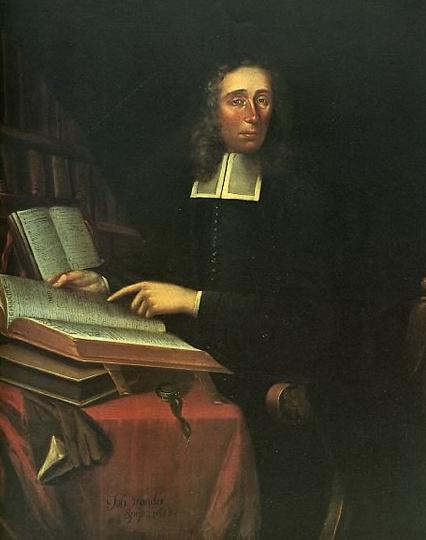
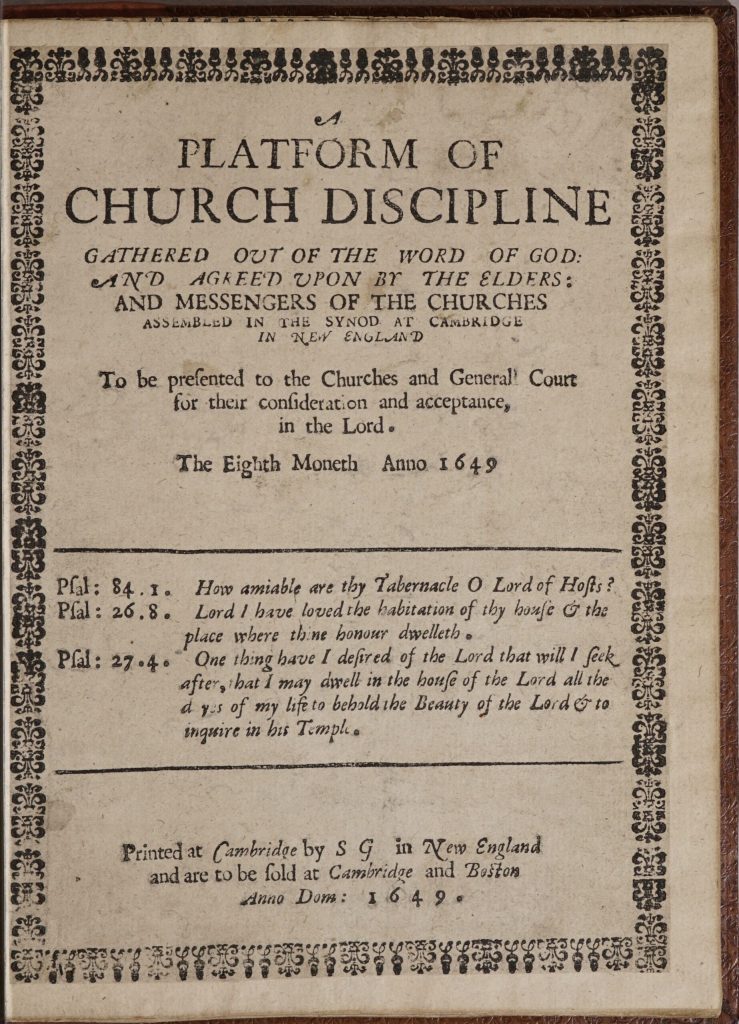
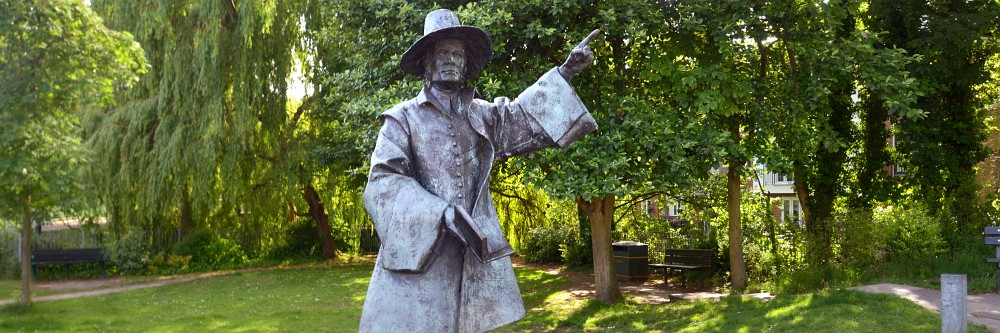
Samuel Stone, New England Puritan, would be born on July 18th, 1602 in Hertford, England. He would go onto attend Emmanuel College at Cambridge University, from which he would graduate in 1624. He would be ordained to the ministry on July 8th, 1626 and would serve as curate at Stisted in Essex.
Come 1633, together with his more famous friend Thomas Hooker, he would board the ship Griffin and set sail for Boston. They minister for a time in Cambridge, but in 1636 Stone and Hooker together with their congregation and others would move into the Connecticut Valley and found a new colony. The site of the location would become known as Hartford. After ministering in New England for thirty years, Samuel Stone would enter his eternal rest on July 20th, 1663.
Samuel Stone in his lifetime would publish a polemical treatise on Congregational church government entitled A Congregational Church is a Catholike Visible Church, a large tome entitled a Whole Body of Divinity, and this catechism reproduced below. Tolle Lege!
__________________________________________________________
A SHORT Catechism Drawn out of the WORD OF GOD.
By Samuel Stone, MINISTER of the Word at HARTFORD, on CONNECTICUT. BOSTON in NEW-ENGLAND.
Printed by Samuel Green, for John Wadsworth of Farminton, 1684.
A SHORT CATECHISM.
Question. What is divinity or religion?
Answer. A doctrine of living well.[1]
Q. What is it to live well?
A. To will the good will of God.[2]
Q. Which are the parts of divinity?
A. Faith in God, and observance towards God.[3]
Q. What is faith in God?
A. A confidence or trusting in the name of God for life.[4]
Q. What is the object of faith, in whom we are to believe that we may live well?
A. God, who is sufficient to make us live well, and the efficient cause of life.[5]
Q. What is the sufficiency of God?
A. That whereby God having enough for himself, has more than enough for us.[6]
Q. Wherein consists the sufficiency of God?
A. In the divine essence and subsistence, or persons.[7]
Q. What is the divine essence?
A. That whereby God is the most absolute first being.[8]
Q. What is the first being?
A. An infinite, eternal Spirit, having life in himself, with a most blessed understanding and will.[9]
Q. What is a divine person or subsistence?
A. The godhead, with a relative individual property.[10]
Q. How many are the divine persons of the godhead?
A. Three, God the Father, God the Son, and God the Holy Ghost.[11]
Q. What is God the Father?
A. A divine person begetting the Son.[12]
Q.What is God the Son?
A. A divine person conceived or begotten of the Father.[13]
Q. What is God the Holy Ghost?
A. A divine person proceeding from the Father and the Son.[14]
Q. What is the efficiency of God?
A. That whereby the Almighty works all in all, according to his ancient decree.[15]
Q. What are the kinds of efficiency, or the work of God?
A. Creation and providence.[16]
Q. What is creation?
A. That whereby God made the world of nothing very good in six days.[17]
Q. Why was man made the last of all upon the sixth day?
A. Because man was to be served by the inferior creatures, and attended by the angels.[18]
Q. What is the creation of man?
A. That whereby God made him a reasonable living creature.[19]
Q. What are the parts of which man was made?
A. A body made of the earth, and a reasonable immortal soul, which is made immediately of nothing.[20]
Q. What is the reasonable immortal soul?
A. A spirit of life with a faculty of reason & will, whereby a man is become a cause by counsel.[21]
Q. What is the special perfection in which man was created?
A. The image of God whereby he was able to please God in a perfect manner.[22]
Q. What is the providence of God?
A. His exact watch over all his creatures, whereby they are preserved and guided to their end.[23]
Q. What is the special government of God over his reasonable creatures?
A. That whereby God leads them to an eternal estate of happiness or misery by his being pleased or displeased.[24]
Q. What is here to be considered?
A. Man’s apostasy and restitution.[25]
Q. What are we to believe concerning man’s apostasy, or fall from obedience to that government?
A. All man by nature being condemned through Adam’s transgression, are wholly infected with sin, and under the dominion of death.[26]
Q. What is sin?
A. The transgression of the law, or any swerving from the law of God.[27]
Q. What are the kinds of sin?
A. Original, which is the swerving of man’s nature, or actual, which is the swerving of his actions from that rule.[28]
Q. What is that death which is entered into the world by sin?
A. A miserable privation or loss of the life of joy or comfort.[29]
Q. What is the first death?
A. The death of the outward man especially; the perfection of which is the separation of soul and body.[30]
Q. What is the second death?
A. The death of the inward man especially; the perfection of which is the ejection of the whole man from God into hell.[31]
Q. Wherein consists the restitution of man?
A. In Redemption and application.[32]
Q. What is redemption?
A. The payment of a due price to divine justice, for his freedom of man.[33]
Q. Who is the redeemer of man?
A. Jesus Christ God-man.[34]
Q. Why is the redeemer called Jesus Christ?
A. Because he is our savior and anointed mediator; priest, prophet, and king.[35]
Q. What is the union of those two distinct natures of Christ?
A. That whereby the second person in the godhead takes the human nature to subsist forever in his own person.[36]
Q. Wherein consists the redemption of Christ?
A. In his humiliation and exaltation.[37]
Q. What is the humiliation of Christ?
A. Subjection to the law in his active and passive obedience.[38]
Q. What is the brief sum of the life of Christ?
A. Christ being conceived by the Holy Ghost, and born of the Virgin Mary kept the charge of the Lord, performing his will in a most perfect manner.[39]
Q. What kind of death did Christ suffer?
A. The first and second death which were both finished upon the cross.[40]
Q. Which are the decrees of his exaltation?
A. His resurrection, ascension into heaven sitting at the right hand of God, and return, to judge the quick and the dead.[41]
Q. What is the application of that redemption or purchase?
A. That whereby it is extended to the church or seed of Christ, through the irresistible power of the Spirit in the word.[42]
Q. What is the brief sum of application?
A. A contrite and humble sinner, trusting in Christ for life, is justified before God, and also sanctified and blessed.[43]
Q. What is contrition or brokenness of heart?
A. The cutting off the heart from sin, by a sight of it as the greatest evil, and a sorrow for it.[44]
Q. How may it appear that sin is the greatest evil?
A. Because it is most cross to God, and separates from him, who is the end and chief good of the soul.[45]
Q. Why can there be no separation from sin, without godly sorrow for it?
A. Because no man will forsake his sin, so long as it is the sweetest object to him.[46]
Q. How may it appear to a man that his sorrow is a godly sorrow?
A. When the heart tastes the greatest bitterness in sin, and the greatest sweetness in Christ.[47]
Q. When is the heart of a man broken off from sin?
A. When he is willing to see that truth which is most cross to his beloved sin, and that God should take it away by any means.[48]
Q. What is humiliation?
A. That whereby the sinner is cut off from resting within the compass of himself, or his own perfection.[49]
Q. Wherein consists his humiliation?
A. In self-despair and self-subjection.[50]
Q. Which is the first part of this self-despair?
A. That whereby the sinner refuses to rest in the shadow of the best duties, as utterly unable to answer the law.[51]
Q. What is the second part of self-despair in a humble sinner?
A. A distrust in his own legs, finding no strength in himself to move or go one step towards a savior.[52]
Q. What is the self-subjection of a sinner?
A. Submission to the disposing hand of Christ, to be at his carving, and to be molded and acted by him.[53]
Q. How does God draw the heart to believe in Christ, or trust in him for life?
A. By his Spirit in the promise, darting in the special light and sweetness of the boundless riches of his grace in Christ.[54]
Q. What is the justification of a believer?
A. That whereby the righteousness of Christ being imputed to him, he is pronounced righteous and worthy of life.[55]
Q. What is the righteousness of Christ?
A. His active and passive obedience.[56]
Q. What is the imputation of the unrighteousness of Christ?
A. The putting of the righteousness upon the reckoning and account of a believer.[57]
Q. What is the sanctification of a believer?
A. A change or transformation into the glorious image of Christ, whereby he is fitted for every good work.[58]
Q. When shall the saints be perfectly blessed?
A. In soul at the point of death, and in the whole man at the resurrection at the Last Judgment; when the wicked shall be damned with devils forever.[59]
Q. What is observance towards God?
A. The performance of duty to God, by a spirit of faith.[60]
Q. Wherein consists observance towards God?
A. In obedience to the law, and the helps of obedience which are invocation of God, and celebration of sacraments.[61]
Q. What is obedience to the law?
A. That respect to the law, whereby a man closes with the infinite fulness of goodness in God, or with goodness itself.[62]
Q. Wherein consists obedience to the law?
A. In the duties of divine worship and righteousness.[63]
Q. What is the divine worship required in the first table of the law?
A. That whereby we embrace God for himself and his own goodness.[64]
Q. Which are the several duties of divine worship required in the four commandments of the first table?
A. 1. Embracing the true God alone as our satisfying object 2. In all his divine ordinances. 3. In a reverent. 4. In a solemn manner.[65]
Q. What is that righteousness which is required in the second table of the law?
A. That whereby a man loving himself in God and for his sake, loves his neighbor as himself.[66]
Q. Which are the duties of love to our neighbor, required in the six commandments of the second table?
A. The due preservation of his degree, life, chastity, good, name, and prosperity.[67]
Q. What is invocation of God?
A. A going to God, whereby we move him with things according to his will.[68]
Q. What is a sacrament?
A. A sign and seal of the covenant between God and his people.[69]
Q. Which are the parts of a sacrament?
A. The sign and the thing signified.[70]
Q. How many sacraments are there in the New Testament?
A. Only two, Baptism, and the Lord’s Supper: both which must be dispensed by the minsters of the word.[71]
Q. What is Baptism?
A. A seal of admission into covenant with God and his church, and incorporation into Christ, which is the portion of all church members.[72]
Q. What is the sign in Baptism?
A. The washing the flesh with water, in the name of the Father, Son, and Holy Ghost.[73]
Q. What is the special thing signified?
A. The blood of Christ shed for us, whereby we are washed from sin, and saved.[74]
Q. What is the Lord’s Supper?
A. The seal of our continuance in covenant with God, and his church, and growing up in Christ.[75]
Q. What is the sign?
A. Bread and wine duly applied according to the institution of Christ.[76]
Q. What is the thing signified?
A. A spiritual feast or banquet, nourishing the soul, and increasing the assurance of eternal life.[77]
Q. What is signified by the elements themselves, bread and wine?
A. The body and blood of Christ, who is the object of spiritual sense, and the strength and gladness of our hearts.[78]
Q. What is signified by taking, blessing, breaking, pouring out and giving the bread and wine?
A. That Christ who is called and blessed, suffered for us, and is given to us by God.[79]
Q. What is signified by our receiving and by our eating the bread and drinking the wine?
A. Our receiving Christ, and feeding upon him by faith.[80]
Q. Who are the guests invited to the Lord’s Table?
A. Church members who discern the Lord’s body, and examine themselves, finding no satisfaction but in Christ himself.[81]
[1] Gal. 2:19. 1 Thess. 4:1. 2 Tim. 3:12. 1 Tim. 6:3. Isa. 54:13.
[2] Prov. 4:23. Prov 23:26. Ps. 90:12. Rom. 12:2.
[3] Ps. 37:3. 1 Tim. 3:5, 19. 2 Tim. 1:13.
[4] Ps. 9:10. Hos. 6:2-3. Amos 5:4, 6. John 5:40. John 20:31.
[5] Exod. 6:3. Rom. 4:17, 21. 2 Cor. 9:8.
[6] Acts 17:25. Rom. 11:35. 2 Cor. 9:8. Eph. 2:20.
[7] Matt. 28:19. John 17:3. 1 John 5:7.
[8] Isa. 41:4. Isa. 44:6.
[9] Ps. 90:1-2. Ps. 145:3. Ps. 147:5. John 4:24. John 5:26. 1 Tim. 1:11.
[10] Matt. 28:19. Heb. 1:3, 5.
[11] Matt. 28:19. 1 John 5:7.
[12] Ps. 2:7. Prov. 8:22, 24-25. Heb. 1:3, 5.
[13] Prov. 8:24, 31. John 1:14. Heb. 1:3, 5.
[14] Isa. 63:10. John 14:26. John 15:26.
[15] Ps. 93:16. Isa. 25:1. Rom. 11:36. 1 Cor. 12:6. 2 Cor. 6:18.
[16] Neh. 9:6. Ps. 104.
[17] Gen. 1. Acts 17:34-20
[18] Job 37:7. Jos. 2:21-22. Heb. 1:14. Jude 6.
[19] Gen. 2:7. Job 35:11. Ps. 91:10.
[20] Gen. 2:7. Job 10:8-12. Hab. 12:9.
[21] Deut. 30:19. Gen. 2:7. Prov. 16:9. Prov. 20:27. Matt. 16:26. Heb. 8:10.
[22] Eccles. 7:29.
[23] 1 Chron. 29:11-12. Neh. 9:6. Ps. 104:27-31. Ps. 145:15-16. Isa. 6:3. Matt. 10:29-31.
[24] Gen. 3:22. Matt. 25:46. Rom. 10:5.
[25] Gen. 3. Rom. 5:12.
[26] Gen. 3. Gen. 5:3. Ps. 51:5. John 3:6, 18-36. Rom. 12:15-20. Eph. 2:1-3.
[27] Dan. 9:5-12. 1 John 3:4.
[28] Ps. 14:1-3. Jer. 6:7. Matt. 12:35. Matt. 15:19.
[29] Gen. 2:17. 1 Sam. 25:37. Rom. 5:17. Rom. 6:23.
[30] Gen. 35:18. Deut. 28:15-27.
[31] Isa. 33:14. Matt. 25:41-46. Matt. 13:41-42.
[32] John 3:5. John 3:14-19. John 6:27, 62-63. Eph. 1:4-11.
[33] Matt. 20:28. Acts 20:28. Rom. 3:24, 27. 1 Cor. 6:20. 1 Pet. 1:18-19.
[34] Matt. 1:23. Acts 20:28. 1 Tim. 3:16.
[35] Matt. 1:23. Luke 4:18-19. Acts 4:27. Heb. 1:9. Heb. 7:1.
[36] John 1:14. 1 Cor. 8:6. Gal. 4:4-5. Heb. 1:16.
[37] Phil. 2:6-11. Luke 24:26.
[38] Dan. 9:24. Matt. 3:15, 17. Rom. 10:5. Gal. 3:13. Gal. 4:4. Heb. 7:22.
[39] Matt. 1:18. Luke 1:35. John 8:29. Heb. 10:5-10.
[40] Isa. 53:9. Gal. 3:13. Phil. 2:8.
[41] Mark 16:19. Rom. 8:34. 2 Tim. 4:1.
[42] Isa. 53:10. Isa. 59:21. John 16:7-8. Acts 26:18, Acts 20:28. Eph. 5:23.
[43] Isa. 57:14. Matt. 5:3-9. John 12:13. John 3:6. Acts 26:11. 1 Cor. 1:30. 1 Cor. 6:11. Gal. 2:19-20.
[44] John 16:8. Acts 2:37. Rom. 11:24.
[45] Ps. 73:25-28. Isa. 43:7-21. Isa. 59:2.
[46] Job 20:11-13. Eccles. 7:26. James 4:8-9.
[47] Eccles. 7:26. Mal. 3:1. Matt. 13:44.
[48] Job 24:32. Hos. 14:2. John 3:20-21.
[49] Matt. 16:24. Rom. 2:17-21. Gal. 2:19-20.
[50] Hos. 14:3. Luke 15:17-19.
[51] Isa. 64:6. Matt. 3:9. Matt. 5:3. Gal. 3:10. Phil. 3:3.
[52] Ps. 61:2. Jer. 31:18. John 16:8-9.
[53] Jer. 31:18. Luke 15:17. Rom. 6:7.
[54] Isa. 43:1. John 6:44-45. Rom. 10:14-18. 2 Cor. 4:6.
[55] Rom. 6:7-8. Rom. 5:18-19. 2 Cor. 5:21. Phil. 3:9.
[56] Heb. 10:7-11. Phil. 2:8. 1 Pet. 3:18. 1 John 2:2.
[57] Rom. 4:6. Rom. 5:18-19. 2 Cor. 5:21.
[58] 2 Cor. 3:18. 1 Thess. 5:23. 2 Tim. 2:21.
[59] 1 Cor. 13:12. 1 Cor. 15:22. Rev. 14:13.
[60] Matt. 28:20. 2 Cor. 4:13. Gal. 2:19-20.
[61] Ps. 50:15. Matt. 28:19-20. James 1:5.
[62] Deut. 6:4-15. Ps. 73:25. Ps. 119:6. Matt. 9:17.
[63] Matt. 22:37-39. Luke 1:74-75. Exod. 31:18.
[64] Ps. 73:25. Matt. 19:17.
[65] Exod. 20:1-12. Matt. 22:37-38.
[66] Matt. 22:39. Rom. 13:8-10. Rom. 16:8.
[67] Exod. 20:12-18. Rom. 13:8-10.
[68] Gen. 18:23, 27-28, 32. Ps. 50:15. Mark 6:9-14. Luke 11:5-14.
[69] Gen. 17:7, 15. Exod. 12:3. Luke 22:19-20. Rom. 4:11.
[70] Matt. 3:11, 26. Matt. 26:21-29.
[71] Matt. 26:26-29. Matt. 28:18-19. 1 Cor. 1:16.
[72] Matt. 28:19. Rev. 6:3-7. 1 Cor. 12:13. Acts 2:39. Col. 2:11-13. 1 Pet. 3:11.
[73] Acts 3:11. Matt. 28:19.
[74] Mark 16:16. Acts 2:38. Acts 22:16. 1 Pet. 3:21. Col. 2:11-13.
[75] Matt. 26:26. 1 Cor. 11:20-30.
[76] Matt. 26:26-29. 1 Cor. 11:11-28.
[77] Matt. 26:26-30. 1 Cor. 10:16-17. 1 Cor. 11:12-20. 1 Cor. 12:13.
[78] Phil. 7-8. Heb. 5:14.
[79] Ps. 2:4. Isa. 53:4. Matt. 26:26-29. Luke 4:18. Heb. 5:4-5.
[80] Matt. 26:27-28. John 1:12.
[81] 1 Cor. 11:28-29.
 The Saybrook Platform