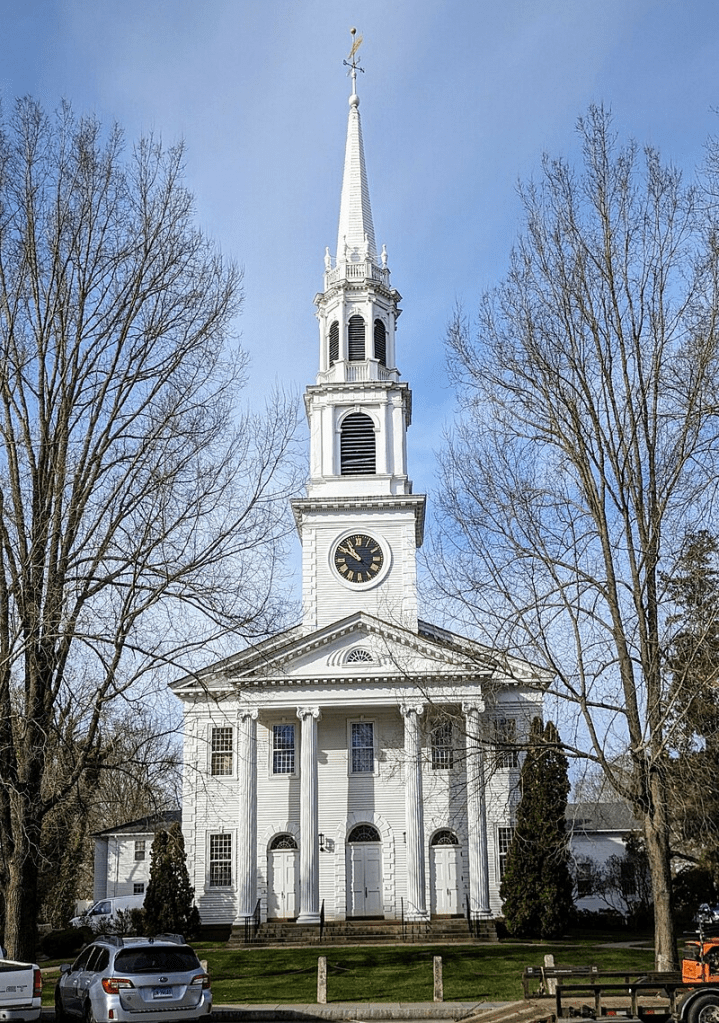
First Congregational Church of Old Lyme, Connecticut
In the last treatment of the Cambridge Platform, we dealt with the second paragraph which treats of the distinction between parts of government and circumstances of the same. The former are essential, while the latter are adjuncts. The former are prescribed by the Lord Jesus Christ in his Word, while the latter are left undetermined (as we’ll see.) The former are immutable, and the latter mutable.
A second argument that Thomas Hooker brings in proof of the proposition that the essential parts of government are prescribed in the Holy Scriptures and thus obligatory in all times runs thus;
- Either essentials stand by the necessity of precept (and so immutably required) or else they are left arbitrary to the will of man to appoint.
- But they are not left arbitrary to the will of man to appoint.
- Thus, essentials stand by the necessity of precept.
The first part of the division is full, as all things spiritual are either duties commanded by God, or else matters left to Christian liberty. There is no third term.
That the second assertion is true follows from the nature and end of an ecclesiastical ordinance, which is spiritual and supernatural. Man, being a mere creature, has no right or prerogative to invest officers and ordinances with the capacity for spiritual blessings and curses. God alone, as Lord and supernatural origin and end of all, is vested with this authority. This thus distinguishes the nature of ecclesiastical from civil power. The officers and ordinances of a civil state may be justly constituted and have power delegated to them since their nature and ends are temporal and natural. Man as creature invested with civil power by virtue of creation has the capacity to enact what is needed for civil life, but not so for the essentials of ecclesiastical matters.
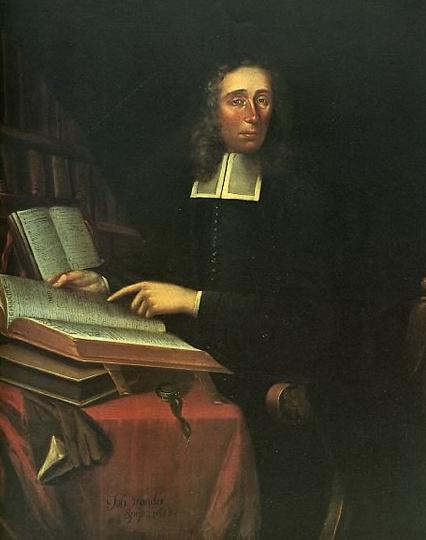
Thomas Goodwin in confirmation states that “whatsoever is set apart by God electively, and culled out from other things to be the instrument of a supernatural power and efficacy, that is such by divine institution; and all such power as is thus supernatural, must be disposed of and executed according to his mind, by his own instruments, and where he hath placed it.”[1]
Goodwin will go on to admit that things such as officers and ordinances have a foundation in the light and law of nature, and are thus founded on natural and moral reason. As we noted earlier, that men must be governed and have ordinances for said government is true by reason unaided by revelation. In addition to this however, Christ has instituted and determined certain officers and ordinances, and sanctified them with spiritual powers. Such is why the Word of God and Sacraments are means of grace, and why excommunication binds one over to Satan instead of merely just kicking one out of fellowship.
This argument adds weight to the former, and further establishes that the essential parts of government are prescribed by the Word of God and thus obligatory on the church in all ages. Let us all then give the Word of God our due attention in order to discern those essentials and ensure that our churches are duly founded thereon.
[1] Thomas Goodwin, The Government of the Churches of Christ, 10.
 The Saybrook Platform