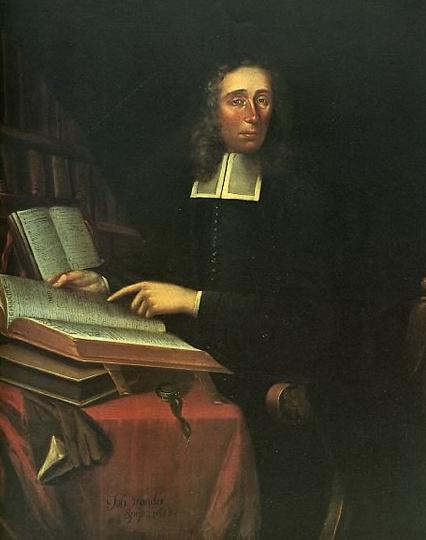
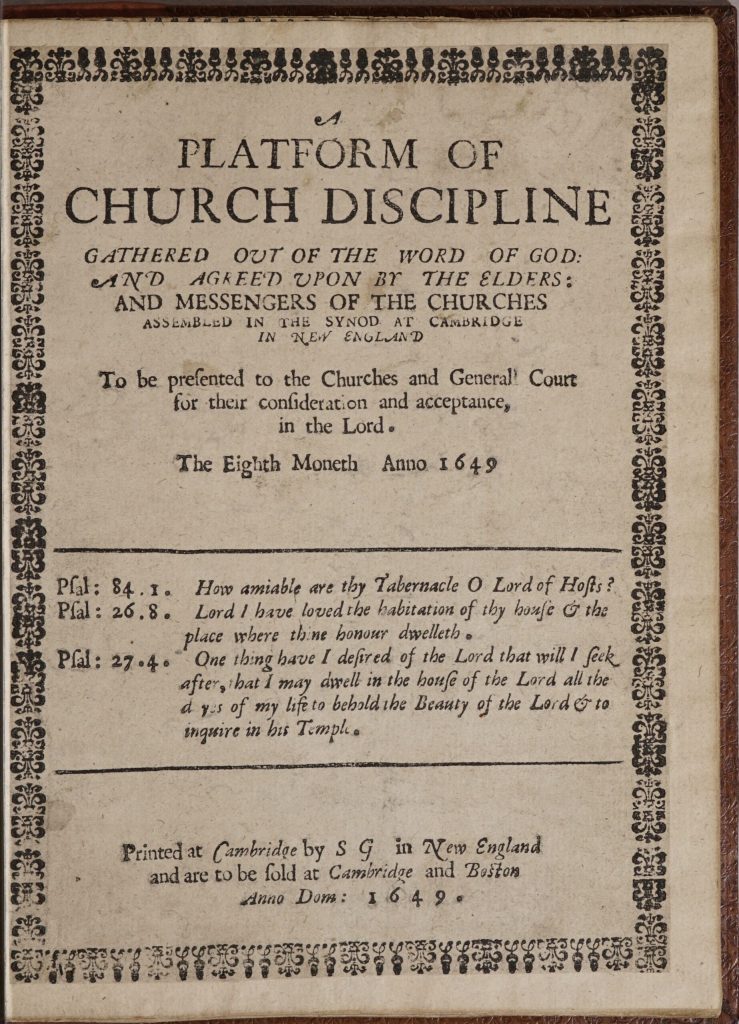

If there is any one figure who demands to be the central figure of early New England, John Cotton would seem to be that man. Signifying this importance of John Cotton, the biographer Alexander M’Clure would affectionately call him the “patriarch of Boston.”[1] His influence was felt not merely in New England, but certainly back in Old England.
Born on December 4th, 1585 in Derby, he would go on to attain his Bachelor of Arts at Trinity College, Cambridge in 1603 and then earn his Master of Arts at Emmanuel College, Cambridge in 1606. In 1612, he would become vicar of St. Botolph’s church in Boston, Lincolnshire. Ever the Puritan after 20 years of ministry at St. Botolph, he would be driven out for nonconformity and migrate to Boston in 1633.
He would live and minister the rest of his life in Boston. He would partake in the Roger Williams and Antinomian controversies, be a part of the synod that produced the Cambridge Platform, and influence many others across the pond in regard of the Congregational way. After a life well lived, he passed onto glory on December 23rd, 1652.
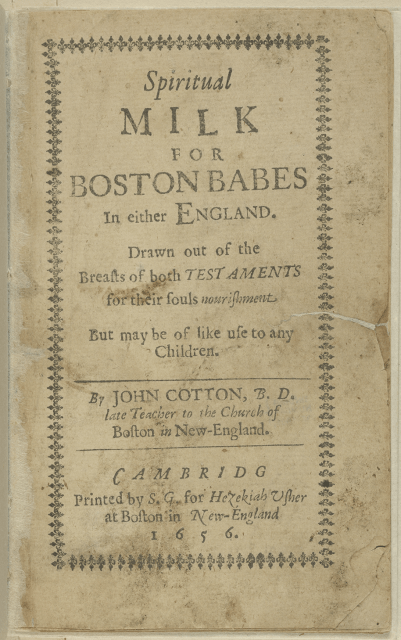
He left behind himself a voluminous output of writing, including many sermons. Of particular note is his book entitled The Keys of the Kingdom of Heaven, which converted no less than John Owen to the Congregational way. In addition, however, he produced a catechism of profound influence in American history. Spiritual Milk for Boston Babes, originally published in the 1640’s, would remain in print continuously for over 200 years. It would be a staple in The New-England Primer, which would serve as fundamental textbook in America’s grammatical and religious education. This catechism is here reproduced for the benefit of the modern church, and particularly for Congregationalists seeking to revive her ancient faith. Tolle Lege!
Note: The archaic spellings have been modernized and all Scripture citations have been footnoted.
[1] M’Clure, Alexander, The Life of John Cotton, 295.
__________________________________________________________
Spiritual Milk for Boston Babes in either England.
Drawn out of the Breasts of both Testaments, For their Souls’ Nourishment: But May be of Like Use for any Children.
By John Cotton, B.D.
And Teacher to the Church of Boston in New England.
London, Printed for Henry Cripps, In Popes-head-Alley.1657.
__________________________________________________________
Milk for Babes
Quest. I. What has God done for you?
A. God has made me, He keeps me, and He can save me.[1]
Q II. Who is God?
A. God is a spirit of himself, and for himself.[2]
Q III. How many Gods be there?
A. There is but one God in three persons, the Father, the Son, and the Holy Ghost.[3]
Q IV. How did God make you?
A. In my first parents holy and righteous.[4]
Q V. Are you then born holy and righteous?
A. No, my first father sinned and I in him.[5]
Q VI. Are you then born a sinner?
A. I was conceived in sin and born in iniquity.[6]
Q VII. What is your birth sin?
A. Adam’s sin imputed to me, and a corrupt nature dwelling in me.[7]
Q VIII. What is your corrupt nature?
A. My corrupt nature is empty of grace, bent unto sin, and only unto sin, and that continually.[8]
Q IX. What is sin?
A. Sin is the transgression of the law.[9]
Q X. How many commandments of the law be there?
A. Ten.[10]
Q XI. What is the first commandment?
A. Thou shalt have no other gods but me.[11]
Q XII. What is the meaning of this commandment?
A. That we should worship the only true God, and no other beside him.[12]
Q XIII. What is the second commandment?
A. Thou shalt not make to thyself any graven image.[13]
Q XIV. What is the meaning of this commandment?
A. That we should worship the true God with true worship: such as God has ordained, not such as man has invented.[14]
Q XV. What is the third commandment?
A. Thou shalt not take the name of the Lord thy God in vain.
Q XVI. What is here meant by the name of God?
A. God himself and the good things of God, whereby he is known, as a man by his name; as his attributes, worship, word, and works.[15]
Q XVII. What is it not to take his name in vain?
A. To make use of God, and the good things of God, to his glory, and our good: not vainly, not irreverently, not unprofitably.[16]
Q XVIII. What is it the fourth commandment?
A. Remember that you keep holy the Sabbath day.[17]
Q XIX. What is the meaning of this commandment?
A. That we should rest from labor and much more from play on the Lord’s Day, that we may draw nigh to God in holy duties.[18]
Q XX. What is the fifth commandment?
A. Honor thy father, and thy mother, that thy days may be long in the land, which the Lord thy God giveth thee.[19]
Q XXI. Who are here meant by father and mother?
A. All our superior, whether in family, school, church, and commonwealth.[20]
Q XXII. What is the honor due to them?
A. Reverence, obedience, and (when I am able) recompence.[21]
Q XXIII. What is the sixth commandment?
A. Thou shall do no murder.[22]
Q XXIV. What is the meaning of this commandment?
That we should not shorten the life, or health of ourselves or others, but preserve both.[23]
Q XXV. What is the seventh commandment?
A. Thou shalt not commit adultery.[24]
Q XXVI. What is the sin here forbidden?
A. To defile ourselves or others with unclean lusts.[25]
Q XXVII. What is the duty here commanded?
A. Chastity, to possess our vessels in holiness and honor.[26]
Q XXVIII. What is the eighth commandment?
A. Thou shalt not steal.[27]
Q XXIX. What is the stealing here forbidden?
A. To take away another man’s goods, without his leave: or to spend our own without benefit to ourselves or others.[28]
Q XXX. What is the duty here commanded?
A. To get our goods honestly, to keep them safely, and to spend them thriftily.[29]
Q XXXI. What is the ninth commandment?
A. Thou shalt not bear false witness against thy neighbor.[30]
Q XXXII. What is the sin here forbidden?
A. To lie falsely, to think or speak untruly of ourselves, or others.[31]
Q XXXIII. What is the duty here required?
A. Truth and faithfulness.[32]
Q XXXIV. What is the tenth commandment?
A. Thou shall not covet.[33]
Q XXXV. What is the coveting here forbidden?
A. Lust after the things of other men: and want of contentment with our own.[34]
Q XXXVI. Whether have you kept all these commandments?
A. No, I and all men are sinners.[35]
Q XXXVII. What are the wages of sin?
A. Death and damnation.[36]
Q XXXVIII. How look you then to be saved?
A. Only by Jesus Christ.[37]
Q XXXIX. Who is Jesus Christ?
A. The eternal Son of God, who for our sakes became man, that he might redeem and save us.[38]
Q XL. How does Christ redeem and save us?
A. By his righteous life, and bitter death, and glorious resurrection, to life again.[39]
Q XLI. How do we come to have part and fellowship with Christ, in his death and resurrection?
A. By the power of his word and Spirit, which bring us to Christ, and keep us in him.[40]
Q XLII. What is his word?
A. The Holy Scriptures of the prophets and apostles, the Old and New Testament, law and gospel.[41]
Q XLIII. How does the ministry of the law bring you towards Christ?
A. By bringing me to know my sin, and the wrath of God against me for it.[42]
Q XLIV. What are you thereby the nearer to Christ?
A. So I come to feel my cursed estate, and need of a savior.[43]
Q XLV. How does the ministry of the gospel help you in this cursed estate?
A. By humbling me yet more, and then raising me up out of this estate.[44]
Q XLVI. How does the ministry of the gospel humble you more?
A. By revealing the grace of the Lord Jesus, in dying to save sinners: and yet convincing me of my sin, in not believing on him, and of my utter insufficiency, to come to him; And so I feel myself utterly lost.[45]
Q XLVII. How then does the ministry of the gospel raise you up out of this lost estate to come unto Christ?
A. By teaching me the value and the virtue of the death of Christ, and the riches of his grace to lost sinners: by revealing the promise of grace to such, and ministering the Spirit of grace, to apply Christ, and his promise of grace unto myself, and to keep me in him.[46]
Q XLVIII. How does the Spirit of grace apply Christ, and his promise of grace unto you, and keep you in him?
A. By begetting in me faith to receive him: prayer to call upon him: repentance to mourn after him: and new obedience to serve him.[47]
Q XLIX. What is faith?
A. Faith is a grace of the Spirit; whereby I deny myself: and believe on Christ for righteousness and salvation.[48]
Q L. What is prayer?
A. It is a calling upon God in the name of Christ, by the help of the Holy Ghost, according to the will of God.[49]
Q LI. What is repentance?
A. Repentance is a grace of the Spirit, whereby I loath my sins, and myself for them, and confess them before the Lord, and mourn after Christ for the pardon of them, and for grace to serve him in newness of life.[50]
Q LII. What is newness of life or new obedience?
A. Newness of life is a grace of the Spirit, whereby I forsake my former lusts, and vain company, and walk before the Lord in the light of his word, and in the communion of his saints.[51]
Q LIII. What is the communion of saints?
A. It is the fellowship of the church in the blessings of the covenant of grace, and the seals thereof.[52]
Q LIV. What is the church?
A. It is a congregation of saints joined together in the bond of the covenant, to worship the Lord, and to edify one another, in all his holy ordinances.[53]
Q LV. What is the bond of the covenant, in which the church is joined together?
A. It is the profession of that covenant which God has made with his faithful people, to be a God unto them and to their seed.[54]
Q LVI. What does the Lord bind his people to in this covenant?
A. To give up themselves and their seed first to the Lord to be his people, and then to the elders and brethren of the church, to set forward the worship of God and their mutual edification.[55]
Q LVII. How do they give up themselves and their seed to the Lord?
A. By receiving through faith, the Lord, and his covenant, to themselves, and to their seed, and accordingly walking themselves, and training up their children in the ways of his covenant.[56]
Q LVIII. How do they give up themselves and their seed to the elders and brethren of the church?
A. By confession of their sins and profession of their faith, and of their subjection to the gospel of Christ. And so they and their seed are received into the fellowship of the church, and the seals thereof.[57]
Q LIX. What are the seals of the covenant now in the days of the gospel?
A. Baptism and the Lord’s Supper.[58]
Q LX. What is done for you in Baptism?
A. In Baptism, the washing of water is a sign and seal of my washing with the blood and Spirit of Christ, and thereby of my ingrafting into Christ: of the pardon and cleansing of my sins: of my rising up out of affliction: and also of my resurrection from the dead at the last day.[59]
Q LXI. What is done for you in the Lord’s Supper?
A. In the Lord’s Supper the receiving of the bread broken, and the wine poured out, is a sign and seal of my receiving the communion of the body of Christ broken for me, and of his blood shed for me: and thereby of my growth in Christ, of the pardon and healing of my sins: of the fellowship of his Spirit: of my strengthening and quickening in grace: and of my sitting together with Christ on his throne of glory at the last judgment.[60]
Q LXII. What is the resurrection from the dead, which was sealed up to you in Baptism?
A. When Christ shall come to his last judgment, all that are in the graves shall rise again, both the just and the unjust.[61]
Q LXIII. What is the last judgment, which is sealed up to you in the Lord’s Supper?
A. At the last day we shall all appear before the judgment seat of Christ, to give an account of our works, and to receive our reward according to them.[62]
Q LXIV. What is the reward that shall then be given?
A. The righteous shall go into life eternal, and the wicked shall be cast into everlasting fire with the Devil and his angels.[63]
[1] Ps. 119:73. Ps. 120:4-8. Isa. 63:1.
[2] John 4:44. Exod. 3:14.
[3] 1 Cor. 8:6. 1 John 5:7.
[4] Gen. 1:26-27. Eccles. 7:29.
[5] Isa. 43:27. Rom. 12:19.
[6] Ps. 51:5.
[7] Rom. 5:12-14. Eph. 4:12.
[8] Rom. 7:18. Gen. 6:5.
[9] 1 John 3:4.
[10] Deut. 4:13.
[11] Exod. 20:3.
[12] Matt. 4:10.
[13] Exod. 20:4-5.
[14] John 4:24. Deut. 12:32. Matt. 15:9.
[15] Deut. 28:58. Exod. 33:19. Exod. 34:6. 1 Kings 9:3. Ps. 138:2. Job 1:21.
[16] 2 Kings 1:3. Lev. 10:3. Job 36:24. 1 Cor. 10:31. Job 5:27. Deut. 8:16. Jer. 2:30. Lev. 26:2. Heb. 4:2.
[17] Exod. 20:8-11.
[18] Isa. 58:13-14. Exod. 32:6.
[19] Exod. 20:12.
[20] Prov. 23:22. 1 Kings 5:13. 1 Kings 2:12. 1 Cor. 4:15. 2 Chron. 29:11. 1 Tim. 5:1. 1 Sam. 25:8. Gen. 4:20-21.
[21] Mal. 1:6. Heb. 12:9. Eph. 6:1. 1 Tim. 5:4.
[22] Exod. 20:13.
[23] Matt. 5:22. 2 Cor. 7:10. 1 Sam. 26:24. Mark 3:4.
[24] Exod. 20:14.
[25] Gen. 38:9-10. Lev. 18:24.
[26] Tit. 2:5. 1 Pet. 3:2. 1 Thess. 4:4-5.
[27] Exod. 20:15.
[28] Luke 19:8. 1 Thess. 4:6. Prov. 21:20.
[29] Prov. 13:11. John 6:12. Luke 19:16. Luke 15:13.
[30] Exod. 20:16.
[31] Eph. 4:25. Jer. 9:4-5. Josh. 9:22. Prov. 13:7.
[32] Eph. 4:25. Matt. 23:23.
[33] Exod. 20:17.
[34] Rom. 7:7. Heb. 13:5.
[35] Rom. 7:14. Rom. 3:23.
[36] Rom. 6:23. Rom. 2:8-9.
[37] Acts 4:12.
[38] 1 John 5:20. Prov. 8:23-24. John 1:14. 2 Cor. 8:9. Luke 1:68-69. Luke 2:11.
[39] Gal. 4:4-5. Matt. 20:28. Phil. 2:7-8. Rom. 4:25.
[40] John 17:20-21. 2 Cor. 5:20. 1 Cor. 6:17.
[41] 2 Tim. 3:15-16.
[42] Rom. 3:20. Gal. 3:10, 24. Rom. 7:9-10.
[43] Gal. 3:10, 24.
[44] Luke 3:4-6.
[45] 2 Tim. 1:10. 1 Tim. 1:15. John 16:7, 9. John 6:44. Luke 19:10.
[46] John 12:32. 2 Cor. 5:19-20. Cant. 5:10-16. Cant. 6:1. 2 Cor. 3:18. Luke 19:10. Matt. 9:13. Gal. 3:5. Rom. 10:17. Rom. 1:16.
[47] Rom. 10:17. Rom. 10:14. Zech. 12:10. Rom. 16:25-26. 2 Cor. 10:4-5.
[48] Phil. 1:29. 2 Cor. 4:13. Phil. 3:8-9.
[49] Matt. 6:9. John 16:23. Rom. 8:16, 27. 1 John 5:14.
[50] Acts 5:31. Zech. 12:10. Ezek. 6:9. Job 42:6. 2 Sam. 24:10. Lev. 26:40-41. Prov. 28:13. 1 Sam. 7:2. Ps. 51:1-2, 10.
[51] Rom. 7:6. 1 Pet. 4:2-4. Ps. 116:9. Ps. 119:9, 105, 115. Ps. 16:3.
[52] 1 Cor. 1:2. Phil. 1:5. Acts 2:47. Rom. 9:4. 1 Cor. 12:13.
[53] Ps. 89:5. Ps. 50:5, 16. Ezek. 20:37. Acts 2:42. 1 Cor. 14:23, 26.
[54] 2 Cor. 8:5. 2 Cor. 9:13. Gen. 17:7.
[55] Josh. 24:15, 21, 24-25. 2 Cor. 8:5. Eph. 5:21. Neh. 9:38. Neh. 10:28-34.
[56] John 1:12. Gen. 17:9-10. Isa. 56:6-7. Gen. 18:19.
[57] Matt. 3:6. Acts 8:37. 2 Cor. 9:13. Acts 2:38-39.
[58] Rom. 4:11. Col. 2:11-12. 1 Cor. 11:25.
[59] Heb. 10:22. Heb. 12:24. John 3:5. Rom. 6:2-3. Acts 22:16. Luke 3:3. 1 Pet. 3:20-21. 1 Cor. 15:29.
[60] 1 Cor. 10:16. Matt. 26:26, 28. 1 Cor. 12:13. Ps. 104:15. John 6:55. Luke 22:27, 29-30.
[61] John 5:28-29. Acts 24:15.
[62] 2 Cor. 5:10. Matt. 12:36. 1 Cor. 4:5. Eccles. 12:14.
[63] Matt. 25:34, 46.
 The Saybrook Platform